September 14, 2015
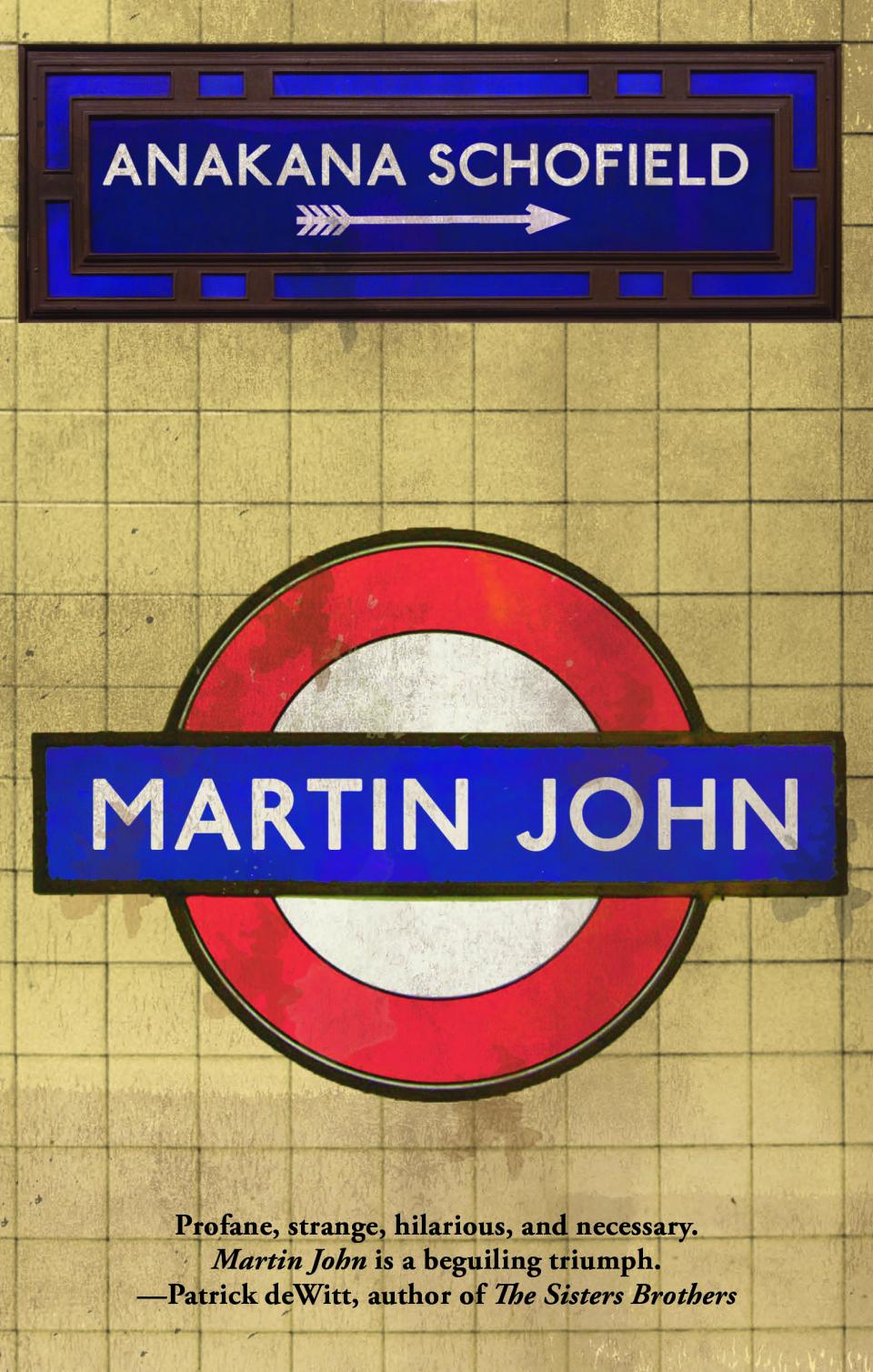
Martin John, by Anakana Schofield
 “That’s aggressive, but you see this hasn’t been an easy book for any of us.”
Anakana Schofield’s Martin John, a novel about a sexual deviant and the follow-up to her award-winning Malarky, is primarily a book about language. It’s about sexual violence is able to happen because of words and ideas that are never articulated or defined, and how these ellipses in our understanding go on to create further damage and harm. “It was a time when people didn’t ask as many questions. That’s the time it was.”
And so in order to fill in the blank, to ask the questions, to define the it, Schofield has to reinvent the shape of a novel. Eschewing chronology, point-of-view, objectivity, artifice itself for something that more resembles a case study, a long-form incident report. Just the latest for Martin John, the reader supposes, who has been in and out of the care of psychologists, social workers and other medical professionals for much of his life. Though he makes a point to stay out of their way—meddlers—and to keep to his routines, essential. He’s holding down a job as a security guard, lives in a nondescript shabby house in London (albeit one cluttered with the detritus of his media habits), visits his Aunt Noanie on Wednesdays, under specific instruction of his mother back in Ireland. (D’ya hear me, Martin John?) But it’s clear that, no matter his circuits and refrains, this centre (a precarious arrangement orchestrated by the mother) simply cannot hold.
The Mother. Martin John’s mother is a spiritual sister to Our Woman from Malarky, who does make an appearance in this latest book, encountering Martin John in a psychiatric ward. (You might remember him as “Beirut”.) Both women are undone by motherhood, wielding teapots as weapons, this action underlining their powerlessness. And yet. Are they really powerless? Are they bad mothers? Do they do what they do out of love? Or what? Do we blame the mother? Does it even matter? Does being a mother somehow put a woman beyond reproach?
Do we blame the mother? The collective address here is not rhetorical. I’m talking to you, and Schofield’s narrator is talking to all of us:
“She did not the idea she had a role in it.
You would not like the idea you had a role in it.
Did she have a role in it?
Have you had a role in it?
Do you have a role in this?”
Martin John forces the reader to be held accountable for some of the violence contained therein, for that time it was in which people didn’t ask as many questions is happening right now. “A thesaurus of vagueness for remembering,” Schofield writes. Think of a now-infamous CBC presenter, hmm? All this making for a discomforting read, made even more so, remarkably, by the reading not being so discomforting at all.
For a novel about a sexual deviant, Martin John is positively breezy. It’s humorous in places, fast-paced, its momentum spurred on by the arrows separating the text’s sections, part of the book’s overall transit motif. A motif that’s important to understanding the book as a whole, notions of underground and close proximity, of public, that these are people who live among us—they are us. And what are to do about that? The idea of transit and transit maps connecting to Martin John’s behaviour too, his loops and circuits. A sense of inevitability. The way that one thing leads to another: “Strange. Estranged. Estuary ranged.” It all comes back to words again, connections, missed or otherwise.
As Anakana Schofield is a friend of mine, I perhaps cannot be relied for a wholly objective review of her work, those it pleases me immensely that I don’t have to be. Read a rave review (one of many) from the Globe and Mail this weekend, and celebrate Martin John’s deserved appearance on the Scotiabank Giller longlist.
September 10, 2015
Daisy Saves the Day, by Shirley Hughes
 British institutions collide in today’s Picture Book Friday pick, in which the great Shirley Hughes pens a picture book right out of Downton Abbey with bunting as a major plot point. I know.
The book is Daisy Saves the Day, about a young girl who has to leave school and take a job as a scullery maid in a grand house in London in order to earn money to help care for her younger siblings. Which was not such a remarkable path for a young girl of her class, but Daisy herself is quite remarkable, bright and clever, hardworking at school. She’s also not particularly good at, well, scullery-ing. Her employers’ modern and unconventional niece, who is visiting from America, wrangles her permission to browse the house’s extensive library however, which makes Daisy’s life a little less lonely.


The story takes place during the summer of 1901 when George V was crowned, and the streets of London were decked in Union Jacks, flags and streamers. (The text doesn’t explicitly say “bunting,” but them there triangles are not just any flags, are they….) Except that Daisy’s house remains plain and unadorned—her employers, The Misses Simms, considered the decorations vulgar. And Daisy, naturally, is disappointed to not be part of the fun.

Ever-enterprising, however, she devises a cheeky way to join in, fashioning a string of bunting out of dishcloths and pillowcases and BRIGHT RED BLOOMERS, no less.

Which, of course, gets her in hot water with the Misses Simms, and poor Daisy is landed in disgrace. She’s given so many extra chores that by the end of the day, she’s too tired to even read. But never fear, there will BE redemption. When one night Cook hangs dishcloths a bit too close to the fire and then nods off, it is Daisy who smells the smoke and rushes to the kitchen to help put the fire out, saving the day, as per the title.

The Misses Simms are so impressed with their young charge that they bestow on her the ultimate gift: they free her from service and offer to pay for her schooling. Because “…it seems to me that you are better at reading than at polishing and scrubbing.” Indeed. And then a happy ending, because Daisy gets to go home to her mother and her brothers. A cheerful end to a cheerful tale, gorgeously rendered in classic Shirley Hughes style, and with endpapers decorated with vintage advertisements for household cleaning products.
We loved this one!
Check out the Daisy Saves the Day website, with more information about the book and activities too.
September 10, 2015
It begins.

I got pregnant at nearly the exact same time as Harriet started playschool three years ago, when she was three years old. And I so vividly remember those precious mornings, the time, rushing home to rescue my tea from under the cozy and sit down to get some work done, not wasting a single moment. To be alone. Although the time did not seem so luxurious: I was in my first trimester and would pass out every night not long after Harriet did. If I hadn’t had those mornings, I would have had no time to get any work done. After Christmas when my energy levels had returned, I got a job writing a book about Arctic exploration, the gold rush, mountain climbing, and parkas, and by then my days of freedom were numbered anyway. So I spent that winter reading Pierre Berton on the Klondike and listening to Iris by the Split Enz over and over again, dreaming of my baby as she kicked away inside me—so you see, I was really not so alone at all.
It seemed like the smallest window, that year. I knew that with our new baby, we’d soon be thrown back into newbornland and babyhood, and we’d have to find our way out again. That it would be a long before I once more found myself at home alone at 9:30 in the morning, the teapot still warm. I edited an entire book as the baby slept on my chest, for heaven’s sake. And now, here I am. And dare I say it: it all went by so fast?
This morning I dropped Harriet off at Grade One, which she is enjoying immensely so far, and then Iris and I trekked down the street for her to begin her first day of playschool. The playschool she has known since she was a fetus: she spent her first year in her carrier as I did co-op shifts three times a month. By the end of the year, she was scooting around the room like a champion. It has always been familiar to her. We love the teachers. Last year when Harriet was no longer a student there, we still visited our playschool friends often, and we’d play with them at the park.
Drop-off was not without its drama. Iris was not happy about my departure, and while I wanted to get out of there and trusted she was in very good hands, I’m a bit worried about the teachers who’ll have to deal with her. Though I assure myself that perhaps like all parents, I’m imagining that my child is more unique and particular than she actually is. I’m crossing my fingers that they’ve seen it all before. And that she’ll have a wonderful morning.
And now here I am, right back where I’ve been before except that this is the way forward instead of just a blip. It’s even time to put the kettle on. It’s time to get some work done. To figure out this new routine, just what to do with all this space and this quiet.
See also: “When I got home again, I didn’t know what to do because there was so much that I wanted to do.”
September 9, 2015
Light Years, by Caroline Woodward
 Caroline Woodward is author of Singing Away the Dark, which is one of my favourite picture books of all time, a book in rhyming couplets with just a few hundred words that has actually given me great strength more than once at times when I needed it. It’s based on Woodward’s own rural childhood: “When I was six, and went to school, I walked a long, long way…” and recounts her journey in the dark through the woods to meet her school bus each day, facing down fears, shadows, and actual cows. And so her latest book, Light Years: Memoirs of a Modern Lighthouse Keeper, is not such a departure, another book about lighting the darkness, being audacious and daring, and about the deep and complex relationship a person can have with place.
From the back of the book: The very TRUE STORY of a WRITER who always chose ADVENTURE over security, LOVE over logic, and who (naturally) quit her best job ever to go off with her equally peripatetic husband to LIVE at a LIGHTHOUSE and WRITE all the stories she always wanted to write, including THIS ONE.
(I don’t usually include descriptions from the back of books, but I particularly love that one.)
Woodward’s memoir is as meandering as her life has been, and I mean that in the best way. I mean that instead of a straightforward narrative about days in and days out as a lighthouse keeper (days that begin at 4am for the first weather report), we’re permitted to a broader story about how she and her husband came to live “on the lights” (after previous careers as booksellers and Woodward’s time spent working as a publishing sales rep up and down Vancouver Island, and throughout all of this wanting to make space for writing in her life), her own childhood spent homesteading in Northern British Columbia, in-depth lessons on meteorological geekery, about baking in a lighthouse kitchen (with enough cookies to feed the Coast Guard at Christmas), about how not to be decapitated by a helicopter propeller-blade, and gardening in challenging climates, and how lighthouse keepers cast their votes (Elections Canada officials arrive by helicopter!). It’s also a fervent defence of manned lighthouses, which are always under threat of budget cuts, and the role the lighthouse keepers play in keeping boaters safe, rescuing lost hikers, monitoring weather conditions and documenting the composition of sea-water for scientific data.
Somewhat incongruously, this book about remote and lonely places is not about loneliness at all, but about one finally finding her place in the world after decades of searching. And it’s a love story, Woodward and her husband’s devotion to each other a constant throughout and one of the chief delights of the memoir. They both work as relief lighthouse keepers, this involving separation for weeks or months at a time, and they find ways to stay connected through these periods. When they’re home, however, they live together at the Lennard Island Lightstation on the West coast of Vancouver Island, and Woodward knows she is privileged to live this remarkable life.
At the end of the book, she writes, “Remember this, memorize the pitch and rise and fall of these sounds because you will not hear them once you are far away from this life, this wonderful, amazing adventure.” And the reader is lucky to be journeying alongside for awhile.
September 7, 2015
Cake and Back to School

Back to school tomorrow! Which means that we spent much of today at the CNE, which was excellent, and the prize-winning celery was as wonderful as I’d hoped for. (It’s basically the reason I go.) And we are so very hot, the weekend spent dripping with sweat and entertaining people in high humidity. Last night our best friends from kindergarten came for dinner, one of our now-regular togethers that involves too much wine and so much cake. Meeting these families was one of the best parts of last year, and I will miss them as our children move onto new classes and schools and our daily lives are no longer as connected. Although friendships can and do endure, as evidenced by tonight when my friends and former roommates Kate and Erin (and Kate’s husband Paul) came over last minute for pizza. The last-minute thing remarkable because Kate and Paul live in Vancouver, and we’ve not seen them in three years. But here they were tonight, with a cake even. And what a cake? If my book ends up looking half as excellent as this one, I will be satisfied. (Apparently the image was inspired by my Mitzi Bytes pinterest board, because there is indeed such a thing.) I have the most terrific friends. Anyway, the convenient thing about all of this is that Harriet’s first day of school lunch is leftover pizza and cake, so her year is off to an excellent start. Wish us luck tomorrow as all the madness and fun begins!
September 5, 2015
Come Away With Me, by Karma Brown
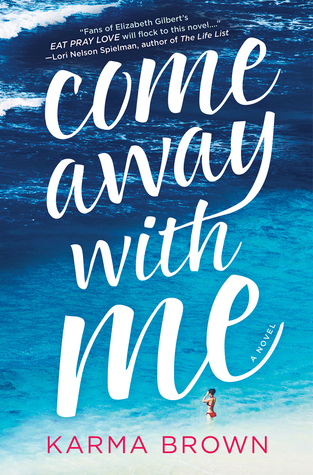 I am intrigued by questions of how people survive the seemingly unsurvivable, which was the reason I picked up Come Away With Me, Canadian writer Karma Brown’s debut novel. It’s the story of Tegan Lawson who had everything she’d ever wanted—an amazing husband and a baby on the way—when the dream is shattered by a horrific accident. Five months after the tragedy, her husband implores her to pick up the pieces of their life (and perhaps begin to forgive him for the accident, as he was driving the night it happened) by embarking on the trip of a lifetime to Thailand, Italy and Hawaii. Reluctantly, she goes, though she is not sure she’s ready (and neither are their families). And the trip itself does not prove to be the salve it might have been in a lesser novel, all of their troubles simply melting away—Tegan’s not taking her anti-depressants, she’s regularly still overcome with despair, her anger toward her husband seems impossible to let go of. And here we begin to see that this dream getaway is not the end of Tegan’s story but it’s the beginning of new one that’s vastly different than the life she’d planned on and dreamed of.
I read this book with pleasure, appreciating its light touch in particularly after spending a week carrying around the Joan Didion bio. Though it’s essential to note that my full appreciation of its remarkable structure and craft was not clear until close to the end. Until that point, I’d been putting some hollow characterization and a bit of narrative strangeness down to the fact that this was a(n otherwise capable) first novel. “I like this book, but…” I was saying to my husband yesterday. Not supposing that all this was part of an authorial sleight of hand that was so absolutely mind-blowing. By which I mean that the discerning reader should be encouraged to bear with this book: rewards will be forthcoming. You’ll see what I mean.
By rights, this book should be terrifically sad, and while I was discovered in a puddle of tears this morning by my concerned family (who wondered why I was taking even longer than usual to get out of bed), Come Away With Me leaves its reader buoyed and full of hope. In the best ways, it reminded me of Sonali Deraniyagala’s Wave and also Laurie Colwin’s Shine On Bright and Dangerous Object (which I reread this summer and absolutely adored). It’s an impressive and memorable novel celebrating life and love and the possibilities of survival.
September 4, 2015
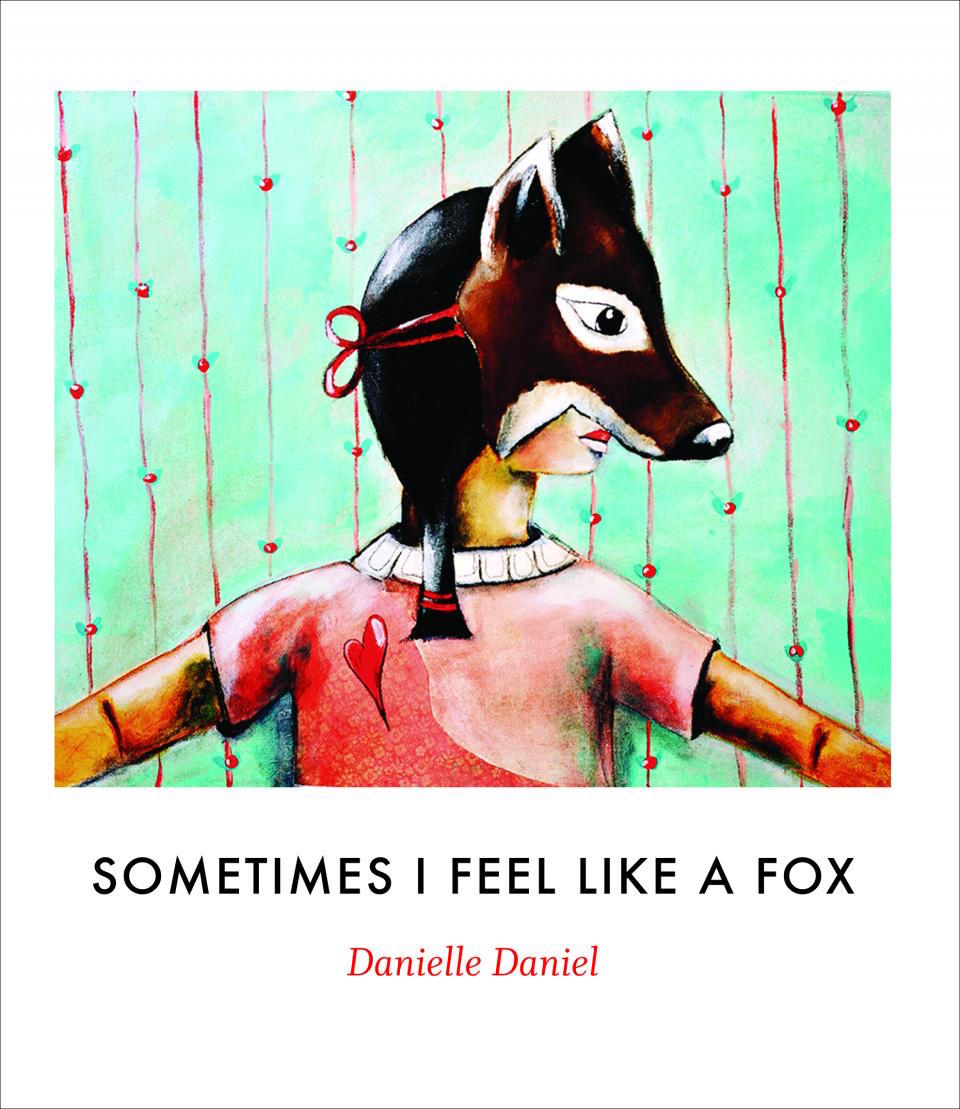
Sometimes I Feel Like a Fox, by Danielle Daniel
Today’s Picture Book Friday pick is Sometimes I Feel Like A Fox, by Danielle Daniel, a gorgeous book that my kids love whose meaning is made all the more poignant by its dedication: ““to the thousands of Metis and Aboriginal children who grew up never knowing their totem animal.” Our world is a very complicated place, but I continue to maintain that one very simple thing we can do toward reconciliation with our Metis and First Nations peoples is ensure that our children know their stories, and not just the stereotypes they encounter in so much of classic children’s lit or the “dead Indian” tropes that Thomas King presents in The Inconvenient Indian. And one thing we can do toward healing and ameliorating the status of Indigenous women in Canada is to buy their books, have their stories told. (See the list: Books by Canadian First Nations and Inuit Women.) And so to those ends, picking up a book like this is an important political act.
It’s also a most rewarding literary one.
Read my Q&A with Danielle Daniel at 49thShelf.
September 3, 2015
Meet Mitzi Bytes
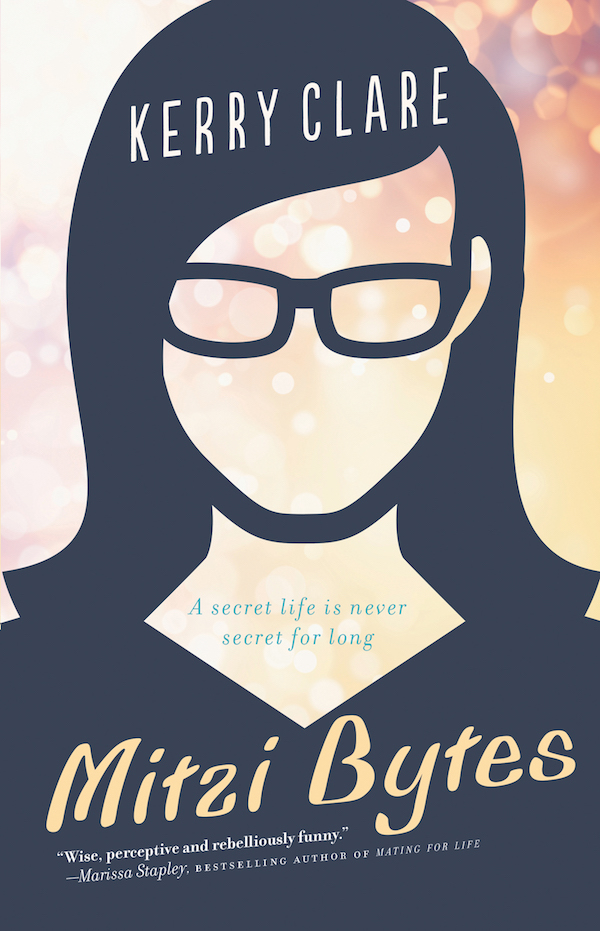
 Oh, it has been so hard for me to keep this secret for more than two months now, that my novel, Mitzi Bytes, has found a home and will be published by Harpercollins Canada in Spring 2017. I have spent the summer working on revisions that have made a book I love even better, and I’m just so thrilled in general.
The news went out today: “Canadian rights to Kerry Clare’s debut novel MITZI BYTES, a grown-up Harriet the Spy for the digital age—a novel about the perils and pleasures of living a secret life online and the risk to friendships and family when that life is revealed—to Editorial Director Jennifer Lambert of HarperCollins Canada for early 2017 by Samantha Haywood at Transatlantic Agency.”
The timing is particularly meaningful to me. Ten years ago, I started the Creative Writing Masters program at the University of Toronto with the intention of writing (and publishing?) a novel. And while I did write a novel (and learn some things, and make some excellent friends that were worth the price of tuition), the novel was not a triumph. After getting some feelers from the universe, I determined that said novel was boring and plotless. So I decided to give up on it, which is the same as “moving on,” and it was the best decision that I ever made. Because the book really wasn’t good enough, and I’d rather publish no book than a crappy one. And while there was some frustration and sadness about this (and I felt a bit left behind by colleagues who went on to publish first and second books), there is plenty else in life (and in literature!) with which one can occupy oneself. So I did. I also wrote another novel and (guess what!) that one wasn’t good enough either. And I wasn’t sure fiction writing was ever going to be my scene.
And then last summer, this idea that had been rattling around in my brain (inspired by a point in previous abandoned novel even!) finally took hold. One evening at the end of last June, I was talking about the idea with my family over dinner and there was just something to it. (That something might well have been, wait for it, PLOT. Who knew?). And then I got out of washing-up duty and sat down to start writing. In hindsight, and in foresight even, it was a terrible time to start writing a book: Harriet was home for the summer, I had other stuff on the go. But when is ever not a terrible time to start writing a book?
Around the same time, I started jogging. “Just keep going. Just keep going,” was my mantra for both. And thankfully, jogging was the thing I eventually gave up on (moved on from?), after the day I burst into tears in Queen’s Park because I hated it so much. The story, on the other hand, kept going and growing. I met my goal of writing 1000 words a day. I hit a brick wall at the end of the summer, 70,000 words but I didn’t know how to tie it all up. I am not great at writing endings. So the book was put on hold throughout autumn as I was busy with teaching and other things, and then one day in December as I was walking down the street (of course!) it occurred to me how the story could end. And then it was done. It was done, and I loved it. This, THIS, is the novel I’ve been waiting for, the book that I was meant to write, and if you’d told me a decade ago that it would take so long, I would have been devastated. But from where I stand now, it couldn’t have been more perfect.
After expert feedback from awesome readers, I worked on my second draft throughout February and March—Sunday afternoons at Robarts Library as the campus outside turned into spring. And feedback from my editor, Jennifer Lambert, showed me the way toward draft three, which I am so ridiculously pleased with and got done because I had childcare one morning a week all summer long and made the most of it. (What a pleasure to be working on fiction for which one is contractually obliged to produce. That fiction writing is top priority—this was a new one for me.) And so here we are, and there will be lots of more work ahead, but I am so excited and pleased and feel very very lucky.
I can’t wait for you to read it!
September 1, 2015
The Last Love Song
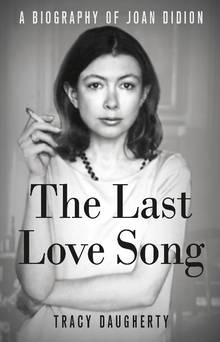 I’ve been reading The Last Love Song: A Biography of Joan Didion for nearly a week, a grand hulking book at 500+ pages. I spent Sunday afternoon in my hammock with it, and when I was finished, I’d never felt so languid. I do one day want to write an essay about Joan Didion, Mad Men, and longing. So I am inspired, even though The Last Love Song is not a particularly good biography—most of its source material is Didion’s autobiographical nonfiction, which I’ve read so many times that I know whole sentences by heart. So it’s not really illuminating. And Didion herself has made a career of being elusive, self-effacing. Also, if Didion’s brother-in-law Dominick Dunne had not been such a shameless name-dropper with a really big mouth, the author wouldn’t have much to go on. But it’s still interesting, because Didion herself is so compelling. The best parts of the book are when author Tracy Daugherty shows us how her writing works and why, dissecting her distinctive sentences. With Didion, it’s so easy to gloss over her polished surfaces and take everything at face-value that I hadn’t always read so closely. The worst parts of the book (not including the faux-Didion cadences and use of repetition and patterns) are when he tries to find autobiography in her writing itself, in which she’d always positioned herself so carefully. The mother-blaming for her daughter’s troubles is subtle but persistent, and troubling. There is nuance is Blue Nights that readers didn’t get, and I don’t think Daugherty gets it either. That Joan Didion couldn’t ever have been a mother except the mother she was. To suppose there is any other option is beside the point and not that interesting. But still, with its flaws, The Last Love Song is worthwhile and it’s good and heartening to see a female writer feted this way. Read Didion first though
August 31, 2015
The Art of Blogging starts October 5.
 My course, The Art of Blogging, starts October 5 at the University of Toronto School of Continuing Studies. Our last session was fun and inspiring, and I’m really excited about doing it again. You can learn more about my approach to teaching blogging here.
And the following is some of the feedback I received on my previous course evaluation, just to give you a sense of what you can expect from The Art of Blogging:
“I really enjoyed how Kerry tied the art of blogging to other art forms—literature, visual art, etc—and encouraged us to see blogging as part of a larger context. Was engaging and thought-provoking.”
“This course was exactly what I needed to get going with my blog.”
“A worthwhile course! I would recommend it to those who want to learn about blogging and all it encompasses.”
“Excellent! Very enjoyable learning experience.”
“I think Kerry did an excellent job of encouraging our individual voices and maintaining a respectful and productive learning environment. Loved the class—thanks, Kerry!”