October 5, 2025
The Story and Science of Hope
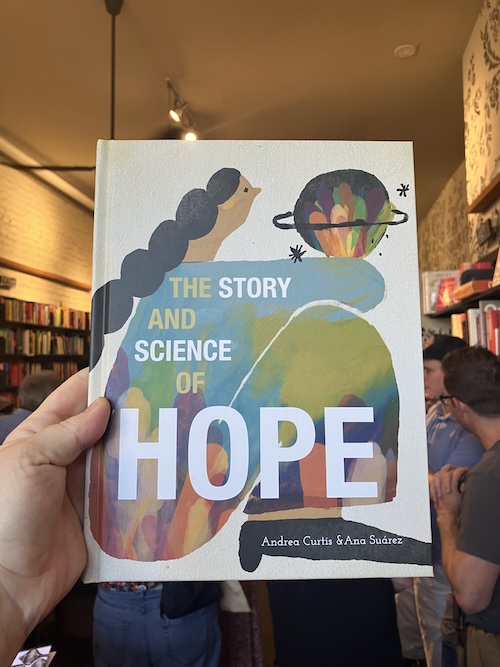
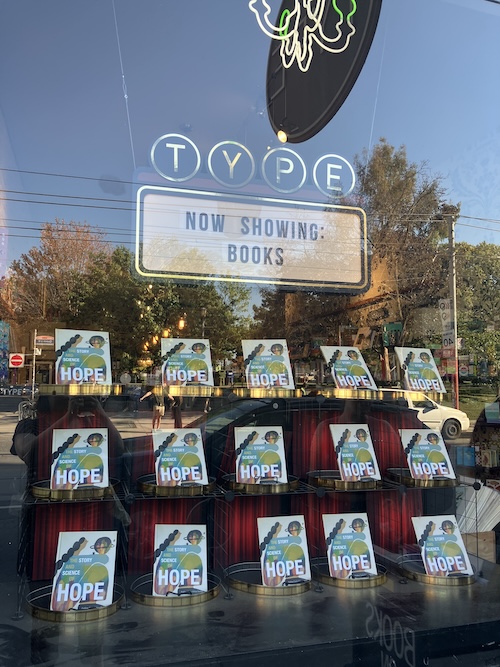
A packed house (and top tier snacks) to celebrate Andrea Curtis’s beautiful new book THE STORY AND SCIENCE OF HOPE today, a middle grade picture book for readers of all ages, out now from Groundwood Books gorgeously illustrated by Ana Suarez. Hope is the place to begin, Curtis tells us, with research backed by science to prove it. And it’s up to us to turn that hope into action, which all of us can do every single day.
October 2, 2025
Please Participate
I received an email yesterday with the subject, “Please Participate in School Council.” And you have to understand that I struggle a lot with imagining that every message on the internet is directed at me. That it took me a long time to realize that I’d been added to certain people’s email lists and wasn’t being personally invited to their art shows or poetry slams. And that I’ve not volunteered at my children’s schools for over two years now, after going all in and then losing my mind, and then after even all that, accidentally ending up organizing the alternative school’s silent auction against my will.
“I have bad news,” I said to my husband when he walked through the door,and he knew exactly what I was going to say. He’d received the email too, but it didn’t permeate his consciousness the way it did mine. He doesn’t feel the same obligation that I do to step up when asked, to partake in tedious community volunteerism, partly because gender roles, but also his psychological issues are not the same as ones that I have in which I feel personally responsible for everything in the world. (He also never needs to volunteer for anything, because he knows that eventually he’ll be roped on my behalf.)
“What would happen,” I asked him, “if I joined, but I brought my newfound understanding of ‘boundaries’ to this experience?”
Boundaries, which means I don’t have to do everything, I don’t have to save everyone, that I can be part of a group without losing a part of myself, without making the group about me.
It has been empowering to learn I can say no to things like this, that if I don’t step up, other people will, but also this can’t be the permanent solution to the problem of community. Not just because I am me, but also because I like community, I need community, I want to be part of and connected to the world.
But can I do it without losing my mind?
Stay tuned… (Hopefully not, here we go again.)
October 2, 2025
Gliff, by Ali Smith
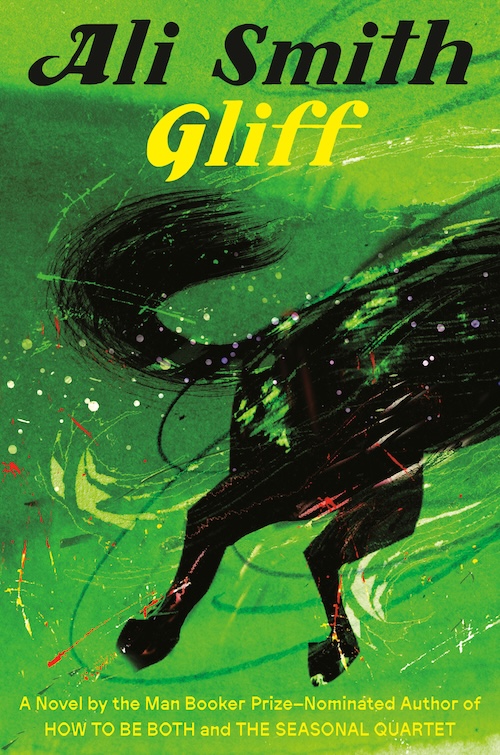
I’m not a horse person, and my Ali Smith mileage varies, so I approached her latest novel, Gliff, most tentatively, plucking it from a library display and not reading it for weeks and weeks (it’s already been renewed twice) before I finally picked it up, the description of its setting in a dystopian future not exactly a draw either. But oh, I really loved it, and read it as a extension of the Seasonal Quartet more than I did her previous novel Companion Piece, which I didn’t love as much as I’d wanted to. Gliff is the story of two siblings in a world that feels torn from contemporary headlines—masked thugs are grabbing people off the streets and throwing them into vans. Vast swaths of society are being determined as UVs, or unverifiables, red circles painted around their homes, which are then bulldozed. And to be unverifiable is to be not quite one thing or another, in all kinds of ways, involving ethnicity, religion, gender, class, and an infinite list of other distinctions. Bri and their sister are holing up in an empty home awaiting the return of their mother, which they both know is actually unlikely to happen. And in the field behind their garden are horses destined for the abattoir, and Bri is glad their sister doesn’t know that “abattoir” means. Words and their meanings (their sparkly meanings, their slippery meanings, their strange and unverifiable meanings) the engine of this novel, along with the horse(power), and also names and re-names, and the power to name oneself, to escape the boxes into which the algorithm would like to squeeze us.
Gliff might have been a heavy and depressing book, but it isn’t. It reads up quickly and breezily, and is infused by a spirit of hope and possibility, even in its darkest moments. It’s a novel about the power of refusal and resistance, about the actual smallness of tyranny. “His opponent is everywhere. His opponent is everything.”
September 29, 2025
Starry Starry Night, by Shani Mootoo
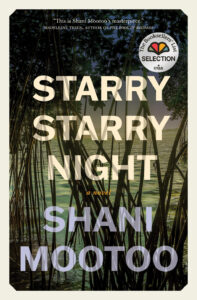
There is nothing precious or cloying about the child’s perspective at the centre of Shani Mootoo’s latest novel, Starry Starry Night, the story of a young girl emerging into consciousness in 1960s’ Trinidad. No, instead Anju’s point of view is considered as seriously as Anju herself considers the world around her, the narrative following her attempts to understand it between the ages of four and 12, which are pivotal years in her own life, but also for her country as it breaks away from the United Kingdom, becoming independent in 1962.
When we first meet Anju, she’s comfortable and indulged in the care of her Ma and Pa, her world carefully ordered, though she’s not always safe—there are male neighbours and relatives who are dangerous, though she can’t exactly articulate why. Early on, there are gaps between Anju’s grasp of her reality and what’s really going on, things that Anju can’t see or that she doesn’t want to see, for example that woman called “Mummy” whom she speaks to on the phone, who later appears with someone who is apparently Anju’s father, both of them just back from Ireland, with a little brother and sister in tow.
Starry Starry Night is a stunning example of what “show don’t tell” can do, the narrative so steeped in Anju’s perspective that the reader feels her experiences viscerally, in particular the first great trauma of her life when she’s taken from the grandmother who raised her and forced to resume her life in a household to which she never feels she belongs, and that feeling of being a misfit only intensifies as Anju grows older and finds herself resisting the gender norms inflicted on her. We also feel her confusion as she struggles to make sense of things that don’t actually make sense, such as Trindad’s racial hierarchy, the tensions in her parents’ marriage, and her mother’s feelings for her, which move between hot and cold.
I’ve never understood the point of autofiction (which I’ve always suspected is merely a device for blame-dodging) as much as I understand it with this book, which includes photographs from Mootoo’s own childhood, as well as items from her biography. One of the novel’s epigraphs is taken from Annie Ernaux’s A Girl’s Story: “…The girl in the picture is not me, but neither is she a fictional creation. There is no one else in the world I know in such vast and inexhaustible detail.” Here, such vast and inexhaustible detail serve to bring a long-gone world back to life.
PS If you liked this book, you should check out another story of 1960s’ Caribbean childhood, The Pages of the Sea, by Anne Hawk, who I interviewed for BOOKSPO last fall.
September 29, 2025
River Story
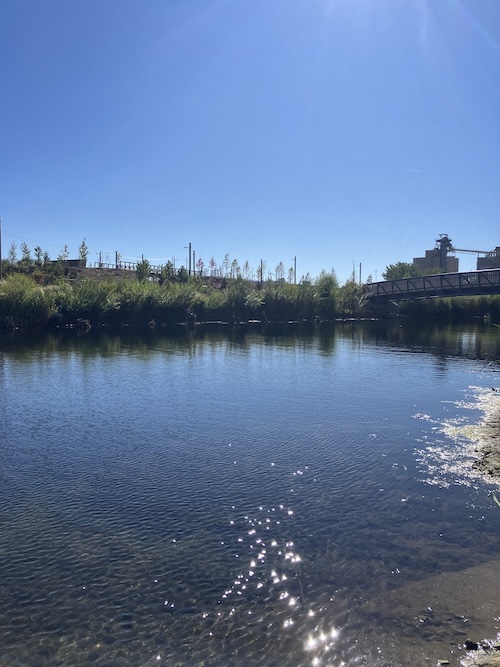
On the Queen Street bridge over the Don River in Toronto, there is inscribed the words, “this river I step in is not the river I stand in,” a phrase for which I had no frame of reference until yesterday when I dared to dip my feet in that river for the very first time. It was a moving experience, not least because of new reverence that’s resulted from the time I’ve spent this year reading river books (Theory of Water, by Leanne Betasamosake Simpson; Water Borne, by Dan Rubinstein; I think the book In Crisis, on Crisis, by James Cairns is also a river book; I still want to read Robert MacFarlane’s Is a River Alive?). But also because this river has been a vein through the body of my entire life, but I’ve never been able to get close to it. Growing up hearing stories about “The dirty Don,” catching glimpses from the subway as we cross the Danforth Viaduct, various journeys into the ravine with my kids to attempt to find it, but we never managed, and the nearest I could get was a view from the Riverdale Foot Bridge, which still wasn’t close enough.
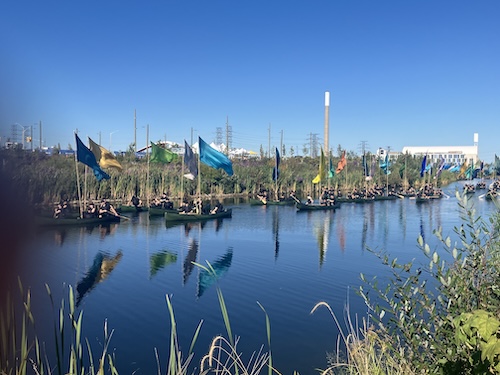
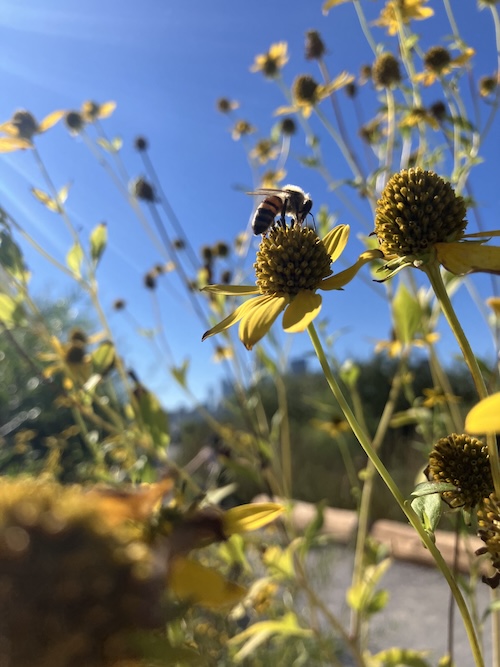
But yesterday at Biidaasige Park, which opened in July, I finally got to meet the river properly, and to celebrate its return to wildness after more than a century of being hemmed in by concrete where it meets Lake Ontario, more than 20 years of planning resulting finally paying off. Pollinators were buzzing with bees and butterflies, and the trails were lined with people who were there, like we were, for the final of four processions of “A Lake Story” that took place over the weekend, an art event by Melissa McGill, commissioned and presented by The Bentway, and performed in collaboration with Jason Logan of the Toronto Ink Company. There couldn’t have been a more gorgeous day for such a spectacle, the sky a vivid blue that reflected in the water as hundreds of volunteers paddled canoes through the park and out into Lake Ontario, each vessel equipped with a flag dyed with different natural inks from Toronto’s waterfront, an array of beautiful hues that echoed and complemented the landscape.
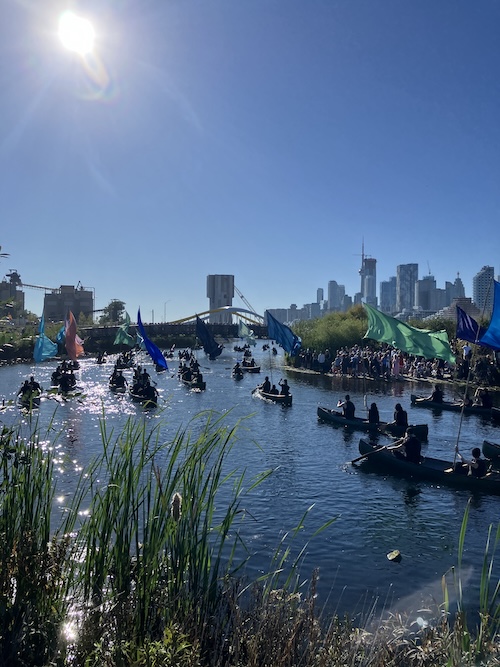
It was a spectacular event, such a beautiful afternoon, made extra magic by the Blue Jays winning the American League East title at the Sky Dome while all this was going on. And I just felt so lucky to be a character in the story of this place, which “A Lake Story” had us thinking about so deeply. At a moment when declarations of “the world’s burning” are so ubiquitous that I don’t even hear them anymore, it seemed incredible to be paying attention to a different kind of narrative, to be here as a witness as the Don River is returned to life and to wildness. To remember what humanity is capable of when people work together and listen to wisdom of the natural world.
September 24, 2025
Hearts, by Hilma Wolitzer
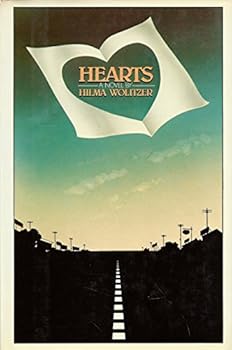
I learned about Hearts, by Hilma Wolitzer (mother of Meg!), from a in the New York Times piece this summer on “18 Great Road Trip Books That Aren’t ‘On the Road’”, a feature that must have been a little inspired by The Road to Tender Hearts, by Annie Hartnett, one of my top reads of the season. The piece recommended Hearts for fans of Tiger Eyes, by Judy Blume; Fun Home, by Alison Bechdel; the work of Laurie Colwin. SIGN. ME. UP. Except then Wolitzer’s 1980 novel proved hard to come by, out of print, unavailable at the library. (You can buy it as an ebook though!) I ended up purchasing a secondhand copy from Alibris.com, springing a couple of bucks more for the hardcover “in good condition,” and am I ever glad I did, because it’s a First Edition, impeccably typeset, that COVER, and it’s a book I’m going to be cherishing for a really long time.
Hearts is the story of Linda Reissman, a dance teacher suddenly widowed from her husband of only six weeks who has to overcome her fear of driving in order to deliver her sullen 13-year-old stepdaughter, Robin, from their former home in New Jersey to her father’s relatives in Iowa, and who, along the journey, discovers she is pregnant. Linda is just 27, and has never—metaphorically or otherwise—occupied the driver’s seat in her own life. Once she’s dropped Robin off, she has vague dreams of arriving in California, but everything else about her future is still undefined, her pregnancy putting all that possibility into jeopardy.
It’s remarkable to be reading this novel now at a moment in which Linda’s abortion in Iowa would be illegal. While it’s devastating to consider just how far we’ve regressed in the 45 years since Hearts was first published, how much American women have lost, I suspect that Wolitzer is not completely surprised, because the signs of the unmaking progress are already there in 1980, less than a decade after Roe vs. Wade. The abortion clinic is swarmed by furious protesters, and a terrible act of violence takes place during Linda’s procedure. The law might be settled, but the people are not.
Hearts is set during a weird time in America that has strong parallels to right now, in addition to the abortion issue—the economy is a mess, oil prices are wild, the Middle East is in crisis. And this—along with Howard Johnsons and motel pools—is the backdrop as Linda and Robin undertake their journey, getting to something particular about the moment, but something essential too about the American Dream, and what it promises to women. Neither of them is especially prone to drama, and they spend a lot of their journey not talking, the narrative brisk and even, moving between their different perspectives, underlining how much they each get wrong about the other, and showing them growing closer as they make their way.
I loved this book, whose story felt as fresh and pristine as my gorgeous first edition, the kind of book I looked forward to picking up again all day once I’d started reading, a double coming-of-age story about womanhood and chosen family, funny, poignant, and real.
September 24, 2025
Gleanings
- “You don’t get the wisdom before you’ve lived it, you don’t get to jump ahead and think you can know all there is to know!”
- But is there a “there” there? Isn’t that old saying true, that the grass really IS greener? Wherever you go, whatever mountain you summit, you get a new view—a new destination, even if it’s not a higher mountain. Just, you know, more road. Someplace you’d rather be.
- In spite of everything or because of it, to be splendid, to not squander our gifts, to keep our joy, to use our imagination, to live urgently enchanted, to share poetic excellence, to practice our practice, to love and be wholehearted and divinely blissfully stupidly human — this is our task.
- What we really need to do, instead of switching off, is to find ways to care and stay tuned in. We need to manage this tuned-in newsy flow sensibly, while still hanging onto our health and (general) happiness and warding off overwhelm. I think we’re all grappling with this.
- The key, it seems to me, is to focus on shaping a life that you love and feel is a good-faith effort towards responding with urgency and congruency to the times we are living in, but not getting lost in the details or a sort of brittle perfectionism that ultimately alienates you from others, and even you from yourself.
- I know, I know. When you hear hoofbeats, think horses, not zebras. Look around, use logic. I know. But I went straight to zebras; I always go straight to zebras. I thought, THERE IS A GHOST IN HERE AND IT THREW MY GUITAR ON THE FLOOR.
- I happily left almost ten years ago and did the (hardest) work to entrench myself in a new place, in the same ways because I always had the feeling I needed to keep moving forward. It’s a hard thing to explain, but I had the sense I wasn’t finished growing and I needed a bigger pot, so each opportunity that came to move to one, I took it.
- Looking “away” from “news” on social media does not mean you’re “burying your head in the sand.” It means you’re engaging with human beings instead of road-raging avatars.
- There are four of us in this relationship, a kind of wild alchemy with no one in total control. And the outcome can be glorious and disastrous.
- This wasn’t community service. It was me getting high off the rush of being the useful expert, of being helpful to strangers on the internet, like the service writer/editor I once was. The very overfunctioning “I can help” behaviour that landed me on leave in the first place, now dressed up as “community care.”
- Time to pull out the winter blankets, the warm coats, though the sun is shining. How cold the water was as I swam my lengths, arms reaching forward, then back, my torso not quite straight. One of my last.
- Today, I’m distracted and very very tired. I hate this predictive text — in very faint letters, if I’m not typing at max speed or if the word is long, some AI program embedded in this app will add in the letters that it believes should finish my word or thought. And mostly it’s wrong! Even when it’s right, I perversely (personally, it just wrote!!!) want to write something different, original. I need to turn this feature off. It is not serving me or my imagination.
September 22, 2025
Bad Indians Book Club, by Patty Krawec
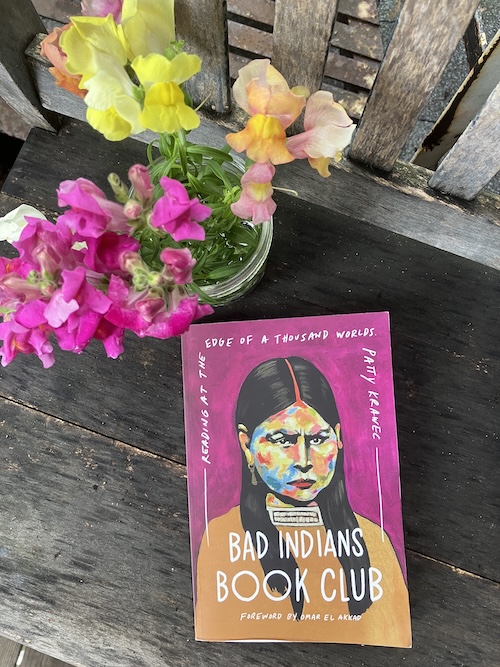
The moment of hideous social backlash which we’re all enduring right now is evidence of how furiously and violently some people cling to white supremacy and the colonial systems upon which this country and so many others were built, which only underlines the subversiveness of a book like Patty Krawec’s Bad Indians Book Club, a book that centres writers whose stories usually are told on the margins. It is a book that was born of a question, and then conversations that turned into a podcast, and as a result, the narrative is rich with connections—between writers, between readers, between books themselves—as Krawec maps a year of reading. “Rather than allowing us to stand on what we think is the stable ground of a singular expert, reading many books draws us into the mashkiig—the swamp—where the ideas in one book layer with the ideas in another.” She goes on to write, “Even if the centre of influence is one that we have come to respect and admire, the borderlands—or places where the influence of that centre extends and then layers with others—brings us to new ways of thinking and to possibly the creation of new centres.”
Krawac, who is an Anishnaabe/Ukrainian writer belonging to the Lac Seul First Nation who grew up in southern Ontario, writes about connecting with her Native family and ancestry in the 1990s, these connections informed by her ideas about Good Indians and Bad Indians, as understood by Hollywood films: “Good Indians: those who rescue white heroes so that they can in turn be saved. And…Bad Indians..: those who refuse to be rescued or to be saved themselves.” And over time, she can to be drawn to the Bad Indians who, she writes, “…offered me a vision of new worlds being born—worlds rooted in differences that bring balance and life , not differences that play out in hierarchies and power.” The first rule of Bad Indians Book Club, according to Krawec? “Always carry a book.”
And thus begins a journey into the wonders of reading, the questions books raise, and the connections we can make between stories—and between each other. Krawec refers to books by Indigenous, Black, and Jewish writers, and those by writers of other usually marginalized communities to construct a network of overlapping concerns and understanding, stories that inform each other, with characters like Nanaboozhoo and Ananzi. She refers to the books and writers from her podcast, and the panellists that presented those works, and supplements these with books that have occurred to her since the original conversations (including works as recent as Leanne Betasamoske Simpson’s Theory of Water, which just came out this spring, and which helped inspire her idea of writing from the mashkiig). As with the stories Krawec writes about, her narrative is more cyclical than linear, more layered than straightforward, as she organizes her Bad Indians reading list into themes—books about beginnings, about history, memoir, nonfiction, horror books, and speculative fiction.
How do we imagine a world that de-centres whiteness and colonialism? With kindness, humour, thoughtfulness, and curiosity (as well as acknowledgement that nobody will ever get it right all the time), Krawec shows the way, her citations an example of gratitude and generosity. I loved the way she cites writers’ racial and cultural identities when she refers them (because these things are central to people’s experience) all the while underlining how these identities can also be points of connection as we learn from and listen to each other instead of rigid lines of division.
As you might expect from a text that’s inspired by mashkiig, Bad Indians Book Club can be a dense read, thick with ideas and meaning, and it doesn’t read up quick, but you won’t want it to. It’s a book to be savoured and experienced, returned to again to let it change you, and for those of us with a bookish bent, reading it is a rich and wondrous pleasure.
September 18, 2025
Vic Book Sale 2025
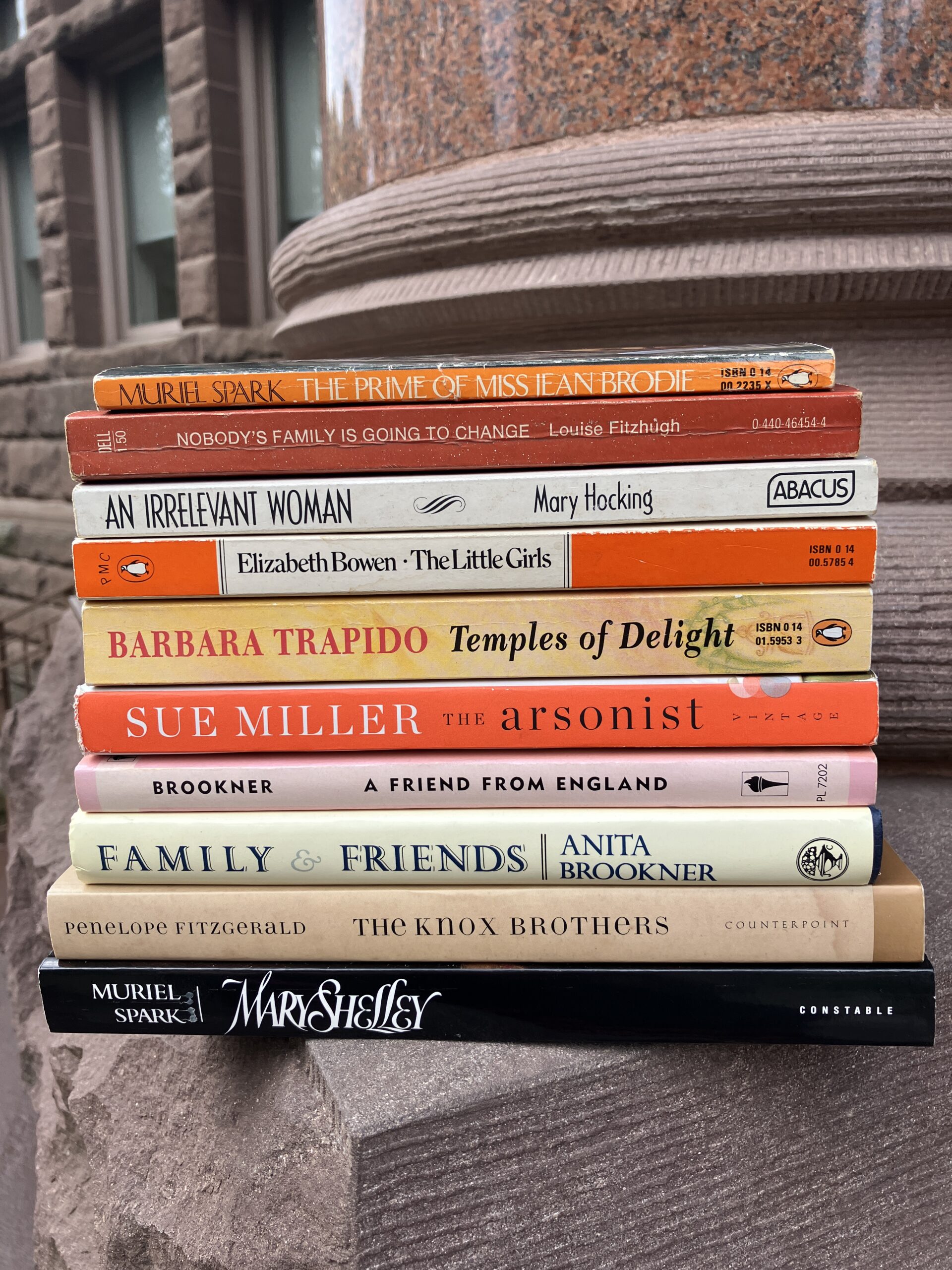
Another year, another stack from the Victoria College Book Sale. Which was wonderful, but HOT and crowded, and I was very tired, and also nostalgic for the days when I had not yet acquired all the books by beloved authors like Margaret Drabble and Penelope Lively, when the pickings seemed easy. But that’s what makes it all the more miraculous to discover gems like the last remaining Sue Miller novel I have yet to read, and also Barbara Trapido (whose novels don’t turn up much in Canada). And a very hard-to-find Louise Fitzhugh novel, which is not a novel without problems, but any Louise Fitzhugh book is worth my time (I read a library copy years ago). Penelope Fitzgerald’s bio of her father and his brothers! Muriel Spark on Mary Shelley (WHAT???). A couple of Anita Brooker’s (one first edition!), an Elizabeth Bowen, and one more by Mary Hocking, whom I’ve read once before and I’m not completely sure I’m on board but we shall see…
September 17, 2025
Heads Up
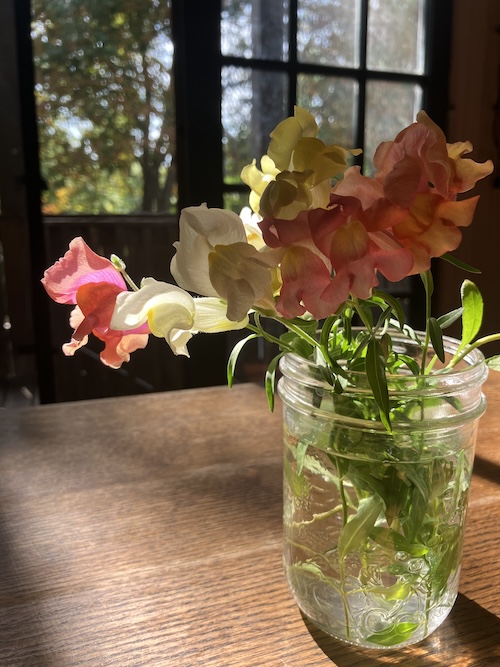
Summer’s on its way out the door, but the sunshine is returning to my south-facing kitchen table. And the snapdragons continue to bloom.