June 20, 2016
Things To Be Grateful For
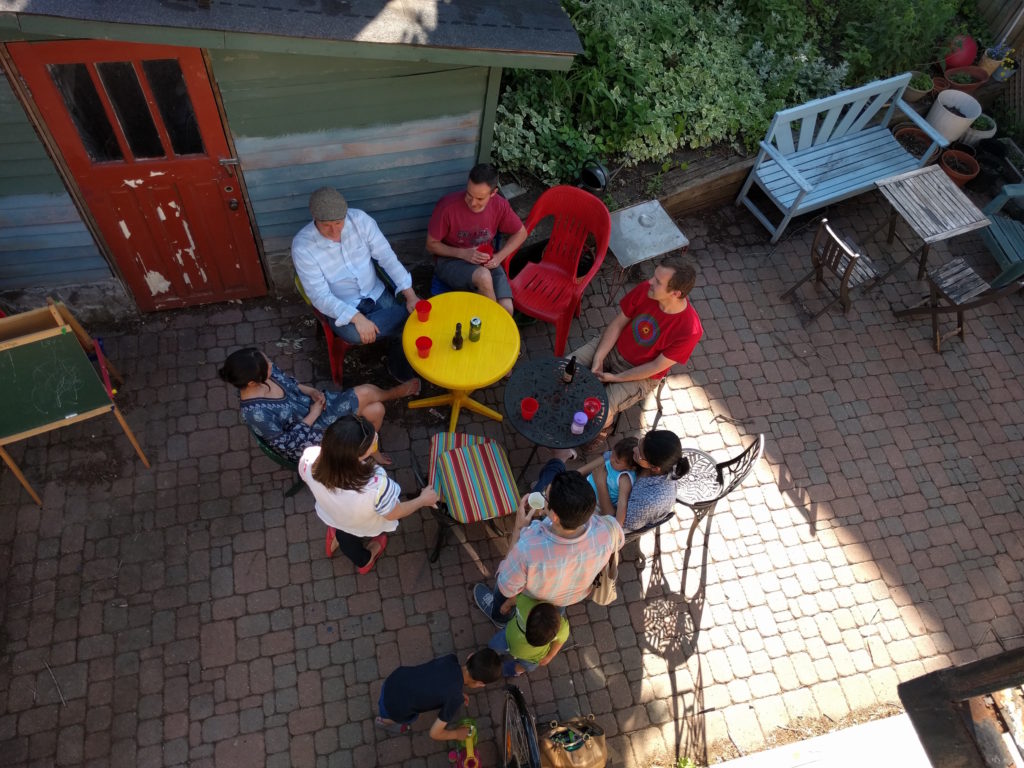
1. On Thursday night, I emailed good friends in the neighbourhood and told them I was feeling spiritually disheartened. “What would really make me feel better,” I wrote, “would be if you came over and drank beer in my backyard tomorrow night and ate pizza.” That I have good friends in my neighbourhood to whom I can make such requests is something to be grateful for. That everyone said yes is another, and they all rolled up the next evening, their children in tow, and we drank far too much in our beautiful backyard under the shade of the majestic silver maple (which is actually a character in my novel, by the way). It was a perfectly wonderful evening underlining our family’s enormous wealth in terms of friendship. Which is the greatest kind of wealth a person could ever hope for.
2. I am grateful to Maggie Smith’s poem, “Good Bones”, which I read around the table on Friday night (either before or after I started singing a karaoke version of “How Will I Know?” on my phone. I cannot recall exactly). I am grateful that such a poem exists, and that it went viral, and that poems go viral at all. A neat thing is that tomorrow signed broadsheets of the poem go on sale with a portion of proceeds going towards a group supporting LGBTQ youth in Orlando. I think details will probably be here.
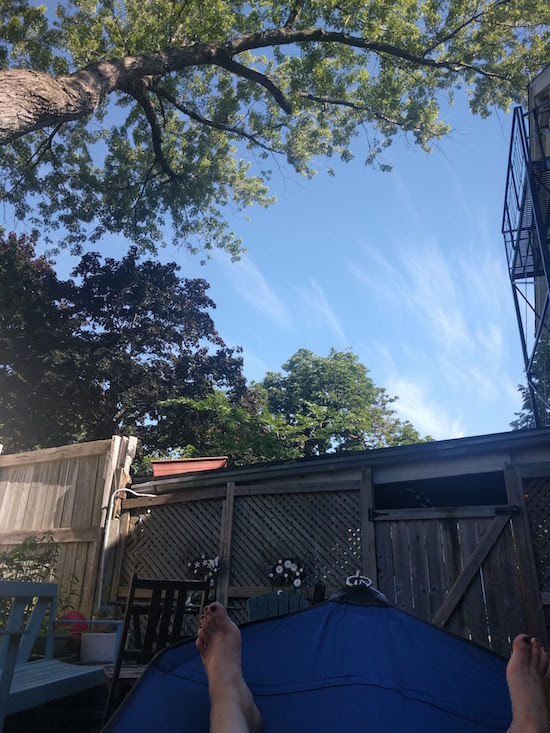
3. I am grateful for a Saturday spent hungover but not painfully so, when I got to read two whole newspapers and Amy Jones’ novel in my hammock.
4. I am grateful to be able to celebrate 11 years of marriage with my excellent husband, who I like and love so much more than I did on our wedding day, and I was certainly fond of him them. I feel so blessed for all the time we’ve had together and the history we’ve created, and I look forward to the future and all the time ahead…and it will never be enough.
5. I am grateful that when our littlest daughter threw up in the restaurant at Father’s Day Brunch, she did so fairly discreetly and that we were able to get the food packaged to go. And that even though Father’s Day really did totally suck, that my children’s father didn’t sulk as much about that as I might have in his shoes. I am also grateful that I have learned to be a better partner by thinking about the hypothetical ways he’d support me in a given situation and sending such support his way. I like that he makes me a better person.
6. I am grateful that no one has vomited on me since 4am this morning. And that when Iris stayed home from school today, she spent the whole day sleeping and I got so much work done I wouldn’t have done other circumstances and she woke up feeling better. We’re hoping for a better night’s sleep tonight.
7. I am grateful for the thoughtfulness of blogs. I am so grateful for Rebecca Woolf, Shawna Lemay, Sarah from Edge of Evening, and Lindy Mechefske, and so many others… I think that the thoughtfulness and nuance implicit to blogging have never been more urgent (and if you write a post with tips about engaging with brands, I will unfollow you).
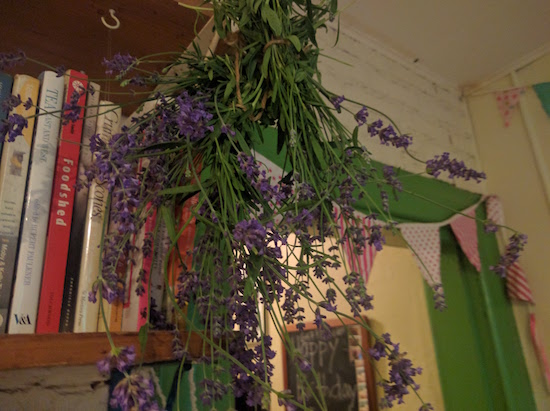
8. I am grateful there is such a thing as lavender. And fifteen ways to use it.
9. I am grateful for the news clip I heard tonight on As It Happens as British MP Rachel Reeves delivered a tribute to her murdered colleague, Jo Cox, and talked about the woman she’d encountered in a coffee shop this week who’d said she’d never met Cox but that learning about her life made her want to be a better person. I imagine that sentiment is widely shared. I think this is excellent and true.
10. And finally, I am grateful that the heat of the day has finally broken, and for the fresh breeze drifting through the window right now.
June 19, 2016
We’re All In This Together, by Amy Jones
 I’ve been having trouble focussing lately on the books I’ve been reading, and I’ve not been sure if the problem has been the books or my lack of focus…or a combination of both? I was hoping for a diversion, however, when I picked up Amy Jones’ debut novel, We’re All In This Together, which became a bestseller when it was published last week. You might remember Jones from her first book, the short story collection What Boys Like—and my interview with her from around that time is really wonderful to read again all these years later. (I recall spending ages transcribing it and then I pretty much never did an actual spoken-word interview ever again. Which is definitely too bad, but not entirely for my mental health.) The novel has received fantastic reviews and I’ve been looking forward to it, although when I first started reading I wasn’t convinced it was going to take. It’s a set-up similar, I thought, to books I’ve read before, books like The Corrections and even Angela Flournoy’s recent The Turner House. A dysfunctional family saga, a prodigal child returning home at a point of crisis. In this case it’s Finn Parker who’s been called back to her hometown of Thunder Bay because her mother’s just ended up in a coma after going over Kakabeka Falls in a barrel—a barrel pilfered from Finn’s brother-in-law’s bootlegging business, no less. So yes, this is not just like another book I’ve read before, but still, it took a bit of reading for the narrative to be properly distinguished.
As I’ve said, part of this is my problem. I haven’t had time to sit down with any book lately and give it the full attention it deserves, entire afternoons to curl up in. Part of the problem also is that the novel begins with characters who are painfully alienated from the worlds around them—Finn has run away from home and has nothing to show for it, living in a boring house in a boring suburb with no friends or other relationships. Her only real companion is a dog she has to borrow from a neighbour. And then we meet Katriina, who is married to Finn’s adopted brother Shawn, but similar to Finn is emotionally estranged from her surroundings. Both these characters are in contrast to Finn’s twin sister Nicki, who is wholly enmeshed in the world, living as she does with her parents (along with her four children from three different fathers, the last of whom happened to be Finn’s boyfriend at the time). The chapters in the book alternate between various characters’ points of view, highlighting the way that even the closest of families can be fundamentally unknown to each other—and these narratives overlap in a really intriguing manner so that we get to see the same moment from a different perspective more than a few times, to really powerful effect.
The novel is conscious of itself as the kind of story we’re familiar with. Nearly every character at least once or twice thinks, “If this was a movie I’d…” and then proceeds to do the opposite, which starts to get a bit overdone…and yet. There comes a point—and for me this was when we finally get a sense of the story from the Parker matriarch, Kate, whose waterfall plunge has gone viral online and has been declared “The Conquerer of Kakabeka,” when we finally get the story from her point of view—when all these familiar pieces begin to be assembled into something unexpected, deeper and more substantial than the novel’s initial lightness and formula may have suggested. Which is entirely fitting actually because there is something very wrong with Kate, something that drove to ride over the falls in a barrel, and in the midst of her decline over the years, the family has been falling apart all around her. She is her family’s lynchpin as she is too the lynchpin to the book, and with her story, finally the threads—Finn, Katriina, Shawn, Nicki, Nicki’s daughter London (who’s determined to run away to Duluth, Minnesota, to meet a celebrity marine biologist she’s fallen in love in on the internet), and Finn and Nicki’s distant father Walter—all come together to create a richly detailed tapestry, a story that proves the line about no two unhappy families being alike, because while we may have encountered dysfunctional families in books, we’ve never met the Parkers.
It wasn’t too long before I was so totally hooked, and grateful to be reading again, to be fully immersed in a story. There is everything here—sharks, Guns and Roses, a bar brawl, geology, Scrabble, Lake Superior, Paris, pancakes, raw beef, boats, betrayal, sex and destiny. And what is most remarkable about these characters, in addition to their depth, was how they surprised me, and also how Jones does a fantastic job of showing each one at his or her worst and yet invoking our sympathy at the very same time. Nicki in particular is a force of nature, and Jones does a stunning job with this complex, erratic and absolutely, painfully understandable character. I wish Finn had been able to have some similar agency in her own experience, although her own revelation at the end of the novel was that she may have a boring life, but it’s her boring life—no small achievement. Even the more minor characters are just as richly realized, even those who aren’t accorded their own chapters (oh, and every character with a chapter comes with his or her own hazard sign to head it. It’s wonderful.)
By the end of this 400+ page novel, I was only sorry that it wasn’t longer. Which is not to say that the ending, of course, wasn’t exactly right.
June 16, 2016
On Process, and Progress, and Living in the World

When Princess Diana died in 1997, I was on Weight Watchers and watched the funeral coverage for hours at a time whilst weeping and riding an exercise bike. I know that feeling things is very important, but will forever be grateful that I ended up married to an English person who taught me the value of composure. Remember how Joni Mitchell taught Emma Thompson in Love Actually how to feel? It was my cold hearted English husband who taught me the opposite, how not to spend weeks at a time weeping on an exercise bike over the death of a stranger. That drama comes around in time, and we don’t necessarily have to go out and court it. (While I am only being partly sardonic here, full disclosure necessitates that my husband’s is the warmest heart I know. I also know that learning to feel for many people is a ticket to sanity, but for me, some restraint was certainly in order. For most of us anyway, it ends up being a balance.)
Which doesn’t entirely relate to my next point, but alas. Which is that this has been the most distressing week I’ve encountered in a a long time, a cumulation of world events and my hormones, I’m sure, but I feel the weight of it all in a way I’m usually more adept at shouldering. Orlando, Stanford rapists, UofT’s lockdown, so much hatred and anger. Also, and this sounds shallow but it’s not, Instagram is ruined for me, changed in the last few days, and now full of ads and posts not in order, and I miss its goodness, the immediacy of the engagement. I really have found Instagram good for the soul, and feel like I’ve lost something. I’ve been driven back to Twitter, which is not good for the soul, although I actually had tears spring into my eyes this morning when I saw #OCanada trending and learned that MPs had in fact changed the lyrics to our national anthem, against the fervent efforts of many to uphold the supposed inclusiveness of the word “sons.” (Possibly yes, “sons” was a general term, back when women had no status, and the language reflected that. Further, “all our sons command” was not even the original lyric, so it’s not like historical preservation is order of the day. I taught my daughter to sing “in all of US” when she was very small, because she is a daughter and nobody’s son, and I think that if we continue to insist that things a national anthem matter, then at least we should make its lyrics meaningful.)
Anyway, when I clicked on the trending term, I found one woman declaring that she will never sing the gender inclusive Oh Canada. “Why not?” I asked her, because the resistance is baffling to me. She explained that she is “not one to bend or sway” (why is rigidity a virtue, I ask myself again and again. What kind of a person never entertains the notion of changing her mind?) when someone finds something offensive and also that the “son” in the lyric is actually Jesus, and we can’t “gender neutralize” him. And I just really didn’t know where to go from there. Her argument is founded on not only nonsense (surely we are not commanding “true patriot love” from Jesus; I’m not sure we’re meant to command anything from Jesus at all, never mind, why is Jesus in our national anthem anyway, except he’s not) but a rejected stand against empathy (refusing to try to understand when someone is bothered by something she’s okay with, to see that another point of view might be as worth considering as her own, even if it’s a different one). Anyway, it’s exhausting. She can sing her song and I’ll sing mine, but it’s worth noting that I was curious about understanding her point of view while she was categorizing the people calling for the lyric change as “wimps.” Which is pretty much where we left things.
And then I read that British MP Jo Cox had been critically injured by someone reportedly shouting slogans regarding the British referendum. And when I heard about that, it took me back to my post from Monday about politicians spouting divisive and dangerous rhetoric with so little regard about the license their words gives some unstable people in our society to go out and commit horrifying acts of violence. I also read Jia Tolentino’s interview with a woman who has recently had an abortion at 32 weeks, a really sad, hard read but an essential one, particular for those people who have no idea what the reality is behind “late term abortion.” As I tweeted afterwards, I am so grateful for these women who share their sad and terrible stories, and I am so sorry they have to and are not left alone to grieve their tragedies. That these woman must make themselves so incredibly vulnerable to prove a point to people who are completely ignorant and full of hatred. It is very easy for women like me to share our simple, painless and uncomplicated stories of abortion, and I only continue to do so because life is rarely so simple or complicated, as Tolentio’s piece makes clear. The most tremendous part of the interview is when the woman says: “Like it or not, all of our rights are intertwined. Maybe there’s some woman who has had four abortions and maybe that feels really wrong to you. But my rights are wrapped up with hers, so I have to fight like fuck for her to have as many as she wants—not just for her sake, but for mine, too.”
I hate that there are people making this, people’s pain, into a fight. We’ve all got better things to do than fight. We’ve got lives to live. And now Jo Cox has died, which is so devastating, all that it stands for, especially in terms of women in politics. I can’t stop making everything about gender, because everything is about gender.
There was a story in the news this morning about a Catholic school trustee who has finally around to the province’s new sec-ed curriculum after a revelation that her own son had been abused as a child, that perhaps it is necessary to reframe the way that sex and sexuality are discussed. While it is irritating once again to have somebody celebrated for realizing what seems blatantly obvious to many of us (see Tabatha Southey on Michael Coren), I think it’s good when a public figure is celebrated rather than denigrated for changing her mind (which is not to say that changing one’s mind puts one above scrutiny. I still think it’s rather too convenient when a politician rejects a previously controversial stance, and wonder why we’d want anybody in power who’d ever held those views).
This is, the changing of minds, is of course, the thing called progress, which is not as simple as I once thought it was—an arrow pointing forward, things getting better and better. The last fifteen years have certainly underlined that this is not the case, and that progress is not our inevitable direction. “Progressivism” isn’t even really a thing, as it is peopled by people who seems to understand themselves as its embodiment and are unaware that their own progress too has to be part of the process. It’s a process of self-examination, of being open to changing, to growing, to learning something new. It’s about bending and swaying, and learning from each other, learning how to work together. It’s collaborative, but it’s also not meaningful unless it’s intensely personal. The line that struck me from the Guardian’s Jo Cox editorial: “What nobler vision can there be than that of a society where people can be comfortable in their difference?”
I have learned so much about the world by thinking hard about blogging, and that last point makes me think about what May Friedman writes about the blogosphere(s) as a radical space “because of the implications of all these narratives coexisting, and the endless unspooling dialogue that therefore emerges.” Blogging too has taught me about how to embrace process rather than looking to an endpoint, because the complexity of the world means that progress is never fixed, that it’s not a place to arrive at. Instead it is the way that we figure out how to travel through.
June 13, 2016
On Violence, Power, Politics, and Faith

I dropped my children at their schools this morning, and then had a meeting at the bank that got cancelled at the last minute, and so I had a half hour to kill at Starbucks while I prepared for a presentation on blogging that I was giving downtown at 11. When I left and started walking down Bloor Street, I noticed that Queen’s Park Crescent was blocked off by police cars and that the museum was surrounded by crowds who should have been inside the building. As I walked towards the Yonge Subway and went into some shops, I overheard people talking and wondering what was happening at the ROM. I was able to use WiFi at the subway station, and found out that the ROM was under lockdown, and so was much of the university campus, and the parliament buildings south of there. I was thinking about these buildings and how I knew people inside many of them, and I was worried and scared. Thinking about what happened in Orlando yesterday, the person on Twitter who’d confessed she felt hurt by the people who’d been able to go about in the world yesterday as though it was an ordinary day. How I’d confessed last night that I just can’t be devastated every time there is a mass shooting anymore, not because it’s not devastating, but because a person can only fall apart at peripheral events so many times before it all becomes rote. Because it’s exhausting. And then now here it is, fear and paranoia knocking at my door. My ignorance at imagining any of can achieve a distance from such things. (Until we’re all safe, none of us are safe.)
Although in actuality, we are pretty safe. From all accounts, police are acting on suspicions and no violence has occurred, and everything will probably be totally all right. It reminds me of September 11, 2001 when the UofT Faculty of Law (where today’s situation seems to centre) was on lockdown because of a bomb threat. It’s true that nothing often happens here, but this doesn’t mean we can’t be melodramatic about the possibility. These lockdowns (which have affected my kids’ schools—which hurts my heart, but also means that their schools remain safe places in a world that isn’t always so) are procedures that suggest there are systems here that are working, and I am sure that there are so many instances of people all over the place taking care of each other, as we do. People checking in with loved ones as I checked in with people this morning. (My husband’s office is also on lockdown, which means he picked a darn fine day to be working from home.)
I read a tweet shortly before my presentation that said someone had been arrested and I assumed from that that the situation had ended. (It hasn’t, but still…) Which was good, because I meant that I didn’t spend my presentation feeling like I was going to throw up. And then I switched on and talked about blogs and blogging, and the importance of room to wander and get lost in, and how the blogger must dare to be wrong sometimes, to even speak out of turn.
The group I was speaking to was political, and I knew that the stakes were different for them than they were for my own blog. But I think the same guidelines do apply, and that surely there is a possibility that a person can be human and political at once. Although I had an interesting question afterwards, about how blogs can be read out of context and used against someone for political reasons, as so many tweets were in the recent federal election, you know, the one with the guy who peed in a cup. I know I will never run for office, not just because I am short on charm, but also because somewhere in the depths of twitter archives, there lies a joke I made once…or twice..about a list of people I’d like to late-term abort. (Some people don’t think this is funny. What is the world coming to?) I did reply by stating that blogs at least offer the possibility of nuance that a 140 character limit does not. And that this question too is why we have to be really thoughtful in our blogging. There was a question too about the blog’s meta-narrative that gives the big picture, post after post, and how most readers don’t engage with blogs on that level anymore—and is the fault then with the reader who misses with the point or with the blogger who misunderstands how people are engaging her work, who is relying on archaic notions of what a blog reader is.
Interesting questions to which I don’t have answers…which is fine because this was a forum in which we were underlying the importance of asking questions without answers, of making process part of a product. But as I went home afterwards, and starting looking at newsfeed and twitter again and realizing that things were still fraught in my neighbourhood, it had me considering (and not for the first time) the nature of politics. It had me thinking about a man I walked past on an ordinary morning a few months ago, the type of person who is agitated and muttering into the air, and how what I heard him say that morning was, “I’m going to k*ll [our premier], that f*cking l*sbian.” And about how politicians practicing divisiveness and power-mongering via playing on people’s fears and anger don’t really understand the consequences of the game they’re playing. That they don’t exist in a vacuum and stoking those fires of fear and anger and injustice for short-term gain trickles down to influence the behaviour of people who are teetering on the edge of something dangerous. It’s the kind of thing that’s inevitable in a system in which elections have “war rooms” and parliamentary parties are literally regarded as being in opposition when in reality the project should be collaborative. The kind of system in which someone will spend days going through twitter archives in order to find something offensive a person tweeted in 2011 and use it to force them to resign. All the feigned outrage, as though there was really anything offensive about that. (Though it’s true that 2011 was not so long ago. The Ontario PC leader Patrick Brown still thought he could legislate the goings-on of my uterus AND thought it was his business to have an opinion on whether or not gay people should be able to marry.)
I think a lot about Patrick Finn’s book, Creative Condition: Replacing Critical Thinking With Creativity—you can read an excerpt from the chapter that’s applicable to politics here. From that passage:
The repercussions of critical thinking are visible everywhere. The financiers who nearly bankrupted the world economy were trained as critical thinkers. They were expert competitors who knew how to present their ideas in the most persuasive ways possible. They also knew how to fend off competing arguments when their practices were questioned. If community rather than rhetorical rivalry were at the centre of our education, perhaps they would have felt a greater need to respond directly to those who questioned the house of cards they were building.
Governments certainly do not need more critical thinkers. In Canada where I live, every year, big yellow school buses roll up to the parliament buildings in Ottawa. The children on the field trip step down with their backpacks and brown-bag lunches and are given an orientation session. Part of that session involves the teachers and organizers instructing the children to behave themselves while in the viewing area. Another involves a detailed explanation of why the people they see will be fighting, yelling, and insulting one another. The children are told that this is how high-level politics is conducted—that this is what civilized governance looks like.
 The problem is not simply D*n*ld Tr*mp (although he is certainly a problem and a half in particular), and the problem isn’t even just America, but instead it’s a system that allows people to get ahead in politics by the virtues of building absolutely nothing except walls, and these on the backs of peoples’ fear and anger. We saw the very worst of it last fall during the election when the whole country seemed to go totally bonkers, and Conservatives rolled out their Barbaric Practices Hotline, and I still can’t fathom how the members of that government are able to look in the mirror these days let alone think themselves be accorded any moral high ground, that we’d actually feel good that these are people working to keep the current government in check. People so desperate to be in power that they’d lower themselves to ideas that start eroding who we are as a people, that take away the best parts of who we are. People so desperate for power that they’d rather rule a wasteland than rule nothing at all.
I have a lot of faith in the world, in people. I’m becoming better practiced at understanding the troublemakers and the shit-disturbers as the people who keep life “interesting.” And understanding that “interesting” is a good thing, a human thing. In my blog presentations, I talk a lot about imperfectionism and messiness and my understanding of the virtues of these ideas extends beyond the blog and into the world as well. Interesting is the best parts of the world along with the worst, and it’s our job to figure out how to live well in the midst of all that. The understand that we all have a role to play in creating a better us, a better world, and living consciously and thoughtfully—and that those with power have to be even more thoughtful than the rest of us. The stakes are so high.
It’s really easy to make fun of Justin Trudeau, to be exasperated by him. To roll your eyes at the idea of “Sunny Ways.” (I like Justin Trudeau, but I am still confused about why he opened his father’s eulogy with, “Friends, Romans, Countrymen…” He certainly does have a flair for the dramatic.) But the reason my world shifted on its axis last October 19 was not because all at once we had an effervescent personality leading our nation instead of a man with dead eyes and plastic hair, but because Canadians made a choice that day. Almost a year exactly before election day, a gunman entered our parliament buildings not only with the purpose of committing violence, stoking anger and unleashing his own personal demons, but with the objective of having us all respond within the limits of his harrowing vision of who we all are. Too many people were willing to underline that image for their own purposes, to have the rest of us living in fear and terror so that they could profit in their own ways—with power. Those who urged us to reelect our Conservative government because we live in a dangerous world and could only rely on people who come bearing barbaric practices hotlines to keep us safe. An idea that only makes the world more dangerous. The lunatic with a gun is a scary idea, but the people who are spouting rhetoric inciting these unhinged folks to take action is scarier times a million. A self-perpetuating cycle.
I haven’t been able to sing my national anthem in years and not just because its lyrics aren’t gender inclusive (and seriously people who are holding up legislation on that, I would like to call a hotline on you) but I have been singing it lately when called upon, and it’s because of what happened on October 19. Not simply that one political party was elected over another, but because Canadians made a choice that day between our living in a dangerous world, or our being part of something better than that. Do you know how easy it should have been for Canadians to have been manipulated with continuing with the status quo after what happened on Parliament Hill that day? That act of violence was the best thing that could have happened to those who are determined to convince us that we are constantly under threat because our fear is what they profit by—but it didn’t work. But hugely, and remarkably, and even courageously, one might say, we rejected that vision.
“I’ll pray that you’ll grow up a brave man in a brave country,” writes the father to his son in Marilynne Robinson’s Gilead. A simple aspiration that also seems impossibly huge, but impossible things can happen, as October 19 demonstrated to me. So that even when fear comes to knock on our door, we need neither open it wide or peer timidly through keyholes. Underlining my faith, in goodness, in people, in what cannot be broken, that one way or another (but still, the right way) everything is going to be okay.

June 12, 2016
In Pursuit of a Mug
I’m not going to deny the fact that today I led my family all the way across the city because I was in pursuit of a mug. But I don’t think they suffered for it. When I learned last week that Diane Sullivan was going to be at the Beaches Arts and Crafts Festival (and that there was even such a thing as the Beaches Arts and Crafts Festival) in beautiful Kew Gardens, I knew I wanted to go, because I could pick up one of her mugs—I have one already, and it is my favourite, a birthday gift from my mom last year—and my children would be happy playing in the park, and admission to the festival was free, plus we could take a streetcar journey inspired by Andrew Larsen’s new book, The Not So Faraway Adventure.
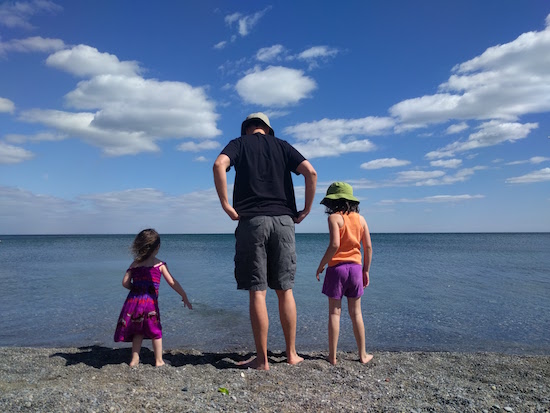
So off we went today after Harriet’s dance class, the streetcar journey faster than we’d expected and actually painless (and not just because this is relative to our shuttle bus misadventures last weekend while the subway line was closed). Arriving at the park and having our picnic. I got to meet Diane Sullivan and indeed pick out a brand new beautiful mug which will make its #TodaysTeacup debut tomorrow. After lunch, I did some more browsing, and the children played on the climbers while Stuart read a novel: everybody was happy. Eventually I had to leave the Beaches Arts and Crafts Festival before I bought everything. And we got some fro-yo, and then walked back through the park toward the lake, the beach crowded with people enjoying the day. And we spent an hour and a bit contemplating the most glorious horizon, trying to skip stones and mostly failing, and gathering an impressive array of sea glass, which was the most perfect exercise in paying attention and appreciating the beauty in tiny ordinary things.
We took the streetcar home after a delicious dinner and gloried in the goodness of a practically perfect day, whose perfection we appreciated in particular in light of the school trip to the farm on Friday, which was perfect in its own way except that Iris threw up on me as the school bus pulled into the parking lot and I had to spend the whole day smelling like vomit. And that that day too was not without its charms is either a credit to my pathological insistence on making the best of things or evidence that I am suffering from delusions.
June 10, 2016
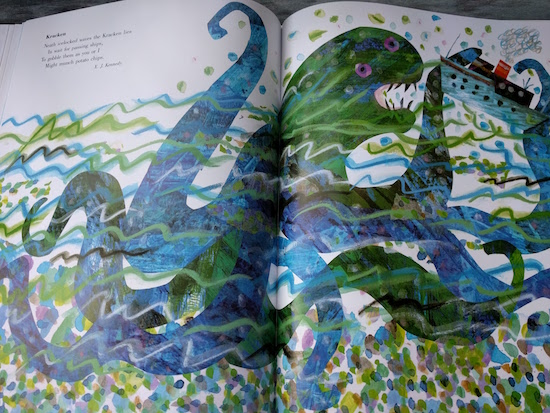
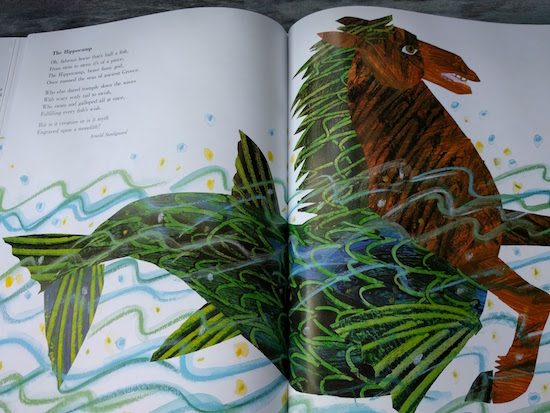
Eric Carle’s Dragons Dragons
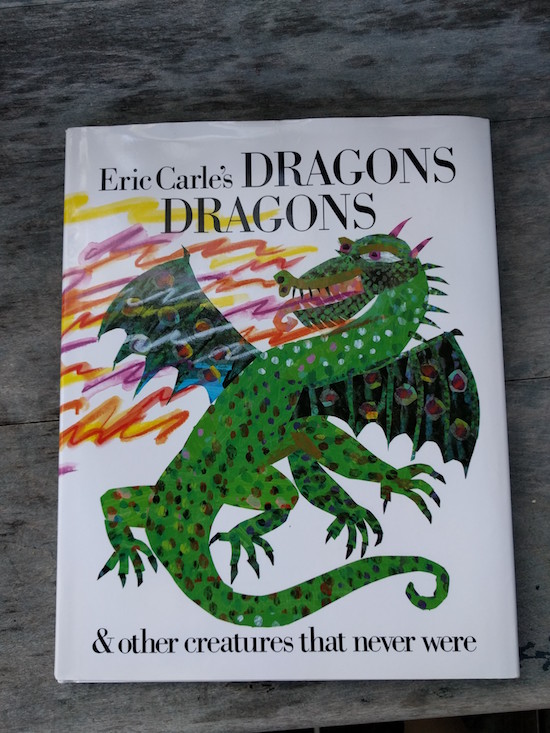
How did we live this long without knowing such a book existed as Dragons Dragons & Other Creatures That Never Were? It arrived in the mail this week, a gift from our friend Zsuzsi, whose packages usually contain books we all fall in love with. This one no exception. It’s fantastic, though you probably knew that already. It is possible that I’m last to the party in discovering this book, but on the off-chance I’m not, I want to make sure you know it too. And if you do already, let’s talk about it—isn’t it wonderful?
The anthology pairs poetry from a variety of sources with splendid paintings by Carle of the mythical creatures depicted within the poems. Most interestingly, the creatures come from a variety of sources as well, including from Greek Myth, First Nations stories, Hindu legend, Chinese myth and even the Bible—Levianthan.
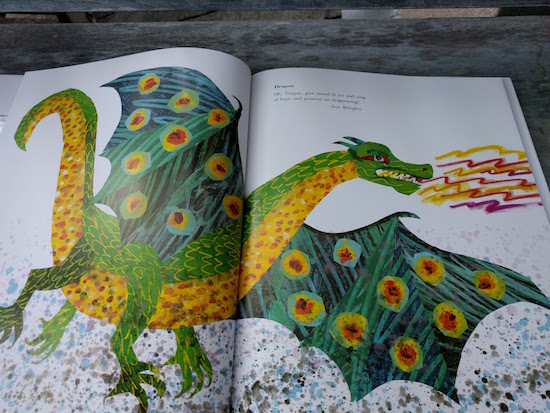
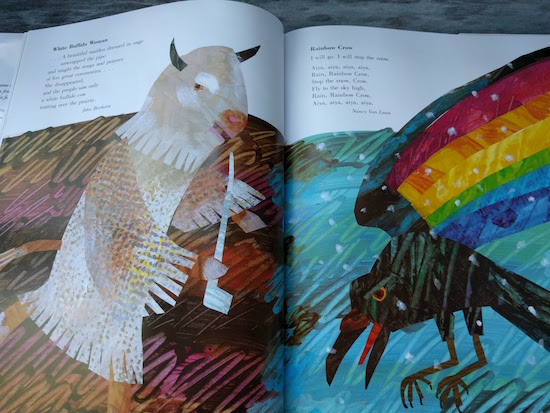
You may recall that I was a bit lost when I read Vikki VanSickle’s picture book, If I Had a Gryphon, earlier this year, because so many of the creatures in the story were ones I’d never heard of before. And so Dragons Dragons proved most illuminating, introducing these to me—krackens and chimeras—as well as many others. And if the poetry weren’t explanation enough, there is indeed a glossary in the back disclosing further details, with the most extraordinary caveat…
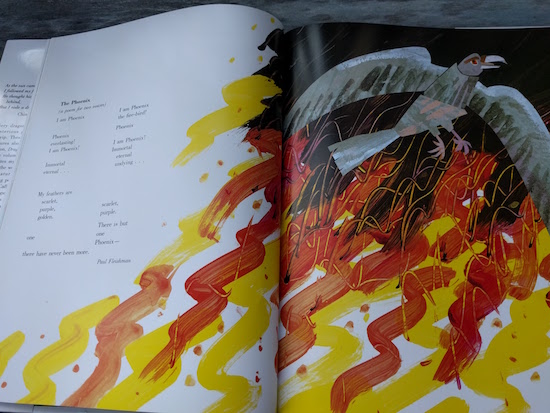
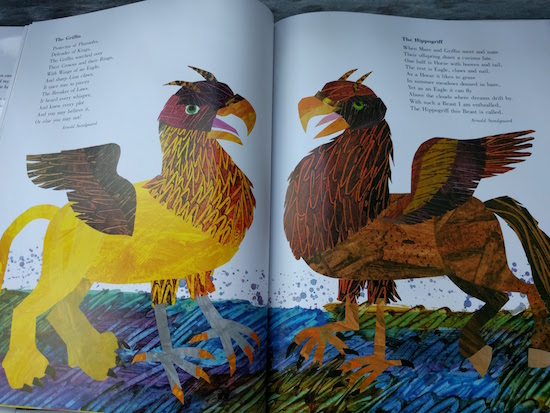
“No glossary can paint a precise picture of the likes of chimeras and dragons and basilisks. These marvellous creations can never be described definitively. Accounts of their appearance vary from source to source and tale to tale. It is appropriate that their images shift slightly in our minds with the storytelling of the moment.”
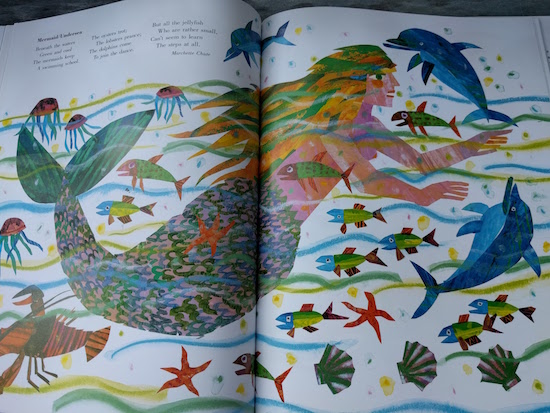
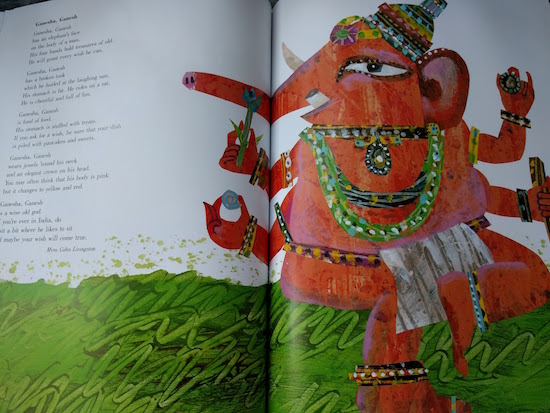
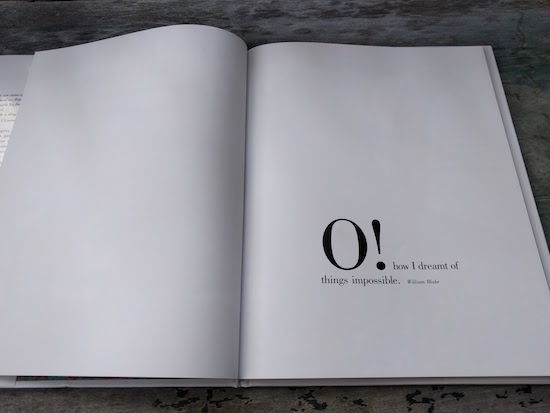
There’s also a wonderful note by anthologist Laura Whipple on the importance of mythical beasts and what their stories tell us about ourselves, our societies and our histories. “Let us allow our children to revel in the power and mystery of these magical creatures. Let them dream of things impossible.”
June 9, 2016
A Pile of Poetry

I attended the Griffin Poetry Prize readings last week, which was so much huger and more excellent and enjoyable than anything I’d ever expected. Afterwards, I couldn’t help but buy books because each of the readers had been so compelling, the poetry itself so arresting, though I congratulated myself on not buying all the books. And then in the morning I couldn’t help but go online and order just one more… Adding to the huge stack of poetry that I’ve been reading this spring, books that have been occupying my senses for a few months now. Most I’ve not motored through, but have have been making my way through slowly, not even in order sometimes. It was been such a pleasure exploring these books, their stories and their language, and while I find it difficult to write about poetry sometimes (and I actually find it difficult to *everything* about poetry sometimes) I wanted to write some of my thoughts down here.
 Sharon McCartney, Metanoia: I loved McCartney’s The Love Songs of Laura Ingalls Wilder, and this new collection is something entirely different, while I loved it too. I heard McCartney read from it in March at the Biblioasis launch, and this experience brought the disparate pieces of the project together for me. This long poem connects with a trend with many books I’ve read toward fragmented pieces that blur the lines between fiction and autobiography, this one concerned with the end of a marriage and the end of a love affair, as well as various other concerns.
 Suzanne Scanlon, Her 37th Year: An Index: I’m so grateful to Sarah’s beautiful blog post which not only introduced me to this book and inspired me to buy it, but also showed me how to read it. I’m currently midway through the alphabet, but enjoying piecing together the narratives contained within and also delighting in the sentences.
 Susan Holbrook, Throaty Wipes: Speaking of delight. I loved Holbrook’s previous collection so much (with its long poem about breastfeeding in particular) and have been looking forward to this one. It’s proven to be just as fun, playful, weird and enjoyable as the other. I especially loved her poem “8 ate…” with its lines (as my eldest daughter turned seven and my own 37th birthday approaches): “Who/ can remember if/ we’ve turned thirty-seven,/ maybe forty-nine already./ But she who still counts/ her age on her fingers/ curls them to individual/ numbers as to singular/ monkey bars. For a year/ she stand at the prow/ of seven, lead sharpened/ by the Swiss Army. shark fin,/ bared tooth, even as hers/ hail down.”

Soraya Peerbaye, Tell: Poems for Girlhood: was the collection I bought the day after The Griffin Readings, after listening to Peerbaye had brought tears to my eyes, with a reference to “Forever Young”, by Alphaville, no less. Read Sonnet L’Abbe’s excellent piece on Peerbaye’s collection and how it was inspired by the murder of teenager Reena Virk, and how Peerbaye underlines the racial aspects of this crime as other writers haven’t done. The book arrived in the mail on Tuesday afternoon, and that night I sat down and read it all in one go. It was amazing.
 Louise Bernice Halfe, Burning in this Midnight Dream: I think I first learned of Halfe’s work when Lee Maracle spoke about her on The Current on First Nations writers, and women First Nations writers in particular and how so many of these are under-appreciated. Halfe’s first collection was nominated for most of the top poetry prizes in the country when it was published in 1998. This new collection is about her own experiences of Truth and Reconciliation as she writes of her experiences at residential schools and also of her own painful family history. As Paulette Regan writes in the book’s introduction: “There are many pathways to reconciliation. Poetry is one.”
 I’ve been looking forward to Alexandra Oliver’s new collection, Let the Empire Down, following up her award-winner Meeting the Tormenters in Safeway, which I loved. The new book doesn’t disappoint, another collection of biting, sometimes funny and usually brutal poems about modern life and its horrors and absurdity, about motherhood and daughterhood, and all the things that once were that will never be again.
 I have loved making my way through Carolyn Smart’s collection, Careen, which reimagines the story of Bonnie and Clyde via primary sources that tell it so much less cinematic. I love the way that language can so perfectly convey the momentum of the story, its speed and all the getaways, and also all the different voices. (You can read the poem, “Proud Flesh,” here.
 We’re reading Never Mind, by Katherine Lawrence, for my book club next week. Truthfully, it’s the collection I’ve struggled with the most out of all of these, so much of the meaning rooted in language instead of story, which is how I find my way into most books. I also have an aversion to nineteenth century settler tales. Further I keep picking it up when I am tired and it makes my eyelids start to droop. It’s demanding more than I feel like giving any book at the moment—but there is goodness here too. There is humour and subversion and a powerful female voice. Look forward to delving deeper via next week’s conversation.
 I loved Lisa Bird-Wilson’s award-winning short story collection, Just Pretending, and so have been looking forward to her debut poetry collection, The Red Files. I’m partway through it now and enjoying it so much, although enjoying isn’t quite the right word for work that’s so harrowing. In these poems, Bird-Wilson takes photographs and other records of residential schools and beautifully imagines narratives, the people behind the official history, their names and stories. She also includes notes from official records and recontextualizes these pieces in a way that’s similar to Peerbaye’s use of transcripts from criminal trials.
 I bought 40 Sonnets, by Don Paterson, right after the Griffin Readings, because he was brilliantly funny and read the poem, “Power Cut,” about being stuck in an elevator, and it was powerful and glorious—and contained a reference to a dumbwaiter. This collection also won the 2016 Costa Poetry Award. I know Peterson is more established than she is, but reading this book finally gave me context as to what Alexandra Oliver is up to—I don’t read many poets like this who utilize traditional forms and metre and rhyme. I really, really like it.
 Conflict Resolution for Holy Beings, by Joy Harjo, was another Griffin Prize nominee, and I too bought this book after her incredible reading. Poems like “Indian Night School Blues” and “We Were There The Night Jazz was Invented.” I’m not far into this collection, but I like it a lot. You can read “Talking With the Sun” here—it’s beautiful.
 Excerpts from all the Griffin-nominated collections are contained within The 2016 Griffin Poetry Prize Anthology—a most excellent keepsake. Not wholly redundant, even if I end up buying every single one of the nominated books themselves.
June 8, 2016
#TodaysTeacup Tragedy
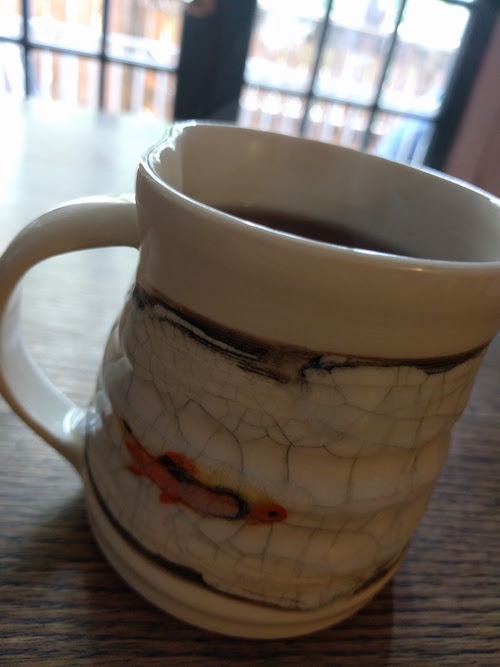
#TodaysTeacup took a turn for the tragic on Monday when I dumped its contents onto my laptop. It took a few moments to process what had happened, and the computer still appeared to be functioning as I poured tea out of it—perhaps, I pondered, we could pretend this never happened? But then the trackpad stopped working, and the keyboard was messed up. I managed to turn the computer off finally, but I should have done it faster. And for two days now it’s been sitting on a drying rack, a fan blowing underneath it. We managed to boot it up this morning and at first it seemed I might be saved…but alas. The keyboard and mouse appear to be fried, the wireless wasn’t working. The computer seems well on its way to being kaput. Thankfully, I am now a devout user of Dropbox so most important things were saved….except for the few documents I slapped onto my desktop somehow imagining they were more accessible there. My enterprising husband grabbed a USB key and transferred a first draft of a new fiction project (that just hit 20,000 words last week) which I am glad has been saved, though rewriting it might have been a blessing in disguise. I’ll have to do it soon enough anyway. Nothing is lost then, except the money I will need to spend on a new laptop, which is annoying, but my accountant will be grateful actually, because I have so few business expenses it’s ridiculous. (This is what happens when your office is your couch.) And it’s a justified expense, because my computer is so essentially to almost everything I do. Being without it these last few days has felt very strange, and it’s reoriented my week, which was supposed to be very very busy as I got ahead of myself on a few bits before school lets out and I lose my childcare for the summer, and have to begin working in the evenings again. But instead, I’ve spent my evenings reading—last night I read Tell, by Soraya Peerbye, who I heard read at the Griffin Readings last week and whose incredible book I read in one sitting. I’m also reading The Naturalist, by Alissa York, and really enjoying it, plus I finished the third book in Steve Burrows’ Birder Murder series, A Cast of Falcons, the other day and it was fantastic. Coming up is Thirteen Shells, by Nadia Bozak, and We’re All In This Together, by Amy Jones. Must keep on reading these Spring 2016 books like a hurricane, because Fall 2016 (the literary one—it falls earlier than the seasonal one) will be here before we know it. And in the meantime, I’m grateful to Stuart who is letting me use his laptop (even with my track record—I am lucky, for sure) and who has only been kind and sympathetic about something that is entirely down to my own stupidity. Although everyone is stupid sometimes.
June 6, 2016
The people we used to be
 I was crossing the street in April when I heard somebody calling my name. I turned around to see a familiar face, a friendly one, but I couldn’t quite place it. My first instinct was that this was my best friend from grade 7, but as we spoke I realized it wasn’t her after all. This woman had a different job, a different narrative, it emerged. But I’d greeted her with such familiarity, that she had no idea I was confused. We kept on talking, and then finally I realized that it was my friend’s younger sister, who I hadn’t seen or spoken to in about twenty years, though our parents in our hometown kept tabs on our whereabouts. I knew a bit about what she’d been up to and we reconnected for a few minutes, and she informed me that her sister, my friend, was about to have her first baby, had gotten married, had found herself in a pretty nice place in her life.
So naturally I went home and googled my friend and her husband’s name, and I found them on Instagram. And since then it has been really nice to get a glimpse into her life and to provide her a glimpse into mine, because while we drifted apart when we went to different high schools, throughout grades seven and eight, she meant a whole lot to me. Our friendship was hugely formative. We were two weird and awkward adolescent girls, but we were weird and awkward in such complementary ways—both of us had our eyes on bigger prizes in life, though we didn’t know what they were yet. Both of us were utterly unimpressed with popular culture at the time (and for good reason—this was 1991) and obsessed with nostalgia. We used to listen to “American Pie” over and over again, and feel like something essential was forever lost to us. I was crazy about the Beatles and wanted to be a hippie, someone bohemian, and my friend had a bit of that bent herself—her parents weren’t into materialism, and I recall that she didn’t have cable or perhaps a TV, which was as radical as it got in the circles I travelled. What I don’t think we ever articulated but were forever circling around was longing, for the kinds of lives we’d heard about in songs our parents sang. I didn’t want to live a conventional life, but I was so conventional, I didn’t even know how to go about articulating that.
And I can’t help but think how useful the internet would have been to a couple of funny girls like us. Yes, the internet and adolescent girls is a disaster, but not entirely. I recall how lonely it was to be a weirdo in 1991, to love old music and want to wear flowers in our hair. Yes, grunge was starting to happen, but we were sheltered, and we were never wild enough to do teenage rebellion proper. We weren’t grungy. There wasn’t any kind of culture out there that we knew about, that we could tap into, so we made our own instead, in the songs whose lyrics we memorized and analyzed, and the objects we revered, and all the things we talked about, the questions we tried to answer in circles. I recall we kept a notebook in which we wrote each other back and forth, and I remember lists like, “Things I want to be,” “Things I want to do.” I remember the goodness of a friend like that who made those things seem possible.
I sent my friend a message on Instagram this morning. I wrote to her, “Do you remember that 23 years ago today we went to see Paul McCartney play at Exhibition Stadium?” My dad took us. It was magical. I think the weather was terrible all day long, and then it wasn’t just in time, and then a guy offered us a free rickshaw ride. And then there was an actual Beatle on the stage, Paul McCartney promoting his album, “Off the Ground.” I have never felt so small in my life as I felt in that crowd, one of so many fans in the stadium, and Paul McCartney couldn’t see me—it was first time that it had occurred to me that he had no idea who I was. But I could see him, and it felt like I was engaging in something real for the first time in my life, a religious experience of a sort. I was part of something bigger than myself, and gave me an inkling that there could be a place in the world for a girl like me after all.
I didn’t get a reply from my friend. Not long after, a photo popped up on her husband’s instagram feed—their baby had arrived. On June 6, I marvelled to myself. How auspicious. It probably hasn’t occurred to her, but it means something to me, and how wonderful anyway, to paraphrase Joan Didion, to check back in once in a while with the people we used to be.
June 6, 2016
Globe Review: Kay’s Lucky Coin Variety
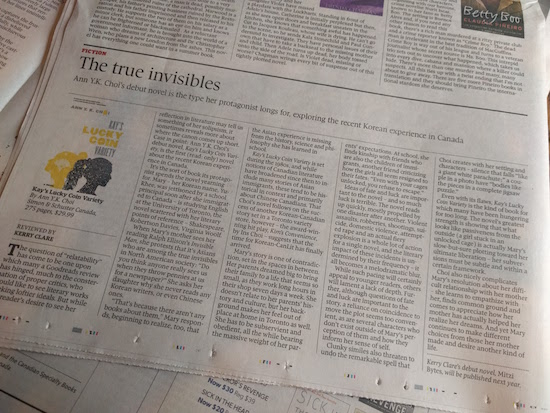
So grateful to the folks at Globe Books for the chance to review Kay’s Lucky Coin Variety, the debut novel by Ann Y.K. Choi, which appeared in the Globe and Mail on Saturday.
‘The question of “relatability” has come to be one upon which many a Goodreads review has hinged, much to the consternation of proper critics, who would like to see literary works seeking loftier ideals.
But while the reader’s desire to see her reflection in literature may tell us something of her solipsism, it sometimes reveals more about where the canon comes up short….’