October 17, 2017
A far cry from Mr. Stillingfleet’s stuff
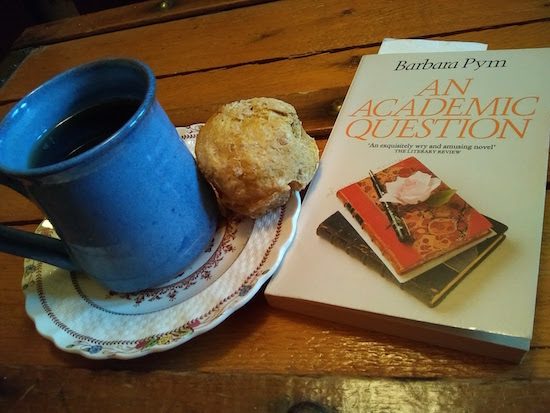
I’ve never been to the Victoria College Book Sale on opening day before, because it’s always on a Thursday and you have to pay $5 to get in, but I hadn’t planned my life well during the weekend the sale was happening last month, and my only chance to go at all would be during the ninety minutes between when the sale kicked off at 2pm and when I had to pick my children up from school at 3:30. So I cobbled together the admission fee, literally out of dimes and nickels from a jar in my kitchen, which made for very heavy pockets, but I got there, and learned of just one distinction between the Victoria College Book Sale on its first day and all the days thereafter: there are Barbara Pym books for sale.
It’s difficult to find used copies of Barbara Pym novels. Her readership was never huge enough, at least not in Canada, as compared to writers like Margaret Drabble, Hilary Mantel and Penelope Lively, whose novels are mainstays at secondhand bookstores (which is the way that I fell in love with all of these writers, and others). I like to think, however, that it’s not just that Pym’s readers are few and far between, but that they’re also quite devoted. The secondhand copies of Barbara Pym novels that I do have came from a house contents sale in my neighbourhood after the death of its elderly owner (which in itself is kind of Pymmish), and that’s the only way I’ll ever be getting rid of Barbara Pym books, by which I mean: over my head body. (I imagine they’re easier to find in secondhand bookshops in England; also, many of her works have brought back into print by Virago Modern Classics with fun cartoonish covers in the last ten years and I’m sure those copies are turning up in charity shops).
Anyway, finding Barbara Pym novels at the Vic Book Sale was exciting enough, but even more remarkable was finding one I hadn’t read yet. I thought I’d read them all, including a collection of her letters and another of unpublished short fiction, and the first book she ever wrote, Crampton Hodnet, which wasn’t published until after her death. I thought I’d spanned the entirety of the Pymosphere, and was content to spend the rest of my life then just rereading her, at least once a summer and maybe even more so, but then there was An Academic Question. I’d missed it altogether. Also published after her death, written during her wilderness years in the early 1970s (before she was “rediscovered” and brought back into print, winning the Booker Prize in 1977 and publishing two more books before her death in 1980).
I started reading An Academic Question on Friday night because I’d been reading A Few Green Leaves (the official newsletter of the Barbara Pym Society) in the bathroom (as you do) and then checked my email to find a reminder that I hadn’t yet renewed my Pym Society membership for 2017. I did so, and took note of the universe conspiring to send me in a Barbara Pym direction, and I’ve already got a backlog of books I have to write about anyway so this would be an excellent opportunity to read for fun and not have to write about it at all.
Take note: I am writing about it. Barbara Pym never fails to incite…
The novel starts off a little roughly. In her note on the text, Hazel Holt writes that it’s cobbled together from two drafts, one in first person and the other in third. Before the book’s spell had taken hold, I kept getting caught on clunky prose and repeated words..but then at some point these problems ceased or else I stopped noticing them. As per Holt’s note, Pym wrote to Philip Larkin of the novel in June 1971: “It was supposed to be a sort of Margaret Drabble effort but of course it hasn’t turned out like that at all.” Which interested me—I remember reading about Pym’s relationship to Drabble’s work in the years when Pym herself wasn’t being published, deemed irrelevant while Drabble herself was very fashionable, her antithesis.
You can see what Pym was up to here—this is a story of a young faculty wife whose sister has had an abortion and lives in London with a man who designs the sets for the news program her husband’s colleagues appear on, all the while the students at the university are going through a period of unrest. In a superficial way, this is Drabble’s milieu—but Pym can’t help but spin it in her own way. It’s the interiority of her protagonist, her doubts and questions, her sense of humour. Caroline is undeniably Pymmish in her preoccupations, spending most of her time with her gay best friend Coco who dotes on his high maintenance mother. While Drabble’s characters are all on the verge of slitting their wrists in a bathtub, Caroline is unfailingly stoic, even at a remove:
‘What was the point of it all?’ Kitty had asked me plaintively, and I felt that for her the evening had been a disappointment, as indeed so many evenings must be now. And what had been the point, really? A few gentle cultured people trying to stand up against the tide of mediocrity that was threatening to swamp them? I who had hardly known anything different could sympathize with their views but for myself I didn’t really listen to the radio; I went about my household tasks, such as they were, absorbed by my own broody thoughts.
And while this is one of Pym’s rare novels that doesn’t contain a single curate, let alone a mention of The Church Times, has only handful of references to jumble sales and the characters drink coffee instead of tea (I KNOW!), the humour is still wryly, undeniably Pymmish. The following passage would never be found in a Margaret Drabble novel:
We sat drinking cups of instant coffee and smoking, commiserating with each other. An unfaithful husband and a dead hedgehog—sorrows not to be compared, you might say, on a different plane altogether. Yet there was hope that Alan would turn to me again while the hedgehog could never come back.
The book wouldn’t work, Pym felt, according to Holt, for its cosiness, and it was remarkable how often the word “cosy” appears in the text (alone with the word “detached”). Which got me thinking about the literary implications of cosiness, as opposed to grittiness, I suppose. Thinking of cosy made me think of rooms, of comfortable sofas, piles of books on the table, interesting items on the mantel—all of which are things that furnish Pym’s books, including this one. Cosy isn’t fashionable, it’s true, what what it is instead is timeless, which might be why we’re reading Pym today while Margaret Drabble’s early novels seem so dated and are out print.
Pym’s Caroline is detached from her life as faculty wife—her husband has proved to be less interesting that she thought he might be, he’s been unfaithful, and she finds herself at a loss as to how support him in his work as one expects she should. She finds motherhood a bit boring and her daughter is cared for by the Swedish au pair anyway. Apart from her friendship with Coco, Caroline doesn’t have anyone to have real conversations with, and when she does talk to Coco, he has no qualms about finding her provincial life kind of tiresome. She spends some time reading to Mr. Stillingfleet, a retired professor at an old people’s home, revealing to her husband that the professor keeps a box of academic papers by his bedside…which ignites her husband’s interest in visiting the frail old man, so he can scoop material from the box and pull an academic coup over his superior. And then Caroline is left with the ethical question of what to do with the stolen paper afterwards, and just where her loyalties lie, and what compromises indeed she is willing to make in the name of her husband’s success…
“‘Hospital romances,’ I said to Dolly that evening when she called around to see us. ‘That’s what I’m reading now. It’s a far cry from Mr. Stillingfleet’s stuff.”
‘Maybe, but it is all life,’ said Dolly in her firmest tone, ‘and no aspect of life is to be despised.”
October 16, 2017
My Conversations With Canadians, by Lee Maracle
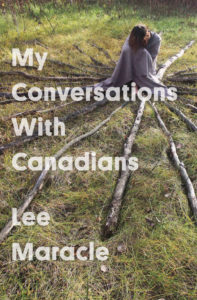 Have you ever listened to Lee Maracle speak? I hadn’t, except for a spot on the radio last year where she totally stole the show. Which meant that I kind of knew what I’d be getting into when I went to her presentation at The Word on the Street last month, and she delivered completely. Terrifyingly smart, warm, informed, funny, biting, and not here for any of your shit, was the impression I got from Lee Maracle. I bought her book immediately after the session, the new essay collection My Conversations With Canadians, the latest in BookThug’s Essais non-fiction series. It’s a book born of Maracle’s experiences over the years addressing audience questions at book events, the book’s most central one being from the old man who gets up and asks her, “What are you going to do with us white guys—drive us into the sea?” Never mind Maracle’s formidable response to him, which you’re going to have to read the book to figure out, but I’m still hung up on the man himself, what he stands for. How do you get to be the person with nerve enough to stand up and demand anything of Lee Maracle, is what I’m wondering about, not least because, well, it means that you get to talk instead of Lee Maracle. I don’t have a problem with self-esteem, but I’ve never thought highly enough of myself for that.
Of course, the question I am asking is rhetorical; how do you get to be that guy? And the answer is white supremacy and patriarchy. Which doesn’t absolve me, of course. Which doesn’t place me outside of that audience of Canadians that Maracle is addressing in these essays. Some of which made me uncomfortable, actually—my experience of the world has left me with no understanding of the power of song, for example, which Maracle writes about in her first essay: “we can sing you up to wellness or sing you down to illness, even death. It is the power of our songs. We could even raise our poles with song.” I delineate this to show that even though much of Maracle writes about does not make me uncomfortable—centralizing indigenous experience, issues of cultural appropriation and stealing stories; the necessity of elevating oratory; fiction as a powerful truth—that I understand the experience of someone who might approach the book and its ideas with some hesitancy. Someone who doesn’t know quite yet that the point is to be unsettled after all.
“It is not enough to acknowledge something—you must commit to its continued growth and transformation,” Maracle writes in her essay, “What Do I Call You?” Which is to say that learning and growing is the very point, that being progressive is a process and one you’re never finished with if you’re doing it properly. Which is why welcoming this experience of being unsettled is the very point, along with sitting the fuck down and listening.
I loved this book. I love the way that Maracle peppers her work with allusions to so many incredible Indigenous writers in Canada who are changing the world, sentence by sentence, how My Conversations With Canadians is also the most terrific bibliography. I love how she writes about Indigenous identity, and how Canadian identity is never questioned, or at least not in a non-superficial way. “I am not quite sure how the identity of Indigenous people became fallible and questionable to Canadians, while their own identity is not, but I can say this much: I do not recall ever having doubts about my identity, The point they are making is that my identity is violable—it can be violated.” (Which reminds me of Camille T. Dungy’s comments about her identity as a Black woman: ‘that you see me as a “regular” person suggests that in order to see me as regular some parts of my identity must be nullified. Namely, the parts that aren’t like you.’)
Maracle writes about intersectionality, about feminism, she dismantles the myth of Canadian niceness, and the myth of objectivity too, and then writes about the true myths that are “the path to truth and knowledge”—something science, she writes, is only just beginning to understand. About giving up “the knower’s chair,” which assumes that we as Canadians as the teachers, and Indigenous people our students (i.e. sit down, bellowing old man!). Gender binary and making a link between the idea of binary and that which binds us, an etymological link that had never occurred to me before. A whole chapter is devoted to cultural appropriation, and knowledge and stories as an inheritance which has been stolen from Indigenous children. (Here I’ll repeat something I’ve written before, that until I read Thomas King’s The Inconvenient Indian, I really thought that the theft we talk about in terms of what was taking from Indigenous people was mostly metaphorical. I had no idea…)
She writes, “Rather than looking at where we are in a hierarchical order of things, we should look at our responsibility toward the lives we are dependent upon. In any relationship, we have responsibilities, obligations, and disciplined interaction. We cannot simple do “whatever we want” in the name of freedom.” I also loved this in a following paragraph, “All engagement is a moment of sharing, every morsel of food a moment of sharing from earth to us and back.” In that same essay, “Humility is crucial to recognizing and examining our failures, our mistakes, our contribution to broken relations…” And then she goes on with this brilliance, “Do not mistake my kindness for acceptance of the absence of the right of access to my land or my love for it. Further, do not mistake my kindness for a relinquishment of who I am and who I will always want to be.”
“Settlers ought to look at their history, then look in the mirror. After annihilating our populations, and much of the animal life on this continent and in the oceans, and after spoiling the air, and the waters, who would want to be you?”
Are you unsettled yet?
As I read this book, I kept thinking of the bellowing man asking questions, and that guy had become a stand-in for the kind of Canadian journalist who has made an industry out of writing about Indigenous issues, not so subtly underlining his racism with every click on his keyboard. About how all this focus on colonialism and intergenerational trauma, and de-centreing whiteness, and giving credence to Indigenous forms of knowledge has, well, threatened to destabilize our white supremacist patriarchal society, and for obvious reasons this really bothers this guy. Because of how he refuses not to see himself as central, as neutral, as non-complicit in any of the systems that perpetuate the tragedy of Indigenous people and their communities.
What would happen if he read this book, I wondered. Like actually read, instead of making inflammatory notes in the margins and planning his rebuttals. What if the bellowing old man actual shut up, sat down and listened?
In the words of poet Muriel Rukeyser: perhaps the world would split open.
October 12, 2017
We love Kazoo
If you have never spent a half hour the night before Garbage Day digging through your enormous recycling bin (which is shared with two other households, one of whom eats a disproportionate amount of pizza, apparently) in search of a missing copy of a children’s magazine that might have been thrown out by accident…then you’ve probably never had a subscription to Kazoo, which described itself as “a magazine for girls who aren’t afraid to make some noise.”
And while I’ve pretty much never liked anything before it was cool (or even after it was, if I’m going to be honest) I’m very proud to say that I was a contributor to the initial Kickstarter for Kazoo six issues ago, and that I’ve never ever been sorry. Even though postal and exchange rates mean I’m paying $70 (CDN) per year for a quarterly magazine—although that might give you a better idea as to why I was digging through the garbage.
Mostly it was because Kazoo is not disposable, which is why I’m happy to pay extra money for something so entirely worth it. A magazine that’s as good as a book, and which is produced so well that it stays in tact after multiple readings. Themes have include Flight, Architecture, Nature, Steampunk, and Music, which all kinds of creative approaches to these ideas, including art, recipes, puzzles, projects, profiles, biographies and more. Each issue includes a comic strip profile of a remarkable woman, and usually these are women of colour, as well as a short story whose writers have included Emma Straub and Jane Yolen, and Meg Wolitzer is forthcoming in the next issue, according to the recent Kickstarter update (and !!!!). Get art lessons from Alison Bechdel, learn to write a song with Ani di Franco, advice on never giving up from Diana Nyad, and read a Q&A with cosmochemist Meenakshi Wadhwa under the headline, “Meet a True Rockstar.
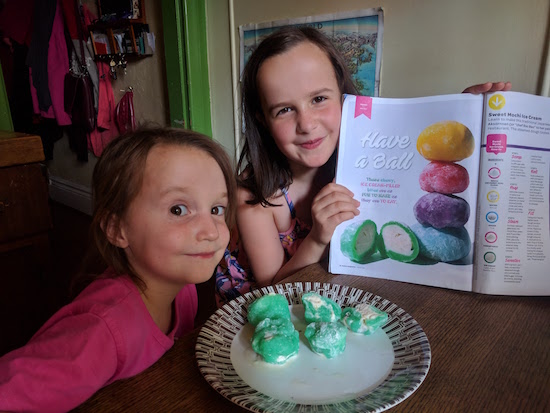
Harriet and I have built a bridge out of marshmallows and toothpicks, we’ve made grapefruit candy and paletas under the guidance of expert cooks, she and her dad made a walking robot out of a toilet paper roll, and our most recent project was mochi ice-cream balls from the Steampunk issue (because we made mochi from rice flour using steam power—get it?).
SPOILER: I eventually found the missing magazine, and it wasn’t in the garbage, but had been put away with a bag of pipe cleaners (of course!). And good thing too, because Kazoo has more than surpassed all my dreams of an amazing magazine to inspire and empower girls, and I’m so glad it’s going strong in its second year. As they report on their website, Kazoo was “nominated for a 2017 National Magazine Award in the category of General Excellence-Special Interest and named one of the “Hottest Launches of 2016” by MIN.” I don’t actually know what MIN is, but I’m sure they’re totally right. I’m looking forward to all the good things ahead, and to renewing our subscription over and over again.
October 10, 2017
Dazzle Patterns, by Alison Watt
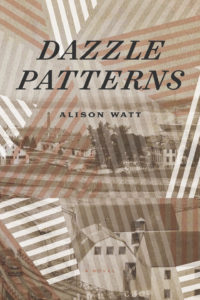 When I’m reading historical fiction, it always takes me a bit of time to get settled in the story, to find my bearings in terms of place and time. It’s like travelling to any land that’s a bit foreign, I suppose, where the customs and language aren’t quite what you’re familiar with. And so I knew to be patient when I started reading Dazzle Patterns, the debut novel by Alison Watt, whose previous works include poetry and award-winning non-fiction. Which wasn’t hard because the premise was compelling: a young woman is working in the local glassworks in Halifax in 1917 as a flaw-checker, dreaming of passage to Europe where her fiancé has been fighting. Parts of the story is also from his point of view, Leo, traumatized after surviving the Battle of Passchendaele, though he doesn’t write that home in his letters. And the other protagonist is Fred Baker, an artisan who works with Clare at the glassworks. He’s the one who delivers to her the hospital on that December day when two ships collide in Halifax Harbour, leading to the explosion that levels huge swathes of the city, leaving so many Haligonians dead or injured. Fred spends the next few days working without ceasing in the overcrowded makeshift morgue, but this doesn’t keep him from falling under suspicion by his colleagues and official authorities—though he’s long been a Canadian citizen, Fred was born in Germany, and there are many people in Halifax who aren’t convinced that the explosion was an accident.
Clare begins to recover from her injuries as Halifax itself slowly rebuilds after the tragedy, and she’s pulled between her parents’ wishes to shelter her and her yearning for independence. When Leo is reported missing, Clare realizes that she’s lost her getaway plan, as well as her fiancé, and contemplates the limits of the future before her. To stay busy as her recovery continues, she begins taking painting lessons at the School of Art, where Fred is also a student. And the connection before them does not occur in cliched ways one might expect, because this is too interesting a story for that, besides there are complications—Clare still loves Leo, and her landlady’s daughter has fallen in love with Fred.
These central strands to the story become woven in a wonderful fashion. The novel’s title comes from the patterns painted onto ships to break up their silhouettes and make the vessels more protected from German U-Boats, which is just one very practical role that artists played in supporting the war effort. Watt portrays other roles as well, artists documenting the war by painting battlefields and the ships in Halifax Harbour, real-life Canadian artists appearing as characters in the book alongside Fred and Clare. The intricacy of glasswork in particular is an important element of the story, glass’s amazing technological capabilities but also its fragility. This is a novel about art, and vision, about seeing, and looking carefully at things—and about what happens when other people fail to do so. The Halifax Explosion and World War One are the book’s backdrop, but not its reason for being—and these historical events aren’t manipulated either to become metaphors to serve the author’s purposes. War and destruction are brutal and violent with long-term ramifications that take years to come to the surface. There is nothing heroic about any of it, except for the people who show up to help others.
And so there would eventually come a point when Dazzle Patterns won me over entirely, as you’ve probably noticed, when its people and the streets they walk on became as vivid as the room I’m sitting in now. I loved this book, the art of its tapestry, all of it leading toward an ending that was absolutely perfect.
October 10, 2017
Where do my books come from?
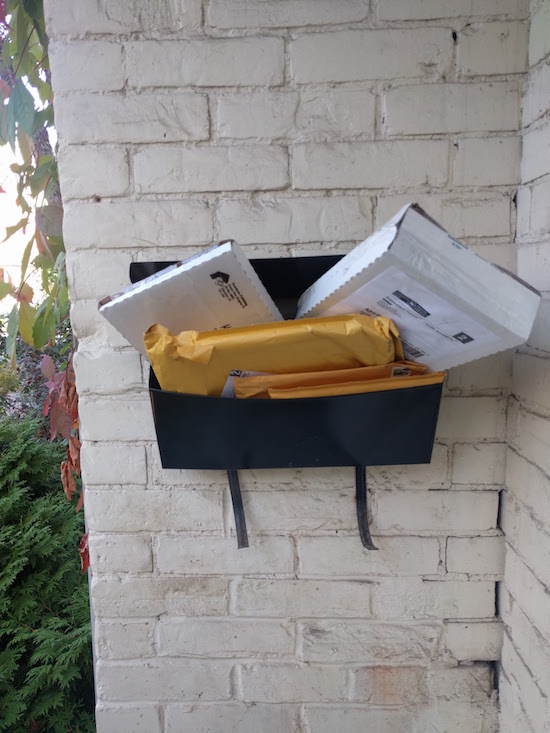
The other week I posted a photo of my mailbox on a day that was, I’ll admit it, particularly remarkable, but not unprecedented. I get a lot of books in the mail, and the photo received a lot of likes and comments that made me think about a variety of things—where my books come from, what I do with the books I receive from publishers, whether or not I persist with books I’m not enjoying, and other things. These questions are going to be the foundations of this post, and a couple of others to come, but I wanted to start with this, which is a meme I’ve done before involving listing the last books you’ve read most recently and where they came from.
- Saints and Misfits, by S.K. Ali: Received from publisher
- My Conversations with Canadians, by Lee Maracle: Purchased from Publisher’s Booth at Word on the Street
- Dazzle Patterns, by Alison Watt: Received from publisher
- What Happened, by Hillary Rodham Clinton: Purchased from Publisher’s Booth at Word on the Street
- Snacks: A Canadian Food History, by Janis Thiessen: Received from publisher
- Collected Tarts and Other Indelicacies, by Tabatha Southey: Received from publisher
- Once More With Feeling, by Meira Cook: Received from publisher
- Just Jen: Thriving Through Multiple Sclerosis, by Jen Powley: Purchased from Staff Picks shelf at Audreys Books
- If Clara, by Martha Bailey: Received from publisher
- The Mother, by Yvette Edwards: Purchased from A Different Book List
- We All Love the Beautiful Girls, by Joanne Proulx: Purchased from Hunter Street Books
- What is Going to Happen, by Karen Hoffman: Received from publisher
- A Bird on Every Tree, by Carol Bruneau: Received from publisher
- Guidebook to Relative Strangers, by Camille Dungy: Purchased from Parentbooks
- The Misfortune of Marion Palm, by Emily Culliton: Purchased from Happenstance Books and Yarns
- Glass Houses, by Louise Penny: Received from publisher (ARC)
- Today Will Be Different, by Maria Semple: Purchased from Parentbooks last year, this was a reread
- Annie Muktuk and Other Stories, by Norma Dunning: Received from publisher
- The Lesser Bohemians, by Eimear McBride: Purchased from Blue Heron Books
- Pond, by Claire Louise Bennett: Purchased from Parentbooks, this was a reread
- The Murder Stone, by Louise Penny: Found it in cottage library
- Wilde Lake, by Laura Lippman: Purchased from Happenstance Books and Yarn
- Truly, Madly, Guilty, by Lianne Moriarty: Purchased (secondhand) from Beggar’s Bouquet Books
- Scarborough, by Catherine Hernandez: Purchased from Mabel’s Fables
- History of Wolves, by Emily Fridlund: Purchased from Lighthouse Books
- Weaving Water, by Annamarie Beckel: Borrowed from the Toronto Public Library
- Do Not Become Alarmed, by Maile Meloy: Purchased from Curiosity House Books
- Turning, by Jessica J. Lee: Purchased from Curiosity House Books
- The Burning Girl, by Claire Messud: Received from Publisher
- In the Land of the Birdfishes, by Rebecca Silver Slayter: Purchased from Lexicon Books
Results are a little bit skewed because eight of these are books I read on my summer vacation and I tend to more deliberate in those choices, but still. Of the 30 books I read, 11 of them were received from publishers. They tended to be smaller publishers too because a) these are publishers I have relationships with through my work with 49thShelf.com and b) some of these books are harder to find in Ontario bookstores so I am unlikely to come across them on my own steam, at least before review copies arrive. A few are books that I would not have previously sought out of my own. Two of them I read because their publicists were quite emphatic that I, Kerry Clare addressed personally, should do so—nice work publicists; you were right. And when I do read these books publishers send me, I tend to write about them either on my blog or on 49thShelf.com, or in both places.
I tend not to read ARCs because I don’t like them—I liked to read finished books with nice covers and I like to read them when everyone else is reading them.
I also buy a lot of books and am an avid independent bookshop customer.
And finally, I don’t disclose in blog posts if I’ve received a book from a publisher. A lot of bloggers do, and on some blogs that are exclusively review sites, it makes sense. But I don’t think it does for me. I trust myself after ten years that my reviews are not biased because I’ve received a review copy—though this was a learning curve for me for sure but I got over it years ago. I get so many books in the mail, most of which I don’t even read, that the idea of treating these books differently than the books I purchase myself is kind of ridiculous—if anything, these books that find their way to me rather than me seeking them out myself actually get read much more critically, as in, “You better be worth my precious time, Book-I-didn’t-even-ask-for.” I also know that professional reviewers (of which I am one) receive review copies as standard practice and this doesn’t need to be disclosed in their reviews. And finally, I see this blog as a space for me, first and foremost, and that anybody else likes to read it is just gravy, but to pepper my posts with disclosures and the like would undermine the authenticity of what I’m up to here.
October 6, 2017
When We Were Alone, by David A. Robertson and Julie Flett
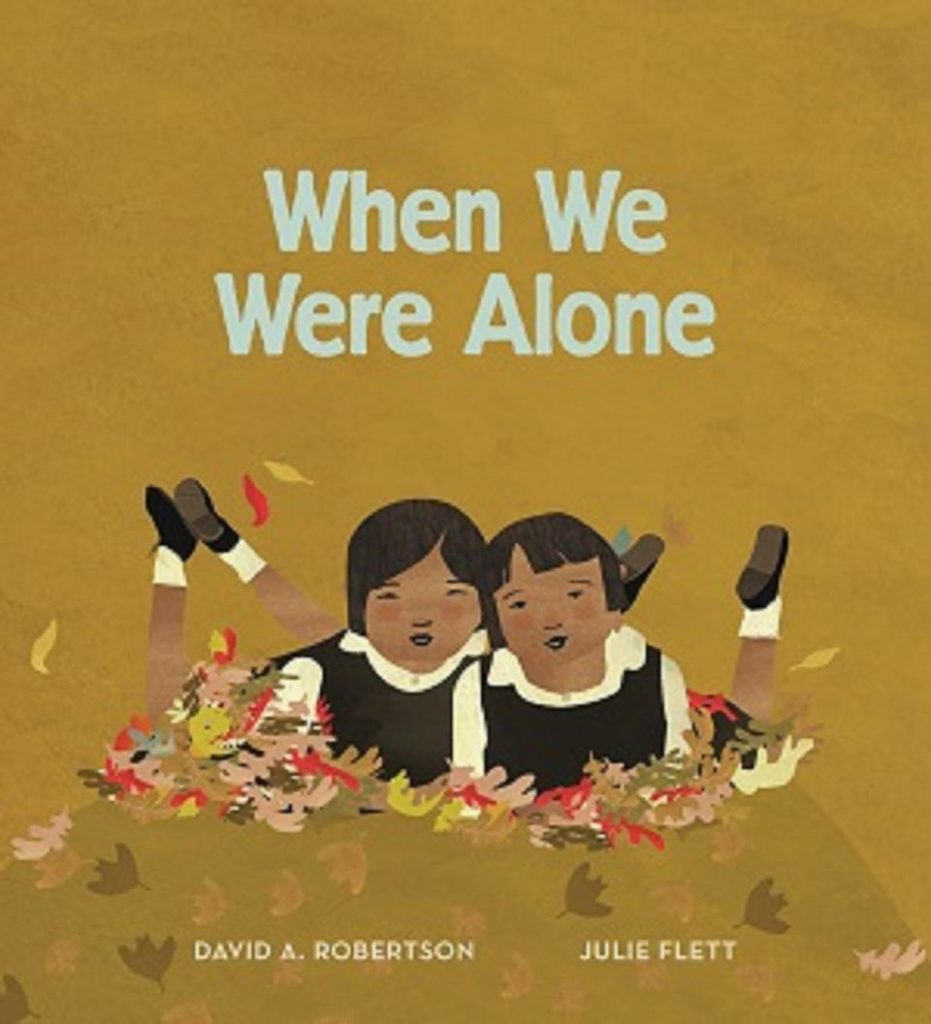
Please forgive the absence of a proper Picture Book Friday post but my phone broke so I can’t take photos, plus my children are off school tomorrow schedules are all askew. But I did make time to run out to Parentbooks this afternoon to pick up a copy of When We Were Alone, by David A. Robertson and illustrated by Julie Flett, whose work I so adore. Partly because Orange Shirt Day was observed at my children’s school last week, and I wanted this book to contextualize it. And also because When We Were Alone has just been nominated for a Governor General’s Award, on the trail of big wins at the Manitoba Book Awards earlier this year and a nomination for the TD Children’s Literature, whose winner will be announced next month. I’d read it earlier this year while we were at the Halifax Central Library, but I didn’t read it to my kids because the book made me a bit nervous. I’d interpreted the title in a sinister fashion, and knew the book was about residential school survivors, and really, I wasn’t sure even I wanted to know what had happened when these poor kids were alone.
But I was wrong, for so many reasons, not least of all in thinking that these kinds of stories were the sort I could ever turn away from when so many other people don’t have that luxury, but also because it was when the children were alone that they were free and used all kinds of smart and beautiful ways to subvert the tyranny and abuse of residential schools. For example, where they had their hair cut short, and dressed in drab uniforms, and were forbidden to speak their languages. But when they were alone, the narrative goes, the children would braid long strands of grass into their regulation short hair, and decorate their bodies with colourful leaves, and hide in the fields far away from everybody else and talk to each other in Cree. So that this is a story of resilience and survival, even more so because the story is told through the perspective of a young girl who is asking her Kokum why she does things the way she does—have her hair so long, wear bright colours, speak in Cree, and Kokum explains that she does all these things because once upon a time she couldn’t.
October 5, 2017
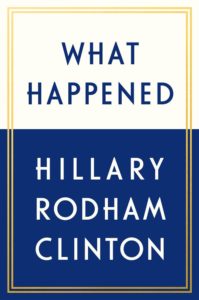
What Happened, by Hillary Clinton
Maybe Hillary Clinton is like cilantro, and you’ve just got a taste for it or you don’t. But I do, and it’s longstanding, which I know because in 1998 I sent Hillary Clinton an email voicing my support in the wake of the Monica Lewinsky scandal, and I recall respecting her decision to not give up on her marriage. Which was kind of a weird thing for an 18-year-old to be concerned with, and not very feminist really, or maybe it is. I didn’t identify as a feminist when I was 18 anyway, and I spent the 1990s’ as a middle aged woman in a teenager’s body, plus there just wasn’t a lot going on on the internet at this point and so sending emails to the White House was how one passed the time.
Hillary Clinton’s 2003 autobiography Living History was the very first book I ever wrote a review of online, during a brief period in 2004 when I had a book blog with a friend and imagined that I too could be a book blogger like Maud Newton but then it all seemed too ambitious and the book blog fizzled out. (And yes, boys and girls, I, like Hillary Clinton, am living proof that we can achieve our dreams. At least if the limits of our dreams are book blogging, I mean.) We lived in Japan at the time and I remember buying the book in the bookshop in our town that was located on top of the train station, just one of a handful of books in the entire store that was in English and therefore I had the literary skills to pick it up and read it. Books were rare then, which is funny because now I basically live in a castle constructed of them. All of that was a long time ago.
But I remember my main frustration with that book, which was Clinton’s refusal to admit her exceptionalness. Her remarkable life, she wrote, was a product of her time, of having been born in a moment where there would be opportunities for Americans, and American women in particular, as there had never been before. Her story, as she told it, was a part of a larger story, which is all fine and well, I guess, but it didn’t explain why everybody then had not become Hillary Rodham Clinton then. I mean, yes, the entire graduating class at Wellesley in 1967 was undoubtedly impressive, but she had been chosen to give their commencement address. Hers was a singular story too, and I wanted more of that.
Which is what you get in her brand new bestselling memoir, What Happened. A book in which Clinton talks about her reasons for pursuing the presidency a second time and dares to state this: “The most compelling argument is the hardest to say out loud: I was convinced that both Bill and Barack were right when they said I would be a better President than anyone out there.” If you have any idea how difficult it is to articulate something like this about oneself, you are probably a woman too.
In this book, Clinton has learned the invaluable lessons that failure has to teach us (and she learned it twice), plus she is angry, and she’s taking shit from no one. She’s no longer giving history all the benefit for her own success and for that of others. Of the women’s movement, she writes, “And it was and is the story of my life—mine and millions of other women’s. We share it. We wrote it together. We’re still writing it. And even though this sounds like bragging and bragging isn’t something women are supposed to do, I haven’t just been a participant in this revolution. I helped to lead it.”
She writes about her working going undercover in the American south during the early 1970s to find schools were segregation practices were still the norm (and there were plenty of them); of her work as a lawyer for women and families; of her successful attempts to found the Children’s Health Insurance Plans during her husband’s presidency, which provided healthcare for millions of American children and which the US government let lapse this week. A lot of this book is heartbreaking, as Clinton reflects on her plans for her Presidency and reflects on the winning candidate’s first actions in office. She reflects on her mistakes throughout her public life, on the many times she’s changed her mind, on her regrets, the evolution of her ideas. In fact, she reflects on all of these more than any man ever would, in that way that women are made to think they must do and the public only doubles down on this inclination. The double standard is incredible, and I never properly understood how systemic and institutionalized (and psychologized) it was until the American election of 2016. In some ways, learning the truth of the matter is incredible. In other ways, not so much.
And yet, this is also an inspiring memoir. It moved me to tears more than a few times. There was a moment reading this book where I felt something unlike anything I’d felt in years, which is envy for American people, for American women in particular (I know!) who had that singular experience of seeing a woman’s name on the ballot in their election for head of state and even got to place an x beside it. (Full disclosure: in our last Federal election, however, I had the amazing privilege of choosing between two exceptionally qualified and inspiring women candidates. That was also an incredible thing.)
Hillary Clinton’s mother, Dorothy Howell Rodham, was born June 4, 1919, “the exact same day that Congress passed the Nineteenth Amendment to the Constitution, finally granting women the right to vote.” So yes, sometimes the backdrops against which lives are shaped are incontrovertible and the connections can be uncanny. But that is only the half of it. The other have is the story of a person who is an actual human, which is say that she is an imperfect candidate. A phrase I’m still kind of obsessed with—because who isn’t? Certainly not Clinton’s running mate in 2016. But I was aware of her imperfections during the election, as no doubt we all were as a result of the biased media coverage Clinton refuses to condone in What Happened. And I remember tempering my enthusiasm for her, not wanting to speak up in support of Clinton, because to so would be invite a storm of vitriol from those concerned with her “Wall Street ties” and war crimes, those for whom she was not a taste that could even be acquired, those people who hated for all the ways in which it’s so much easier to hate a woman than a man, in all their pantsuited specificity.
But no more. Because I learned something from the 2016 American election, which is the danger of staying quiet, of being polite, of trying to please everyone. If I could take anything away from this political morass we’ve found ourselves in, it’s the courage to be half as brave as Hillary Rodham Clinton.
October 4, 2017
Books on the Radio!
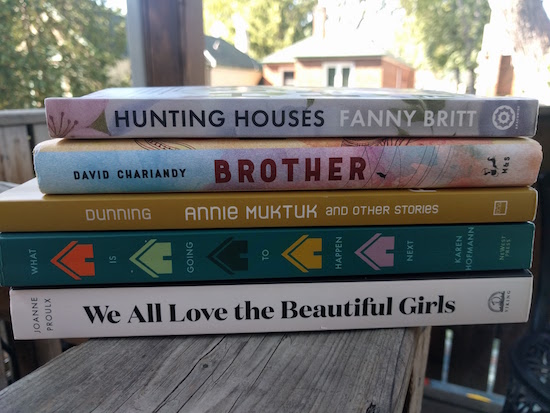
Finalists for the Governor General’s Literary Awards were announced this morning, and the shortlist for the Scotiabank Giller Prize came out earlier this week, and the Rogers Writers’ Trust Fiction prize list came out last week. Interestingly, none of the books that I’ve loved best this year are turning up on the prize lists—possibly my affection is a curse?—but I’ve been paying attention to this kind of thing long enough to know this is not something worth being bothered about. Nothing bugs me more than news stories after prize announcements highlighting what big names have been “overlooked,” or trying to be strategic about what books are nominated. Basically, it’s all very subjective, and I’m just happy that all the big Canadian prizes highlight such a wide selection of books this year. There are many titles on these lists I haven’t read yet, and I kind of love that—the possibility that they may indeed end up among the books I’ve loved best after all. Which certainly include the five titles I talked about on CBC Ontario Morning today. You can listen again on the podcast—I come on at 25 minutes.
October 3, 2017
Snacks: A Canadian Food History, by Janis Thiessen
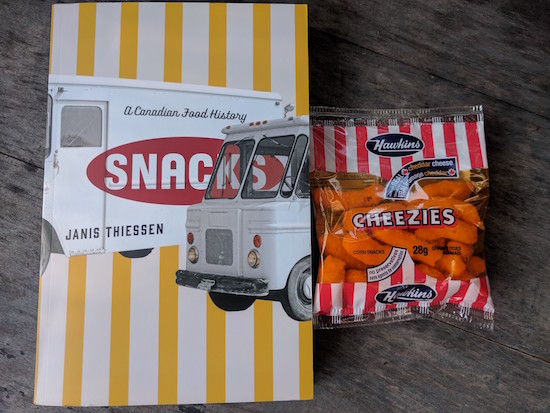
As soon as I heard about Janis Thiessen’s book, Snacks: A Canadian Food History, I knew I’d want to read it, for so many reasons, not least of all because I’d necessarily have to purchase snacks in order to authentically Instagram my reading experience. Props, I mean. Plus, basically I’ll do almost anything to justify a bag of potato chips. I knew the book would inevitably lead to the purchase of cheezies: “It’s for work,” I’d tell the sales clerk, making sure to save my receipt. “The things I do to support Canadian and books and literature”, I’d self-congratulate, all the while licking orange cheese dust off my fingers. And all of this pretty much perfectly transpired, with the added bonus of the book being fascinating.
Now, if you cannot fathom how a book about the history of snack food might be fascinating, then I’m not going to try to win you over, but if Snacks already sounds intriguing to you, you won’t be sorry. Thiessen begins her book by placing snack food in the context of contemporary food culture, which stresses health and wellness, all things “natural” over processed, and sees fit to gloss over class, gender and labour issues in the ways we value and talk about food. She writes about the role of snacks in her childhood, which made me think a lot about the potato chips that were a fixture of my life when I was growing up—and how my Dad’s glove compartment was always packed with Bazooka bubble gum. She gives an inventory of her own family’s pantry, and challenges the vilification of snack foods in several interesting ways.
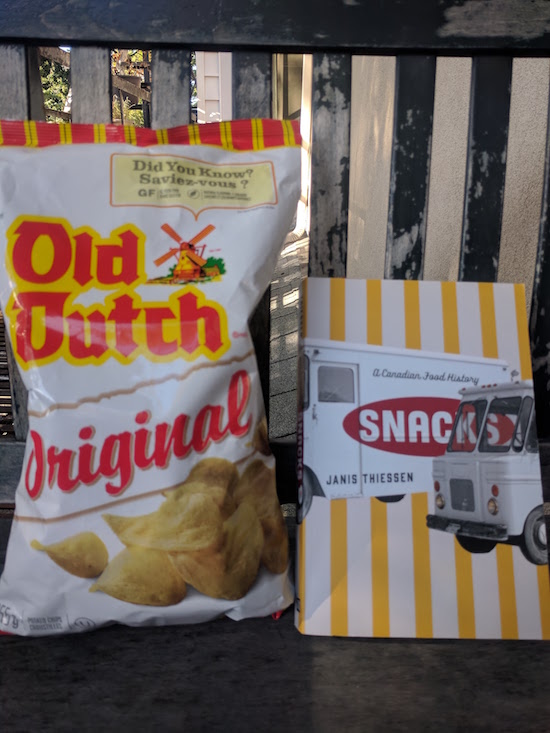
I wanted to buy a bag of Old Dutch potato chips to accompany my Hawkins Cheezies, but tracking down a bag here in Ontario would prove surprisingly difficult. Or not so surprising, I would learn, as I started reading about the Potato Chips Wars of the early 1990s (which were really a thing!) in which Old Dutch tried to expand into Eastern markets and Hostess Frito-Lay would go into Toronto stores and buy all their Old Dutch stock, promising discounts on their products if they didn’t sell Old Dutch again. My husband finally tracked down a bag at a convenience store on Bloor near Bathurst. Previously, he’d seen a box of 50 mini chip bags on sale for Halloween, and I admonished him for not buying the box—it was portion controlled, I pointed out. We could have kept the box around and had chips for weeks and weeks, except that we then devoured the one bag of chips he did buy so thoroughly that I realized no chips were safe in our midst. It was honestly fascinating to learn more about the history of the potato chip though, its industrial and agricultural histories, about the consolidation of potato chip companies in Canada, that Old Dutch, that Canadian mainstay, isn’t even actually Canadian….
Neither is Hawkins Cheezies, I was shocked to learned, or at least it didn’t start out that way. Hawkins began as a big American snack food company that fell apart due to scandals connected to divorces and Mafia ties, and what was left of the company was a plant making cheeses in Tweed, Ontario, whose business has remained unchanged for more than half a century. There is a mythology around these products, a national mythology too, and Thiessen probes these to interesting ends. Her research consists of oral stories by plant employees, getting at the labour side of snacks in a way that most food discourses neglect to. Readers learn about the experience of working at or managing Old Dutch and Hawkins plants, and other food companies, as well as candy, chocolate and biscuit factories. (Interesting fact: huge risk of fire and explosion in candy factories. Who knew?) Other companies Thiessen writes about include Paulins, Moirs (whose 1980s’ commercial for Pot of Gold I remember well…) and Ganong, Robertson’s Candy, Cavalier Candies, Purity Factories, and Scott-Bathgate.
The book’s last chapter is about a game show produced regionally across the Canadian Prairies in the 1960s called Kids Bids, wherein children were encouraged to save wrappers from Old Dutch potato chips and then bring in their collections to the show to bid on coveted items—top prize was a bicycle. Exploitive and unhealthy, perhaps, but Thiessen shows how the show gave children agency and opportunities…and basically eliminated litter from chip bags. Oh, those were the days…
October 2, 2017
Pickle Me This goes to Edmonton
I lost my umbrella when I was in Edmonton, possibly in a bookshop, or somewhere en-route to the Hotel MacDonald, where I got to have fancy drinks with writer and blogger extraordinaire Shawna Lemay. So does that make it a literary lost umbrella, I wonder, even if it didn’t happen in fiction? Although I include the umbrella Virginia Woolf lost on a bus, and that wasn’t fiction either. Does it still count as a literary lost umbrella if it’s pocket-sized? Pocket-sized umbrellas just don’t seem all that literary. But they are particularly easy to lose.
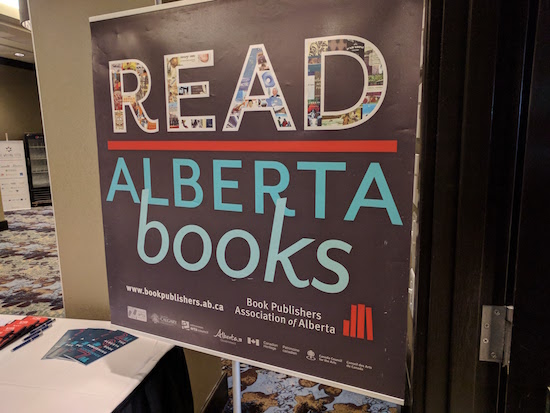
Umbrella losses aside, however, as well as a minor mishap where I drank too much tea and managed to poison myself and spent an afternoon in bed in my hotel room, I had a wonderful time in Edmonton. (This was about two weeks ago. I’m a bit behind, blog-wise, and working hard on catching up.) I was invited for the Book Publishers Association of Alberta’s Annual Conference to give a presentation about why book blogs matter, and arrived in Edmonton on Thursday afternoon on a plane packed with women who were heading to some weird multi-level marketing conference for beauty products and obviously tried to convert me into their cult. (“Are you looking for your Plan B?” the woman sitting next to me on the plane was asking, and I’d never before considered how awful it would be to be trapped on a plane with people who were trying to convert you into their cult. I am still disappointed that I never thought to answer, “Are you peddling beauty products, sister? Cuz I don’t need no beauty products.”)
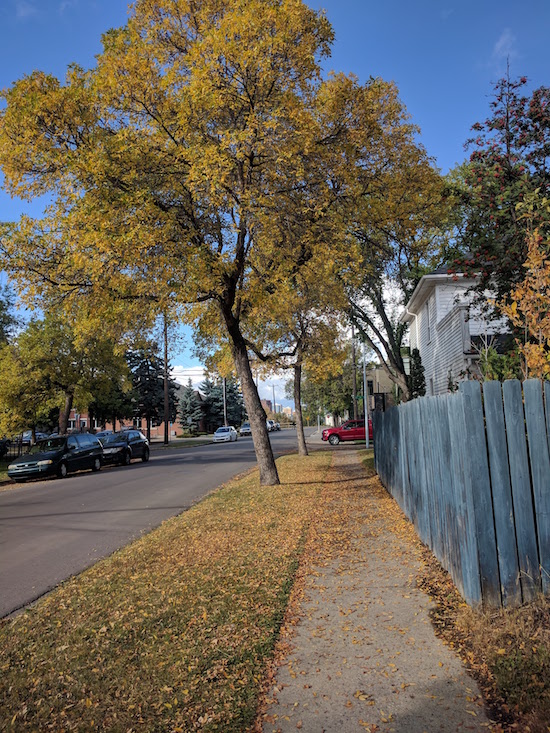
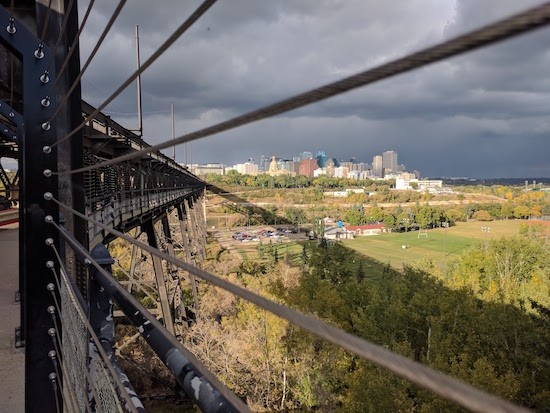
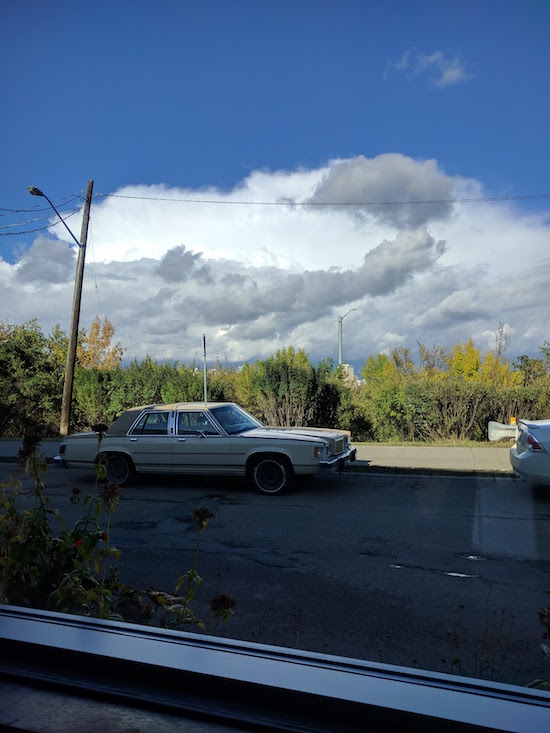
I had half a day to spend in a city I didn’t know yet, which is the most incredible kind of luxury, I think, in terms of time and opportunity. After finding my novel for sale in the airport bookshop (where the booksellers had even heard of it, or at least were very convincing in pretending they had…) a taxi delivered me to Whyte Avenue where I poked in shops and hung out in a Second Cup to charge my phone, and then I started walking, taking in the golden light in this place where Autumn comes earlier than it does where I live. Edmonton is beautiful, and it was a gorgeous, crisp fall day, and I had a very good time exploring on my own, making lines on a map that was new to me. When I reached the edge of the river valley, I was able to take in a great deal of the city at once, and it was gorgeous. I stopped at the High Level Diner for dinner, and it just happened to be Ukrainian night, so I got to have pirogies and borscht. And then I began my long long walk across the High Level Bridge with great dramatic clouds rolling in (see my first photo, above) and at this point I was pleased that I still had an umbrella.
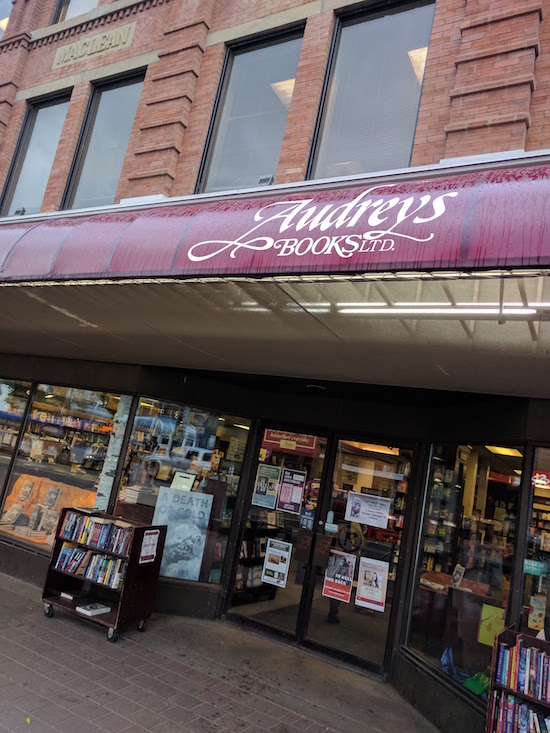
As visiting bookstores is basically the reason I go anywhere, a trip to Audreys was the thing I most wanted to do in Edmonton, and it lived up to my amazing expectations. Although I must admit I’m partial to Audreys after my book was an Edmonton bestseller in April, and it was also pretty splendid to see it on the Staff Picks shelf. But even without these glorious details, I would have been happy to spend time browsing in Audreys, where I managed to find perfect gifts for each member of my family, and I bought Jen Powley’s memoir Just Jen and Claire Kelly’s debut poetry collection, Maunder, both of which would turn out to be very good choices.
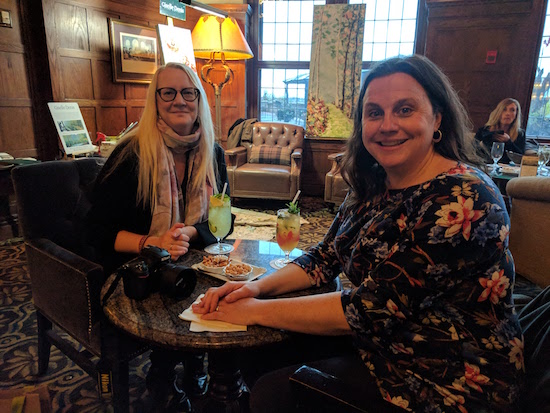
Shawna met me at the bookstore, and then we went out for drinks, and had a delightful time. We’d met briefly at Shawna’s book launch in Toronto awhile back, but not exactly properly. However she is one of those bloggers that gives you the impression—with her candour, generosity, eloquence, thoughtfulness—that you know her. And I think I really did, because we had a terrific time together, never running out of things to talk about, and I could have talked forever, except that it was getting late and I was operating after a day of travel (planes and walking) and a two hour time difference. Luckily we got to keep on talking as Shawna kindly drove me to my hotel.
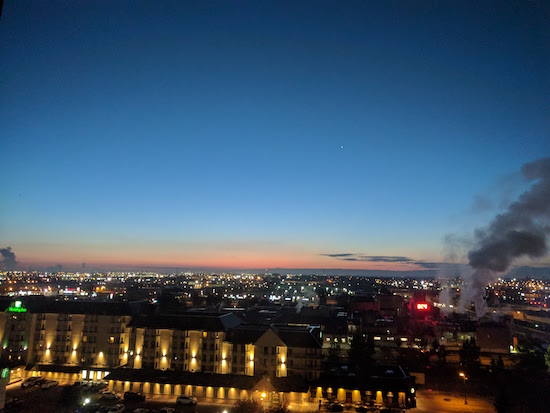
I saw the sun come up the next morning—I woke up at six so I could call my children before they headed off to school. There is nothing in the world quite like a prairie sky. And then I ordered room service and read books, and prepared for my presentation later that morning, which went very well, and it was so terrific to meet people in the Canadian book world with whom I communicate often and/or have been familiar with for years. I take for granted sometimes Canada’s hugeness, and that there are also these people I’ll never have the chance to meet face-to-face and then I do meet them and realize how powerful it is to bring people together and how much our culture benefits from these true connections being made. I loved Saskatchewan poet Brenda Schmidt‘s presentation about how social media has become her workbook—I identified so completely. And it was especially nice to be there to celebrate Alberta Books when I’ve been especially fond of them lately—Annie Muktuk and Other Stories and What Is Going to Happen Next are two stand-outs. It was a privilege to be part of it all, and hanging out in Edmonton.