August 15, 2019
Immediacy
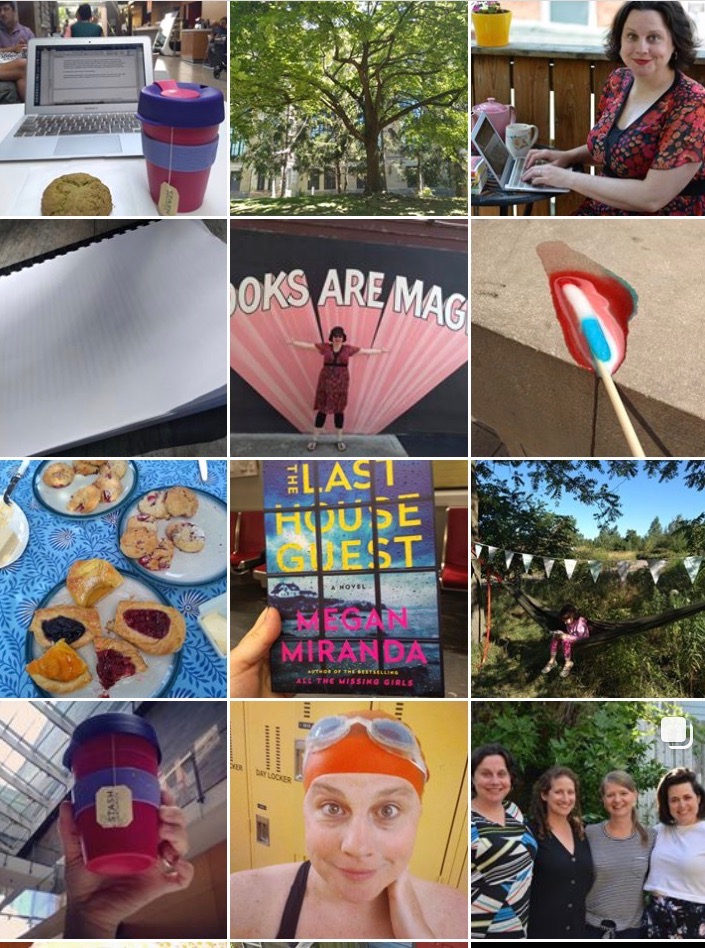
I’m really terrible at Instagram. Or rather, I’m totally amazing at Instagram, were Instagram a blog circa 2004. I share too much; cannot hold back; it’s sometimes poorly lit and totally unfiltered—well, except the photos of me in the yellow locker room first thing in the morning, which are what filters were made for, aesthetics are not central to the experience, the colours clash, and my face is everywhere. You either like it, or you don’t.
But I love it. For me, my Instagram is an extension of my blog for sure, the place where my most mundane and curious content has migrated. It’s a scrapbook of my days, my moments, and it’s also got the community component that blogs had circa 2004, people I’ve never met who feel like my friends. And there are certainly things I’ve posted on Instagram that have turned into actual blog posts, but just extended. Sometimes Instagram is where the thought begins.
It’s the immediacy of Instagram (and blogging) that I love, the Insta-ness. It’s the insta that makes the whole project worthwhile. Although there is actually very little that’s insta about Instagram anymore, now that the feed is algorithmic instead of chronological, and we’re all supposed to schedule our posts for optimum brand engagement. But I refuse to be a brand, and keep on insisting on being an actual, real live and moderately-flawed human being. Not for everyone—and that’s okay.
How can you even schedule a blog post, or an instagram post? For me, blogging has always been about the moment, capturing the atoms as they fall (to paraphrase Virginia Woolf). Right now as I’m scrambling to write this down with twenty minutes to spare before we tumble out the door and onto the subway to meet friends for a picnic. Context is everything, and so is (I suppose) exuberance, which is what leads me to post nine photos in a row in a single afternoon, an effort to (impossibly) capture every single angle.
This green, this light. How it was exactly. (And now it’s gone. But not entirely.)
August 12, 2019
Crime Fiction Round-Up
One Small Sacrifice, by Hilary Davidson
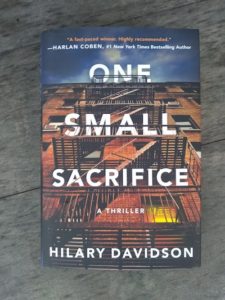
It took a bit of time for Hilary Davidson’s latest to grow on me, mostly because the novel begins after a lot of the story has already taken place. War photographer Alex Traynor escaped conviction after the death of his friend a year before, but Detective Sheryn Sterling has had her eye on him—and when his fiancee goes missing, Sterling is desperate to find her and finally get this dangerous character off the streets where he belongs. But of course, the reality of the situation turns out not so straightforward after all, as sections of the book from the point of view of Alex and his fiancee make clear. Even more difficult, Alex suffers from the effects of PTSD and isn’t entirely sure he can trust himself after suffering from blackouts. But once the novel got going, I was totally hooked, and there were plenty of twists I never saw coming. New York City also makes for a spectacular setting (that cover, right?) and Davidson evokes it so well. I really loved this one.
*
A Dance of Cranes, by Steve Burrows
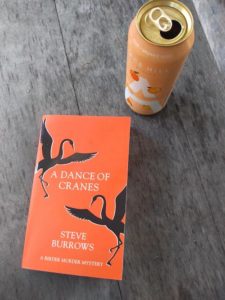
Can you believe I’ve been reading the Birder Murder mystery series for six books now? Never a disappointment, even if sometimes plot lines strain for credulity. (Shocking for a birdwatching detective series, right??) But I continue to adore these books, this one which starts off with Inspector Domenic Jejeune back in Canada and split with his partner Lindy (for her safety, of course, though he doesn’t bother to tell her about that) but now Domenic’s brother has gone missing in a vast and remote park in Canada’s north (obviously, there are whooping cranes involved) and it’s up to Domenic to rescue him, risking his life in the process. All the while back in England, Lindy’s life continues to be in danger, but not for the reason everybody thinks it is (and obviously, there are cranes involved, though not necessarily whooping) and will romance finally blossom between Detectives Lauren Salter and Danny Maik? A fabulous instalment in a series that is reliably delightful.
*
A Better Man, by Louise Penny
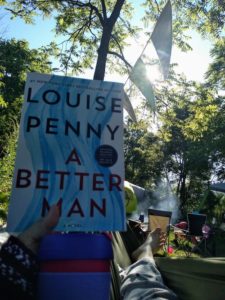
And speaking of reliable, the latest Inspector Gamache novel is a summer highlight for me every year, even through credulity often suffers the same straining. But reading Louise Penny while camping is my favourite thing, and I’ve been doing it for years now, for so long that I no longer believe that Gamache carries the scent of sandalwood, as the narrative asserts, but instead: he smells like campfire smoke. A Better Man stays close to Three Pines—rivers are raging and spring floods are high, putting the province of Quebec in peril. And then a woman goes missing, and her abusive husband just might get away with the crime. Gamache has returned to Head of Homicide after a demotion and is serving with his son-in-law, Jean-Guy, for one more case before Jean-Guy and family begin a new life in Paris. The personal and professional remain interwoven in this story, which was everything I look for in a Louise Penny novel. Reading it is truly a pleasure.
August 7, 2019
Get Excited and Make Things
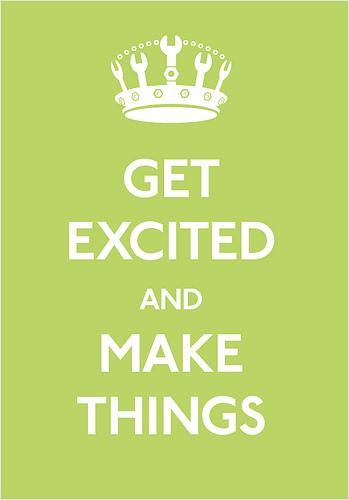
Once upon a time, we had a sign on our fridge that said, “Get Excited and Make Things,” and I have no idea where it came from, but apparently the meme originated in a 2009 Will Wheaton blog post, and the sign was stuck on our fridge with a magnet for years. Coming down at some point, but the sentiment lives on, and I think it might have become our family motto, if the enormous piles of stuff on my children’s crafting table are any indication.
But it’s a sentiment I believe in, and one I clung to as I entered 2019 feeling somewhat dispirited, mostly because I didn’t have much to feel excited about. Excitement is my driving force, and I didn’t know what to do with the year that lay ahead, in which no plans and schemes were being hatched, so I decided to make some. I went back to the blog, remember? And I made Briny Books and Blog School (with the help of my husband who built the websites for both—it’s a family motto, remember?), and now my little world is overflowing with things to be excited about, and I’ve got butterflies in my stomach perpetually.
And this is what blogging is all about, right? It’s about making something out of your stories, experiences and ideas, a DIY aesthetic, making the whole thing up as you’re going along and learning as you go. It’s being a blogger that has given me the mindset to take on these new projects this year, figuring it all out as I go along, to not know the outcomes, but to have some faith in the path forward. Let’s see how it all turns out, is the blogger’s approach, which requires attention, curiosity, and a capacity for growing, learning, and—ideally—being excited all the time.
August 6, 2019
Gleanings
- What is new is that I have decided, at the age of 60, that I am a goddamn knockout. Like Dorothy at the end of the film version of The Wizard of Oz, I had the power I sought all along.
- Just as “home” will always be the spot on the map where I am not at the moment, class is the same: one foot in each world, at home in both, never completely belonging to either.
- And reading continued to do its deep and secret work: it created for us a place each day where we could talk about things. How seasons change.
- Libraries are vibrant and fluid places that help us to adjust to the world and their doors must be kept open to everyone – for free!
- We’ve had a good long marriage, the still life painter and me.
- One of the things I love about concerts, theatre, lectures, any large spectacle, really, is taking in the audience.
- That ambivalence makes The Tortoise and the Hare more interesting…
- Along the way, there are a few rueful mentions of disappointments and reading gone astray … but it is all enchanting to listen to, and such a privilege to have shared.
- In fact, living here, along a beautiful country lane miles from the bustle, it’s quite easy to be in denial about just about anything…
- Classic Mennonite Elderberry Pie
- When life hits me hard, one of the first actions I take is to buy movie tickets.
- A narrative is purposeful and directed, but the news confuses me.
PS Big News: The Blog School website is live and our official launch is September 16! Learn more…
August 5, 2019
Keeping Blogging Weird
In the spring, @hkpmcgregor recorded an episode of Secret Feminist Agenda about “Keep Podcasting Weird,” and I’ve thought about the episode a lot in relation to blogging and book blogging. I had been blogging about books for awhile when publishers started sending me review copies in 2007ish, and while I was grateful for their attention and consideration, I lament now what it did to my blog. Because it turned my blog into a blog that looked like everyone else’s, and at the time I even thought that meant I was finally doing it right. But what gets lost—attention to obscure novels, my own unique perspective, the indulgence of my own curious avenues. It’s also just not as interesting to be blogging about exactly the same books that everyone else is, and what exactly is the point of this pursuit, beyond contributing to online homogenization.
I’d started blogging about books while I was a graduate student, so I’d been writing about Virginia Woolf and Victorian entomologists, and I was obsessed with the works of Margaret Drabble and Laurie Colwin…and then all of sudden here I was reviewing the new Ian McEwan. Yawn.
From my new online blogging course, Find Your Blogging Spark
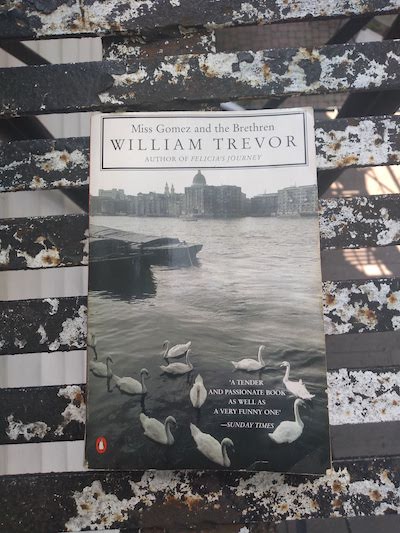
More than ten years on, I’ve learned the virtues of keeping it weird, who wins when we do (hint: it’s everyone), and what a more interesting place is the blogosphere and #bookstagram when we make space for novels purchased for a dime at a provincial park camp store. Books you decide to spend that dime on because of a description that begins with, “Only the pub and the pet shop are still inhabited in the boarded-up wasteland of Crow Street Southwest London…”
I spent much of this long weekend reading Miss Gomez and the Brethren, an early novel by William Trevor, whom I’ve never read before, and the novel reminded me of Muriel Spark, that curious midcentury mix of slightly old fashioned and shockingly sly and subversive at once, with an outsider’s view of Englishness.
I absolutely loved it, and have been thinking a lot about serendipity, partly because the book is about just that (although in a darker and less whimsical sense) and also because of the odds of this book and I finding each other, the most perfect literary match. Whoever left this book—which I’d never even heard of—in the camp store so that I would find it because we’d ducked in to get out of a thunderstorm, lingering over ice cream cones to avoid going out into the rain. Someone left it and I happened to find it, picking it up because William Trevor’s on my long list of authors I’ve been meaning to get around to reading, and here was one of his books in my hands, the kind of summer reading magic that is impossible to manufacture, but I’ve been grateful to be a beneficiary, and have this book be part of a wonderful long weekend.
August 2, 2019
Mrs. Everything, by Jennifer Weiner
I had an oddly optimistic revelation about the world the other day—odd, because I haven’t had an optimistic revelation about the world for at least four years—which was that when people look back on the literature published in the second half of this decade, they’re going to be thinking, “Good gracious, the Patriarchy (RIP) on its last legs must have been quaking in its ugly boots.”
Because the books are so feminist, and furious, confronting racism and violence against women. Fiction and nonfiction, commercial and literary—I promise I haven’t been even deliberately seeking them out. But almost every book I’ve picked up this year, and certainly every one that I have loved, has been staring the patriarchy in the face and having none of it. Refusing to submit, to be polite, to keep things uncomplicated, to tolerate the status quo.
And in 25 years—after the current US president has been found dead on a toilet, the stupid red hats have disintegrated (cheap production will do that), and a few remaining rat-men have built an all-male colony out in the ocean on an island constructed from millions of copies of 12 Rules For Life (I would LOVE to know the number of people who bought that book versus number of people who finished it; is that why it keeps selling? Because the reader hopes a different copy might prove worthy of their attention?)—these books will be what remains of this time, the culture we made.
It’s sort of like the illusion I once bought as a young person that the 1960s was only groovy and folk songs, instead of political assassinations, endless war, and racial violence. You know the expression, “You had to be there.” In this case, it’s kind of the opposite. It’s even better if you weren’t.
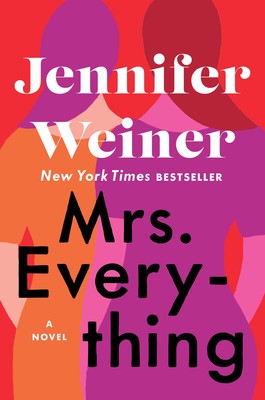
And this is the gist of Jennifer Weiner’s latest novel Mrs. Everything, her thirteenth novel and her tour de force, a novel that reminded me of recent work by Meg Wolitzer and Lauren Groff. My one criticism that it started out unsteady, the story of a family in the 1950s whose American Dream is coming true, a mother and father and two daughters who’ve just moved into red brick house in Detroit. The characters are a bit stock at this point, the good girl and the bad girl, their disapproving mother, some manufactured drama…but then the novel starts going and it never stops.
What I love best about this novel is what I love best about any narrative that features more than one woman (which is the only kind of narrative I love at all, to be honest). That the women in the book are not foils, that their characters and narrative development is sufficiently complicated, and that their relationship is as much supportive as it is fraught. And such is the way with Jo and Bethie Kauffman, the two sisters who grow up in that house in Detroit. One is posed to be the good girl and the other is the problem, and then fate intervenes and neither one ends up on the trajectory that she, the reader, or anyone else imagines for her. Jo will become a suburban housewife, Bethie the counterculture rebel, but neither archetype is the whole story, and the whole story is mostly that there is no right way to be a woman. We live in a society that’s going to mess with each and every one of us.
The novel takes the sisters from the 1950s through to the present day, and beyond, and its fabulous momentum builds as it goes. The sisters come together, are pulled apart, face heartbreak and trauma, keep going, keep learning and growing wiser all the time. This is a story of women, and civil rights, and the rise of LGBTQ rights as well.
The constants? Weight. It’s not a theme of the book, but it’s always in the background, as its always in the background (maybe not so far back) of the lives of almost every women I know. Feeling fat when you’re not, and then actually being fat—is it not remarkable that women are able to feel badly about themselves no matter what their size? It’s a fascinating narrative strand in the book. As is the idea of mothers wanting something different and better for their daughters than what they themselves have had to go through, but the thing about daughters (who are women, who are people) is that they don’t always want to dream the dreams their parents dream for them, and they have to learn from their own mistakes, and also none of us want to entirely believe that we’ll be subject to the same rules our mothers were. We’ll do it different, this time, and we do, but some things stay the same, as Mrs. Everything serves to underline.
As Michele Landsberg explains in her book Writing the Revolution: “Because our history is constantly overwritten and blanked out…., we are always reinventing the wheel when we fight for equality.”
But I would like to believe there is something different about the current moment we’re in, when women are finally courageous enough to call out discrimination, abuse and violence, to finally call things by their names. Because in not being able to do so before, were we blanking out our own history, our own experiences? Doing the work of the Patriarchy for it, but no longer. I hope.
Mrs. Everything misses absolutely nothing.
July 31, 2019
Stop Waffling, and Write
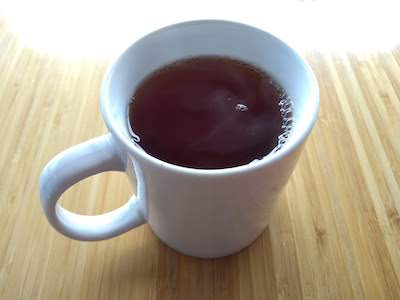
I finally read Brigid Schulte’s essay in The Guardian, “What is women’s greatest enemy? Lack of time for themselves,” an essay I’d seen many people sharing online last week. And to be honest, once I got to it, I found the piece a bit…slight? Understanding why it had resonated with so many women for sure, but it also frustrated me, and made me impatient. I wanted more. I wanted something less waffley (no offence to waffles) and less cribbed from A Room of One’s Own, because it’s been 90 years, and surely we can do better than, “What would happen if…” and thought experiments about Shakespeare’s sister.
(What might you have written had you not sat down to write the piece about how women don’t take enough time to sit down and write?)
I’ve spent the last few weeks completing the modules of my blogging course, whose goal is to deliver women the confidence (the nerve?) to carve out their own little space online, to emphasize to them that their voices matter and so do their stories, and that the world needs both these things. I’ve written 25,000 words that I’m proud of and excited to share very soon that I hope will inspire and motivate people who are blog-curious or at least need a little jolt to get their blogging spark back…but at the heart of it all there really is just one point, and it’s this one: You just have to do it.
And you know what? We can blame the patriarchy. (We definitely SHOULD blame the patriarchy. See Toi Smith: ‘Let’s stop calling it “mom guilt” because that’s bullshit and not actually a thing. Let’s start calling it what it really is: internalized patriarchy, capitalism, and white supremacy which has conditioned women to believe that once we become a mother our pleasure isn’t ours, that our joy isn’t ours, that our creative force isn’t ours, and that our time isn’t ours.”)
But all this means is that when you finally do sit down to write, what you’re doing is more radical, awesome and profound than you might initially understand it to be—which only makes it all the more important that you actually sit down and write. Telling yourself that you’re not writing because you don’t take time for yourself is a decision you have made, and it’s kind of boring. It’s also like telling yourself that don’t write because you’re a perfectionist, or that you don’t write because you have a job, or because you have kids. (To be fair, if you’re not writing because you have kids AND a job, I get it. Though there comes a point when “having kids” stops being an occupation that takes up every ounce of your soul and your life.)
Because there are so many people who face these hurdles, but leap over them and write anyway. There are so many women who do make time for themselves and for their art, even if we live in a society that conspires to make them feel guilty about those choices. So to stare wistfully into our teacups and lament the choices we’ve made to limit our creative experiences (honestly, you could let that call from your mechanic go to voicemail) because that’s just how it for women, it’s what we do, is essentialist and very annoying.
It’s also just another excuse to avoid doing the thing, and Brigid Schulte gets it exactly right when she writes, “I wonder if that searing middle-of-the-night pain that, at times, settles like dread around my solar plexus may not only be because there’s so little unbroken time to tell my own untold stories, but because I’m afraid that what may be coiled inside may not be worth paying attention to anyway. Perhaps that’s what I don’t want to face in that dusky room I dream of.”
The biggest challenge lies in not finding the time to write, but in staring such fear in the face. But it’s possible. With the knowledge that even if you fail, you’ll be so much further along than you would have been if you hadn’t tried, and also that you will never ever be better than you’ll be if you start practicing right now.
July 25, 2019
Find Your Next Perfect Summer Read

I made a brand new literary quiz to help you find your next perfect summer read! The results will be a bit familiar if you’re a frequent reader here on the blog, but this will help you decide which one to read first. You can take this quiz here!
July 24, 2019
Even Weirder Than Before, by Susie Taylor

There is a sweep to Susie Taylor’s debut novel, Even Weirder Than Before, each scene written in the present tense and turning into the other so seamlessly. Daisy Radcliffe—our protagonist, who we meet in her thirteenth year at precisely the moment that her father has left their family to take up with one of his graduate students—is never in transit, but rather Taylor has her narrative move from scene to scene and with such smoothness, like a film reel. Like the way that adolescence goes, I suppose, one life changing moment leading right into another without a great deal of forethought.
I really loved this book, which takes Daisy through her teen years, first kisses and first boyfriends, trying to find herself while her family has broken down, and the ebb and flow of friendship. Adolescence is a terrain that many authors have mined before, but Taylor’s approach is fresh and interesting, and all her characters are delivered complexity where lesser authors might have served up tropes (ie the depressed divorced middle aged woman; the deadbeat boyfriend). It doesn’t have quite the same level of absurdity, but Taylor’s narrative recalled Sue Townsend’s Adrian Mole Diaries for me, and also Brian Francis’s debut novel Fruit, both books light on the surface but rich with subtext, which Even Weirder Than Before is exactly.
It’s a queer coming-of-age novel, but its politics is a trick up its sleeve, the very best move saved until the novel’s final sentence. But in the pages before it, we see Daisy learning about her own power as a woman and lack of it, how her mother is messed by the patriarchy, and how the characters in the book, male and female both, respond to the shootings at Montreal’s Ecole Polytechnique, a tragedy that doesn’t appear to touch Daisy’s world directly, and she’ll be older before she really understands. With a subtle hand, Taylor has written a political book that’s also at home in its bright and appealing pink cover—and it’s absolutely a joy to behold.
July 23, 2019
My Favourite Podcasts
Honestly, it seems a bit perfect that a week after the New York Times publishes their “Have We Hit Peak Podcast?” article, I’d write a post about my favourite pods. After all, I’m publishing my post on a blog (from the article, “Like the blogs of yore, podcasts — with their combination of sleek high tech and cozy, retro low — are today’s de rigueur medium, seemingly adopted by every entrepreneur, freelancer, self-proclaimed marketing guru and even corporation”), a form that’s been pronounced dead so often on a regular basis for at least a decade that I kind of feel like an internet zombie as I type this.
Being timely is not my forte. Last week I joined the Patreon of one of my very favourite podcasts…just as the last episode of the season wrapped and they all went on hiatus. So maybe if Kerry Clare is rounding up a list of her favourite podcasts, we’ve hit peak podcast definitively. But on the off chance I’m not the only one who’s late to the party, I wanted to share links to the ones that I’ve been loving.
Even better, most are on a summer hiatus, so here’s your chance to get caught up!
I was referred to the Mom Rage Podcast by my pal Lindsay Zeir-Vogel (notably: a frequent caller to their Labia Hotline) and knew nothing about the podcast before I listened—I think it was the episode where they interviewed a mother who had an abortion. It was good BUT I will admit that I’d underestimated what the podcast was all about. Two blonde white ladies who live in California, I was thinking, shallow and light. But then: NO! I started listening more and realized the hosts (blonde hair notwithstanding) were both writers (Edan Lepucki and Amelia Morris), that they interrogate issue like race, sexuality, public schools and climate change, they’re both absolutely charming, funny and real, and suddenly I wanted to be their best friends. Notably, I’ve been reading books recommended on their podcast all spring—it’s all so good and interesting.

David Tennant Does a Podcast With…
Someone shared a link to this one on Twitter, and it was the episode where Tennant was interviewing Jon Hamm, which was totally weird for me because here were the two men from TV I’ve most fancied (Broadchurch and Mad Men) and they’re talking to each other. And then I listened to previous guests, including his Broadchurch co-stars Olivia Colman and Jodie Whittaker, and every instalment was just interesting and delightful, even the conversations with people I hadn’t supposed I cared about.
I think Can’t Lit was the first podcast I started listening to, and it’s been a fun and refreshing antidote to the fraughtness of so many literary conversations about community these days. Co-hosts Dina Del Buchhia and Jen Sookfong Lee deliver a generous and bullshit free approach to being readers, writers, and community members, and their conversations with Canadian writers are always genuinely interesting.

To listen to World of Stories, co-hosted by Margrit Talpalaru and Hudson Lin, is eavesdrop on two friends tackling that age-old question, “Whatcha been reading lately?” with a focus on diversity and representation. It’s a pleasure.
Another LZV recommendation (that woman’s one hell of an influencer, at least when it comes to me!), I’ve been listening avidly to Amanda Laird’s Heavy Flow podcast since the beginning of the year, and it’s taught me so much about feminism, periods, and the no-longer-mysteries of my own body. (I also reviewed Amanda’s book of the same name back in March.)
Can a podcast be an academic project? This one can, and it’s even peer reviewed, which is fascinating. And it also means that not everything on Hannah McGregor’s podcast is RIGHT up my street, but so much of it is, and her ideas about academia are applicable to other parts of life. I’ve learned a lot from this one, and really admire McGregor’s persistence and desire to learn and grown through her work.

Call Your Girlfriend and Going Through it
And…the podcasts that I am definitely so late to the party in recommending. I really like Call Your Girlfriend, co-hosted by Aminatou Sow and Ann Friedman (“We believe that friendship—particularly among women and femme-identified people—is a defining, important, and powerful relationship, and that conversations among friends can be the source of incredible social and political power”) and also the mini-podcast Going Through It, which Friedman made with Mailchimp. Good storytelling all around.