November 12, 2025
Done With Chasing

I am having a harder time than usual selling the spots for my 2026 manuscript consultations, which I mainly spread the word about on Facebook and Instagram, and my husband recently raised the question of whether the fact I’m the lead plaintiff in a lawsuit with Meta might be part of the reason why the algorithm is not favouring my content, and I mean, it’s plausible, no?
But even if it’s not, oh my goodness, I have had it with Facebook and Instagram. It’s all AI slop, confused baby boomers, and posts trying to break my heart or make me angry, even when they’re not stealing my work to run the world with AI. After I read the post from the LA Dodgers pitcher whose baby daughter had been stillborn, Instagram just starting showing me random posts about other people’s stillbirths. I only use these platforms on my desktop (um, because having them on the phone is scientifically proven to destroy one’s mental health), which no doubt is impacting my user experience, but that seems like a weird excuse. Most of the posts I’m shown are suggested posts with clickbait about celebrities I don’t know, scam ads for fake companies going out of business, “life update” posts from people I’ve never heard of, and carousel posts by people I don’t follow captioned “I’ve said it before, and I’ll say it again…” about their feelings regarding the elf of the shelf.
Whatever I still get out of Facebook and Instagram is in spite of Facebook and Instagram, and because of the human beings who still take time to post and share there, not because of anything an algorithm has ever delivered to me. Which helps me not feel so bad about my posts getting less traction, because it’s all so unpleasant, and I’m going to have to find a way to run my business and get the word out and promote my books away from Meta at some point anyway, because even when they’re serving me, they’re not really serving me—except maybe by feeding my humanity into their gross capitalism machine.
And it feels good to just admit it—that this is a game that I don’t want to play. Instead of trying to contort my life and my self to deliver whatever fickle thing that we’re all imagining that machine is craving so that we might possibly be rewarded (until it starts wanting a different and we have to change again). It’s a game I’m not playing on Substack either, surely to my detriment. But my sense is that focussing on my blog and using Substack to promote this platform is going to be more rewarding in the long run than becoming a star Substacker, even if the result is that I am a fairly middling Substacker, which feels like FOMO sometimes. And that is something I’m not that used to feeling on the internet, having spent 25 years (more than half my life!) with an online platform. Like, usually, I get to be one of the OGs, but on Substack it’s not like that at all. Sometimes I try a little, and other times I don’t, and the results between the two remain consistent.
So I’m going to keep doing what I’m doing. I like Substack because the opportunity to be paid for my work has been meaningful, in terms practical and otherwise, and also because it’s a platform for my podcast (whose Season 4 will be dropping in January!). I joined Substack about the same time that the Notes timeline was rolled out, and I regret that I never got a chance to experience Substack without it, just because the only reason I came to Substack at all was because I was so tired of the incessant chatter of social media and far too many voice in my head.
But it’s here on the blog where my focus will remain, a decision that limits my reach, perhaps, but also means that I’m in control of what I do, that I’m writing for myself, that the people who matter will find me, and people who don’t only mean that I get to write with the lack of self consciousness that makes creativity possible.
January 2, 2024
Returning to Myself
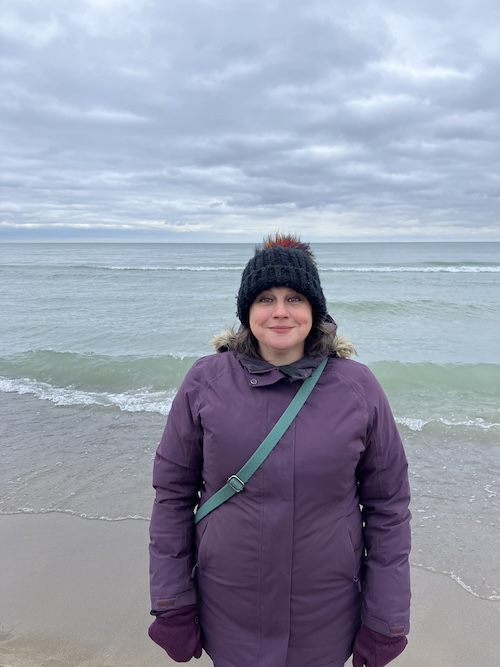
Something I’m grateful for is the way that selfies and Instagram have taught me to make friends with my face, with my appearance, which is no small thing when you’re a woman in your mid-40s (and I kind of wished I’d been able to do as much when I was youthful and 600% gorgeous but had no idea of the latter). For a very long time, I’d see pictures of my self and feel bad about not looking the way I thought I looked in my head. But once selfies became a thing, the face in the photo became familiar, somebody I recognized, even if she looked a little bit odd or the light was unflattering, but who doesn’t look odd, sometimes? How tedious to be the woman who freaks out about appearing in photos with the same face she walks around in the world with all the time.
There was also so much that was gratifying about Instagram’s algorithm’s favouring of faces, and bodies. The whole matter feeling particularly subversive since my face and body defy conventional beauty standards in some ways, and so I’d get to celebrate myself, to feel empowered and good inside my own skin, as though I was the one making the rules instead of catering to somebody else’s standard, and I was, I think, for a while.
Or maybe I never was, I don’t know. What I do know, however, is that at some point it started to feel not good. That whenever I needed the dopamine hit of engagement with my posts, I’d post a photo of my face, and the LIKES would start coming. And is that any way to treat my friend? Something that started off feeling empowering and meaningful becoming a cheap kind of gesture, and I became conscious of that. I became conscious of everything, this performance of my self, my life, my tea cups, even. I did not like it anymore.
Instagram wasn’t a performance, in the beginning. Or if it was, I didn’t notice, because it was serving me, and the LIKES came easily, so I didn’t have to think of them. (There were never so many, but numbers aren’t the kind of data my mind clings to.) I’ve spent the last 23 years putting elements of my life on the internet, and so social media feels natural to me, and I’ve always been able to use it in my own way, creating my own template instead of contorting myself in order to fit into somebody else’s, which is part of the reason why I’ll always be obscure, but it’s also entirely the reason I’m still here.
But last fall, it stopped feeling good to me. Partly it was became I was working so hard to try to sell my book (which is to say, to try to sell myself) and the book wasn’t selling. And—not unrelated—I was stuck in a rut in general, doing all these things both in my actual life and on the internet simply because these were things I always did, and while it’s true that rituals add meaning to existence, it’s possible to ritual so much that the life gets sucked out of them. The small ceremony of #TodaysTeacup began to feel rote. Posting my face began to feel rote. And then, even worse, I was doing all these things by rote and getting less engagement than I’d ever seen before, and it made me feel really bad about myself and about everything, and what even is the point of that?
Last year I struggled a lot to feel present in the moment. I think a lot of it was anticipation about my book release, so much set upon that event that every moment before it just felt like counting down the days. In the summer I swam to the middle of the lake in my favourite place in the whole world, and it just didn’t feel like my head was there, which was terrible since immersion in that lake, in that moment, in any moment, really, is so essential to my mental health. Similar to Instagram, it felt I was performing my experience, doing the things I do because these are the things I do, rather than consciously deliberately doing them.
By mid-December, I was pretty miserable. I actually diagnosed myself with a low grade depression, but I think I was just getting my period. Or maybe I was actually depressed after all, but getting off Instagram did the trick of fixing what was ailing me. Instantaneously. I think I’d been exhausted from the effort of trying to promote my book inside my little sphere of influence, like a crazy maniacal tap-dance that absolutely no one on the planet cared about, and once I got to stop dancing, it felt like such a relief. No longer scrolling past everybody else’s literary end-of-year triumphs, all the while my novel hadn’t garnered a single review. (And yes, I know that there are many writers who’d be grateful for the opportunity/exposure/sales I’ve been lucky to have, which is part of the reason talking about this at all is hard, but…that’s not the point?). Being able to just take a mug down from the cupboard without thinking about it. Heading out with friends and family and not taking a single photo, or if I did, not showing it to anybody. Noticing something beautiful, and not needing to share that beauty in order for it to true. Merely living a day, instead of feeling like I had to document it—and there was nothing mere about it. It was so restorative, and meaningful, and felt like I’d got a part of my life back that was only just for me.
And this is what I’m hoping of more of in this new year, to return to myself, to connect with the moment, to live more offline, and live differently on it. To spend less of my time striving for external validation (so much of which is superficial) and more time doing things that are meaningful to me.
October 17, 2023
Synthesis
If you’ve been around here for a while, you know that my blog is most useful to me as a place to work through my thoughts, ideas, and confusements, a place to try to synthesize ideas that seem disparate, contrary, and that this process is a way to calm my busy brain.
Synthesizing is what I do, as a human being and as a storyteller, and not long into my experience in therapy (for anxiety) it became very clear to me that every book I’ve ever published exists as an attempt to complicate binaries, to inhabit grey areas, and to bridge divides. And by extension, that I feel a responsibility to bridge divides, to manage conflict, that I feel a tremendous amount of anxiety about any conflict or disagreement that I’m not charged with mediating, and that I take on the role anyway in my own mind and fry my brain cells in an attempt to get it all sorted out.
Social media is really hard for me because of all of this. First, because I have a hard time understanding that not every message is directed at me personally—synthesizing is what I do, and so I’m using all the data, plotting it, trying to understand it, making it all make sense. And second, because it doesn’t all make sense, it can’t, and no amount of understanding or management can form all that noise (most of it charged by other people’s emotions) into a cohesive narrative—which, of course, doesn’t stop my brain from being wide awake at 4am trying to make it so.
That I can’t control how other people think or feel or emote—I don’t think I’m unique in finding this impossibly difficult. For me, that lack of control feels like a real threat to my security, even if it isn’t in practicality. Learning to let other people think what they think and feel what they feel has been an important part of my progress in terms of mental health, to learn to understand another even if I disagree. Also to sit with pain and suffering and their realities, instead of trying to fix it, or deny it. because it makes me feel better. To accept that there is not just one narrative (and also maybe that someone has more chance at arriving at what I believe to be the truth if I give them the space to get there themselves, rather than insisting on their arrival). That just because someone has a different story than mine, it doesn’t mean they’re wrong, or even that I am. I have become disillusioned with a politics of self-righteousness (along with hierarchies of suffering), because I don’t think righteousness is politically self-defeating (and also/and-by-extension, righteousness itself becomes a a silo in which one loses touch about what one is right about in the first place).
I don’t know where I’m going with this. And maybe that is the point.
And course, I sort of do know where I’m going (if not where I’ll ultimately arrive), which is that in the last week and a half on social media, I’ve been witness to conflict like I’ve never seen before. (Which, OBVIOUSLY, is the least important fact of all of them regarding conflict in the last week and a half, but, see, they’re not covering my mental state at the New York Times, so I’m sorting it all out here, and I know my three loyal readers will understand.)
So much CERTAINTY has been really impossible for me to grapple with. Of course, the proverbial “It’s complicated” is an obfuscation, for sure (as well as, in almost every instance in which it’s employed—mostly an excuse to do nothing, an acceptance of the status-quo) but I think “It’s simple” can be just as much. Especially when presented by both sides who are using identical language—of pogroms, of genocide, of being on the right side of history—and insisting that their opponents are simply presenting lies and propaganda.
How does one begin to synthesize that?
Partly, I suppose, by understanding that both sides are using this language inspired by genuine fear, by terror. Terror that’s justified by historical precedent, borne through inter-generational trauma, and justified by anti-Semitic and anti-Muslim acts of hate and violence. As a person who lives with anxiety, I actually understand a tiny fraction of what this must feel like. I felt it this week as my community centre heightened security, as I received updates from my child’s school in response to threats real and imagined.
But it’s the dehumanization I’ve struggled with, the reaction of so many to take sides, to post flags, the impulse to debate about just how babies were murdered, or justify the deaths of thousands more children. As though there was no other choice, that this is just the way. As though any of this will make anybody safer in the end. When you’re fighting a monster, and your enemy puts you in a place where you’re justifying the death of somebody else’s children (as though there were any such thing as “somebody else’s children), you’ve become the monster you’re fighting and your enemy has won.
May 31, 2023
On Momfluence
I was still five years away from motherhood the first time I came under the spell of momfluence, but of course 2004 was a very different time. I was living in Japan then and a blogger I followed about expat life in Japan took part in some sort of exchange with another blogger who was an American mother of three who lived in Malawi where her partner ran educational programming, and I was hooked. On her blog, which was called “Lucky Beans,” she used to have a blog feature called “Corners of My Home” where she could give readers glimpses into her family’s private spaces, which were usually littered with stones and pebbles collected in her youngest child’s pockets. I think her approach was Montessori-based and I was impressed by her household’s toy organization, a bin for everything and everything in its bin. None of the toys in her home were plastic, I think for Montessori reasons, but indeed this also had a particular aesthetic, and I fell in love with it. “When I have a child,” was the thing I thought, “this is the kind of mother I want to be.”
And I kind of was! There is no twist to this story. The internet has always been useful to me for aspirational purposes, but not in an aspirational aspirational way, if that makes any sense. It was never about striving for something unattainable, but instead putting an idea in my mind of an approach to parenthood that would suit my circumstances. And my aesthetic—I still hate plastic toys. But it was also less about aesthetics than practicality—I live in a small apartment and have never had that much extra money. Having less stuff and organizing it neatly just made sense, and also for the planet, because I think of all the exer-saucers that are going to outlive us all.
It helped that she wasn’t trying to sell me anything (like I said, this was 2004; she didn’t even have an Etsy shop!) and even if she was, I wouldn’t have been able to buy it. And indeed there was definitely an element of performance to her online identity (my favourite was the time she went away for a couple of weeks, and her husband took over the blog, temporarily changed the name of “Lucky Beans” to “Tough Beans: Dad’s In Charge,” and showed us a much less idyllic view of their domestic life) and surely there is one too to the fact that I’m writing this at all, and letting you know that even when my children began to acquire My Little Ponys, they were secondhand.
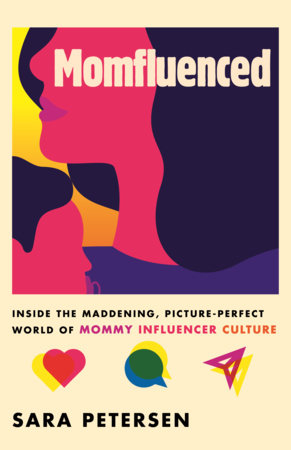
It’s complicated, which is the central thesis on Sara Peterson’s new book Momfluenced: Inside the Maddening, Picture-Perfect World of Mommy Influencer Culture. I have no idea how I would have been a parent before the internet starting throwing inspo my way, or how my own mom helped me figure out science projects, birthday party themes, or Halloween costumes without the help of Google (and to be fair, some of my Halloween costumes were pretty shitty). How performance is baked in to my experience of motherhood, as my blog documented my pregnancy, my bumpy intro to the mothering life, and then social media came along to help me track my children as they grew and grew and grew. Without online life, I would likely be less annoying in many ways, and I might even be less smug about my children’s wooden toys, and would they even have wooden toys at all if Lucky Beans hadn’t convinced me?
I think being an online creator, as opposed to a consumer, even as someone whose online platforms have a negligible following at best, has helped to keep my relationship to the mamasphere more positive and inspiring than soul-destroying; it’s broadened my world instead of depleting it. I wonder if it helped too that I didn’t join Instagram until 2016, by which time I’d found my feet as a parent, was not so lost in newbornland. And while I did recognize myself in some of Petersen’s profiles (I think we went apple picking twice and everybody hated it, and we don’t do that anymore; omg, I also just remembered the cookie bunting I tried to string at my daughter’s sixth birthday, which was definitely for the ‘gram, but I cut the holes wrong, and they fall fell together on a clump on the string before the whole thing fell on the floor) it has helped me that the ways I’ve been inspired by others’ online mothering has been alligned with my own inclinations anyway, that I’ve never been very interested in doing anything that I don’t want to do. (I don’t like crowds, for instance, so lining up for that iconic photo that everything else is doing is really not likely to happen.) I really do think that Instagram has inspired me to look for the spots of beauty in my life, and to try to cultivate more of that, which works to my benefit—it means there will be a bouquet of bright coloured tulips on table all summer long.
But I do wonder what the costs might be. What would my family photos look like if I hadn’t been influenced by other people’s poses? How would I be a different parent if I could be more focussed on the immediate, on the moment, rather than thinking about how it all might look from the outside, how best to capture the light. But see, would I even notice the light then? And I always notice the light. If a string of bunting hangs in the kitchen and no one is there to put it on instagram, does the bunting even bunting? (But it does! I see it every day! And oh, look at the light. Let’s take a photo. Let’s capture time for a moment, sunlight shining through the dregs of a jam jar like a Mary Pratt painting.)
May 18, 2023
On Mess
A blog post is always self-referential, even when it isn’t. The nature of blogging is that the blogger is always writing about herself.
(I think one could argue that this is true with any literary form, but with blogging it’s essential.)
*
I never read Dooce, though I got very into reading blogs at the same time her blog blew up, and I’ve been writing mine as long as she was. But she was a few years older than me, and I was in a different place during those few years where she was writing raw from the trenches of motherhood, a place where her words wouldn’t have registered. And then by the time I had children of my own (and yes, to quote her memoir, it sucked and I cried), she had become slick and branded, and so I never got to see myself in her story, as so many other women did.
*
*
I once read an entire book about the history of blogging that only mentioned a woman once, and it was a co-founder of Blogger who runs out of a meeting in tears.
*
Heather Armstrong made me uncomfortable for all kinds of reasons. You’d think that as someone who has also tried to tell the truth about motherhood, embraced online platforms for self-expression, struggled with mental health, and supports women telling their stories that I would have more compassion and empathy for her experience, but I struggle with this. I struggle with messy people. I like to imagine there are rules to be followed and that things generally work out for people who do, which is my own problem. I note how coverage of Armstrong over the years has tried to fit her into a narrative with a tidy beginning, middle and end, but she kept escaping these confines, kept being too much. I think of how we praise people for daring to tell their truths but then they keep going and we’re all, “Oh, no, not that truth. I don’t like that one.”
*
Armstrong’s life and death have a lot to say about the limits of personal storytelling. Did it prolong her life, or might she have been healthier without it? Without a platform to perform on, would she have been less narcissistic? But aren’t people with such tendencies always going to find a platform somewhere anyway, online or otherwise? Did it turn her into a character, a caricature?
I think a lot about my fervent believe that personal storytelling was going to save the world, that blogging (and mommy blogs especially) were a radical act. But the world is decidedly not a kinder, friendlier or safer place for women, for mothers, than it was 20 years ago when blogs were new.
*
I wasn’t surprised when I heard that Heather Armstrong died. I’d checked out her social media from time to time, and it was clear that she was struggling. She kept posing for pictures on her porch looking terribly thin, and it bugged me. I’m not saying this was justified, but this is how it was. That this person who was famous for the hugeness of her truth telling, for her audacity and nerve, was literally skin and bones, withering down to nothing, and posing for these pictures to which people responded by telling her, OMG, you look amazing.
*
But when I say “I wasn’t surprised when I heard that Heather Armstrong died,” I’m doing it again, putting stock in those rules. That this is what happens, logical outcomes. She had it coming. That narrative is inevitable. I’m trying to control the mess, apply my own kind of sense to it.
*
“But when we paraded through the catcalls of men and when we chained ourselves to lampposts to try to get our equality– dear child, we didn’t foresee those female writers,” said Dorothy Parker.
*
Maybe this is the problem of making any one person an emblem—of womanhood, of motherhood—when it’s hard enough being one single human. Of how women are expected to faultless, never misstep. Can a blogger ever really stand for anything except her self?
*
Part of the tension too is that we see ourselves in these women, our real and most authentic selves, but then they also show us our worst selves too, even when we don’t pick up on it directly. And then they also reflect their own selves, the parts of them that are nothing like us at all, and the effect of all of this is uncanny, the familiar rendered strange. How we want everything to be relatable and the gap becomes a chasm when it isn’t.
*
I want to admire people for daring to unlikable. Part of that deal, of course, however, is that I’m not obligated to like them.
*
I personally have such a hard time with the notion that a person can be a mess and that this is just okay. That a person can fail to follow the rules and still be worthy of love and compassion, even if there isn’t a fix. And I want to fix, I want to fix. For me compassion is the desire to fix, and I’d like to train my mind to get to a more generous place, a place for grace.
April 4, 2022
Seasons
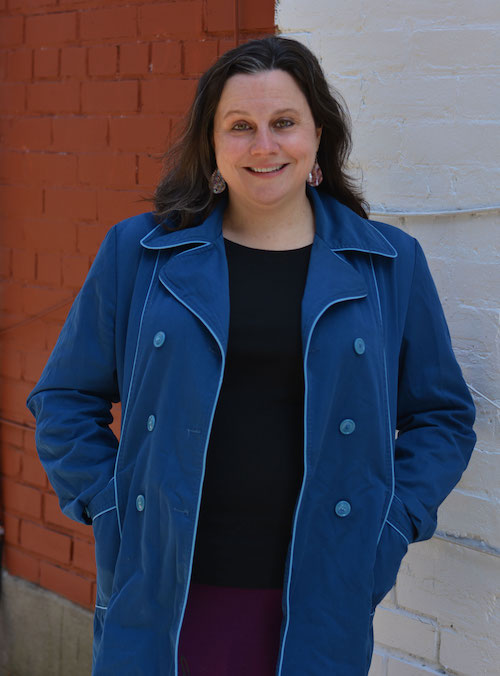
I am so grateful for seasons, and not just because some seasons mean I finally get to shake off my winter coat. I am grateful for seasons because they remind me that change is healthy and good, that cycles are an important part of being a living thing, and that nothing is ever standing still even when sometimes it appears to be.
I spent the first two months of this year having a restful season, with lots of spaciousness, room to reflect, and reconnect with myself after a difficult time. Believe it or not, all that quiet was fruitful, and all of it helped me feel like myself again, and then suddenly one day at the beginning of March, it occurred to me that what I was missing was writing and it was time to begin a new creative season, which has proven as wondrously restorative as my period of not writing had been.
If you too are feeling like it’s time to start creating, I’m happy to remind you that my online course, FIND YOUR BLOGGING SPARK, is ready whenever you are to help take your ideas in an exciting, inspiring direction. Email me with any questions and learn more on my Blog School website.
February 3, 2022
Ted Lasso and the Internet

The other day I stumbled onto a Reddit thread. I don’t usually visit Reddit, but I was searching for information about a gift card fundraiser my Member of Provincial Parliament was running for local families who’d lost their homes in a fire, and someone had posted the flyer on Reddit, others following up on how the fundraiser sounded like a scam (which it’s not, since I’d been emailing my MPP directly about it) and it just occurred to me how everybody on the internet always knows everything all the time, especially when they don’t, and maybe this is the very worst thing about the internet altogether (which is saying a lot).
This idea underlined during the brief moments I’ve spent—before I sensibly manage to pull myself away—reading comments on posts about obnoxious right wing protests, how little chance those commenting (on either side!) are giving themselves or those who disagree with them to listen and learn, to think and consider. How nobody is curious, and how those who support the protests are prone to knee jerk defensiveness, which results in things being irrevocably stuck.
I’m thinking too about how years of writing on the internet has reprogrammed my brain so that I’m consistently taking up the pose of expert, how I can barely know anything without considering turning those ideas into a listicle of life hacks.
And how even movements that began with best intentions—like women owning their authority and using “Dr” in their Twitter profile if they possess such a title, but how that’s led to a whole bunch of “Doctors” peddling misinformation about vaccination. (I’m looking at you, Member of Parliament for Haldimand—Norfolk.)
How nobody is asking questions, unless they’re “just asking questions,” and we know what that’s all about.
How nobody is ever asking questions that they don’t (think they) know the answers to already.
Which brings me to Ted Lasso. (Do all journeys eventually arrive at this place?)…
January 10, 2022
If the sun’s rays fall on the table, and nobody LIKES it, does the sun even shine?
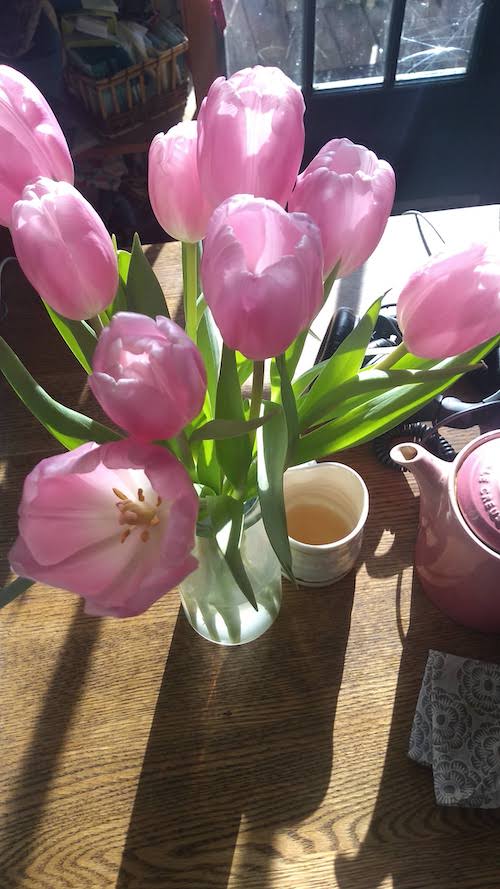
I was explaining how important Instagram had become to me as a practice of paying attention, of noticing. “The way the sun falls across my kitchen table throughout the day.” And I was asked if I’d still be able to do that without posting, making me consider what it means to have an app as an intermediary between me and the world that I’m supposedly paying attention to. It’s interesting—why do I feel like I want to work everything out in public? A question I’ve never really known the answer to, or maybe I do and it’s somewhat self-indulgent. When I’m teaching writing via blogging, I put it down to the form’s epistolary origins. To blog (which, for many of us, is what Instagramming is) is to be asking, “Is anybody out there?” (Though is it also to be demanding, “Look at me?”?) What if, “Is anybody out there?” isn’t even the question I need to be asking anymore?
Last week, I felt like everything I read was a message to my wondering soul. Courtney E. Martin’s newsletter, and this post from artist Lisa Congdon about how, “Lately, though, I’ve been feeling like a don’t always have something to say that hasn’t already been said…” But/and then I listened to poet Maggie Smith on the JOMOcast (and immediately ordered her journal and new book, Keep Moving, from which the journal is inspired) and she was talking about the usefulness of working things out in public, about not having to feel like there is a divide between one’s public and private selves—and I get that. It’s everything to me.
And yet. I guess the idea of fashioning being into some kind of performance makes me tremendously uneasy right now. There is a certain self-consciousness to it that’s tripping me up, and it hasn’t always been this way, but maybe it’s just that I’m more conscious of all kinds of things than I’ve been in the past, my self just one item among them, and so it feels like a performance, whereas it didn’t used to?
Is hyper-conciousness a thing? Because maybe considering this is the beginning of articulating what I’m going through right now, picking up on all the vibes, and I’m looking for what’s real and solid instead of what’s trending, what’s distracting, what’s noise. On the sun on the table, I suppose, even when it’s not posted for everyone to see. On this blog, which is somewhat of a more private place.
What would happened if I really zoomed in, intent on focus? This day, this house, this moment. Right now?
October 21, 2021
10 Questions
The excellent Kate Jenks Landry did a Q&A with me on her inspiring blog, and you can read it right here!
March 2, 2021
Something to Be Said for an Island

During the past year, I lost all my patience with the hive mind. I don’t think I’d ever blocked an acquaintance on Facebook before, but this year it’s been something of a reflex, and not even without sometimes telling that acquaintance to fuck off first , as in *typing it right out there in the comments thread,* instead of just yelling at my screen as per usual.
I mostly have quit Twitter altogether, because constant access to everybody’s thought processes like a ticker-tape was turning me into a misanthrope.
I still marvel at all those curious enough to put the big questions onto social media, beyond maybe, “What are your plans for tonight’s supper?” I am here for the minutia and your photos of your cats. But oh my god, I have never cared less what you think about vaccinations, or lockdowns, when you’re local nail salons should open, and my aversion to the airing of these concerns is so apolitical—the over-anxious bother me as much as the laissez-faire types. (Though it’s worth noting that I don’t have many of the latter in my circles, really. And if I did, I probably told them all to fuck off last April…)
I think it’s because I’ve found this very tenuous balance of keeping it together, and anything that causes me to waver makes me irate. And I don’t mean “anything” in terms of data, facts or news stories—I am always happy to consider these, because it’s not like I don’t inhabit reality, but it’s just other people’s feelings, other people’s fears and worries about the same things I fear and worry about—I just absolutely lack the capacity to take them on board.

Which is why my blog has more than ever seemed like a beloved retreat. Where I go to write pieces for myself, and I don’t even share some of the posts on social media because I really don’t care what anybody thinks of them, and I write these pieces for myself more than anything. If someone shows up and finds my thoughts worthwhile, then that’s terrific, but it’s not like I’m broadcasting them, you know? It’s “I don’t care what you think,” but not even from a place that’s defensive. Like really, all the work I can do right now is the work in my own head.
(It’s worth remarking that I have infinite capacity for other people’s blog posts, for their thoughtfulness and process, for work that makes me think. It’s the more surfacey, less exploratory kind of content that I just can’t contend with.)
And the strange thing about all of this is that while I’ve also been having no truck with the virtuals, I’ve been trying very hard to be zen about the actuals. Accepting that the behaviour of others is beyond my control, trying to trust that most people will make good-enough choices for our community, and trying not to lose my mind about people who don’t, because that anger serves no one. Possibly this is easier because the actual people are more theoretical these days of isolation, and virtual people are all getting up there in my online grill, having ideas and opinions, and everything.
(It is possible that the latter group of people drives me up the wall because they are proof that Project of Live-and-let-live is a lost cause? Or does Live–and-Let-Live only work if you keep people at a remove [ie not while receiving a tickertape of their every waking thought]?)
On the weekend, there was an article in the newspaper about “conspirituality,” which is the kind of nonsense I’m all over—if you ever want me to read an article, make sure it’s about a cult, is what I am saying. And I checked out the Instagram account for the woman mentioned in the first half of the article, and couldn’t stop scrolling because her audacity and entitlement was just so fascinating to me, like all I want to do is figure it out… But I won’t. And eventually I had to stop because if I didn’t, my brain would have exploded, and I just have to let it go, let that whackadoodle woman do her whackadoodle thing, and let all her whackadoodle fans respond to her posts with the worshipping hands emoji.
Like I’m reconsidering the idea of society as a web, is what my point here, or maybe I’m talking about (just?) the web as a web instead. This blog as the place I’ve got out in the country, off the grid, where we’re collecting the water in a rain-barrel, and while you’re welcome to stop by and I’ll pour you a cold glass of lemonade, there is really something to be said for an island.