December 23, 2011
Our Best Book of the library haul: Don't Slam the Door by Dori Chaconas and Will Hillenbrand
 Of course, this was our favourite book from the library haul this week. Don’t Slam The Door has rhyming couplets, fabulous vivid drawings, and is one of those causality lesson books (like Tumble Bumble, one of our favourites). The little girl implores the dog not to slam the door, but then he does and all hell breaks loose, just as she’d predicted– knotty wool, stinging bees, cows in the bed, and whatnot. Delightful. But I especiall admire the bossy little girl at its centre, demanding everything of everyone around her, and doesn’t she seem just a little bit familiar.
December 20, 2011
The pieces we've chosen

Hattie prepares to roll out the pastry
Someone asked recently what the reasons are that those of us don’t go to church still make a point of celebrating Christmas. To which I answered that it’s about lighting darkness, about remembering all things that are evergreen, and celebrating the miracle of new life. And so there’s a 7 ft tall balsam fir in our living room, stockings by the fire, and we’ve been baking cookies shaped like stars and crooked snowmen. Gifts are very far from the point, and what gifts there are are most often books. Harriet has asked if Santa not come this year, because she doesn’t like him. “I want my stocking empty,” she kept saying, and we’ll listen so not to traumatize.
We sing Christmas carols, traditional ones and ones by Slade, Wizzard and The Pogues, and this year we’ve told Harriet the Christmas story, because these things are of the culture we’ve come from, and we like stories of all kinds– we recently purchased our own copy of Dick Bruna’s The Christmas Book after reading the library’s copy to near-death. We’re also reading A Christmas Carol together, each of us for the first time, and however familiar the story is from popular culture, it’s a joy to be discovering. In particular since we have a gorgeous big edition with illustrations by Quentin Blake, and although I’m not sure how much Harriet is really getting out of it, she’s taken with Tiny Tim. Kristen den Hartog’s most recent blog post has made me interested in making the film version of the book part of our family holiday tradition.
And oh, tradition, isn’t that at the heart of it? These hooks we hang our lives upon. To be without religion is not be rudderless, I insist upon that. I guess some might resent that we pick and choose the pieces with which we build our life, but the pieces we’ve chosen are chosen with care, and held in reverence.
December 19, 2011
Blogging course makes the news
Much of this Fall was consumed by the adventure my first round of teaching The Art and Business of Blogging at through UofT’s School of Continuing Studies. An article on the course was included in The Toronto Sun‘s recent continuing education supplement, and is available for your reading here. And just a reminder that the course will be offered again in the spring!
December 19, 2011
I read The Spoiler and Osprey Island
 Without actually intending to, I’ve gone on vacation, mostly thanks to the last two books I’ve read, both big, fat, enveloping novels. The first was The Spoiler by Annalena McAfee, which was published this year in the UK and will be out in Canada in April. McAfee is a veteran newspaper journalist, as well as (less interestingly) the spouse of Ian McEwan. The Spoiler is her first novel, something of a roman-a-clef, which takes on the UK newspaper business, whose own business has been creating its own press for last six months with the News of the World Scandal. Though McAfee sets her book in early 1997, not so long ago that the fundamentals were so different (or at least the sleazy, illegal tabloid tactic side), it was certainly a different time– John Major was at the end of his power, Spice Girls were only in the ascent, Princess Diana was still campaigning for landmines, and Liam Gallagher was married to Patsy Kensit. And notably, in the newsroom, expense accounts were limitless, and the internet was only going to be a fad.
The problem is that McAfee’s narrative is all too aware of itself, conspicuously placed on a pivot point, and when her protagonist Tamara Sim references Princess Diana and Jill Dando in the same chapter (who’d both be dead not before long, we know), or dismisses the internet as a fad, we’re taken out of the story, and placed above her. Though perhaps such a vantage point is appropriate, because we’re clearly expected to find Tamara something of an idiot. And it it is curious why she, glossy celebrity gossip scribe, has been enlisted with the task of interviewing formidable journalist legend Honor Tait, now aged 80 and doing publicity for a new collection of her articles and essays.
Fallout is to be expected as these two very different characters collide, and the effect is uncomfortable, amusing. As the novel proceeds, both characters become better developed, though Tamara mostly remains a caricature. Fortunately, the plot itself so picks up in the novel’s second half that such a flaw is forgiven. The book’s ending is surprising, absorbing, and serves to strengthen all that came before it. It’s a good old read, and quite devourable in its light touch. Comparisons to Nancy Mitford and Helen Fielding are apt, though I’d probably lean more to the latter. Perhaps like Helen Fielding equipped with a thesaurus is how you’d sum it up just right.
And then there’s Thisbe Nissen’s Osprey Island, which I bought from a clearance bin in 2009 and never got around to reading. And I  picked the wrong season within which to finally get to it, because this book is Judy Blume’s Summer Sisters meets Dirty Dancing. You’ve got the island lodge with the townies, a crop of Irish chambermaids on working holiday visas, and the preppy waiters (“You just put your pickle on everybody’s plate, college boy, and leave the hard stuff to me.” The thing you might not know about me is that I reviewed Patrick Swayze’s autobiography last year. But I digress.)
Plot hinges on a troubled couple, a fiery death, and battle for custody of a vulnerable boy, with sideplots involving chambermaiding, summer love, the Vietnam War and hotel life. Nissen’s a really good writer, which heightens the novel’s more trashy elements, and many of the characters are startlingly evoked. It’s a beach read for the thinking woman, and I enjoyed it even though I don’t even have a beach.
December 18, 2011
Making the season right
 From my Christmas post at Canadian Bookshelf, “Books: Help to Make the Season Right”:
“Pictures of this Christmas book tree have been making the rounds online for the last week or two, representing a tangible link between reading and the spirit of the holidays. Though such a link would come as no surprise to anyone for whom gift-giving is a tradition, because there is no object on earth as easy to wrap as a book is. Even the clumsiest thumbs are capable of a present-worthy wrap job, thanks to compact solidity and right-angled symmetry. Further, once the wrapping is shed, the book is ready for reading straightaway, no batteries required, no plugging in to charge… Books have the potential to make everything that’s wrong with Christmas right, to make gift-giving about more than acquisition and stuff.”
Read the whole thing here.
December 18, 2011
I had a plan once
 I had a plan once, that I’d have a book before I had a baby, but it turned out that I had a book that wasn’t very good, and one can put off having a baby forever. So I had a baby, and then I wrote a lot of other things, but it’s hard to write a new book when one took you wrong before. The first (or, ahem, second) time around, you can fool yourself into thinking the objective is just writing to the end, but there’s more to it than that. It’s hard to write a book once you’ve learned that your best might not be good enough, that hard work really can come to nothing, that the doubting voices in your head might be telling you the truth. It took me three years (and many false starts) to get to the point where I was ready to start again, but once I did, I found myself tremendously liberated. There was no fear of failure, because I’d done that before and survived, and I could do so again if required. And having my illusions shattered, I knew there was no other reason to be writing another book except for the sheer love of doing it, and love it, I truly did.
I started this first draft in September of 2010, and my goal for 2011 was to finish it. The manuscript was finished a few months ago, but it was only this morning that I printed it out (on green cardstock, because what else am I going to use it for?): 128 pages, 65,000 words, absolute proof of goal achieved. And you know what? It’s actually pretty good. I’m looking forward to reading it over the next few weeks, red pen in hand, and then beginning my second draft with a blank page, new document, and trying to make it as good as I possibly can. Which is now my goal for 2012, as well as to enjoy every step along the way.
But in the meantime: hooray for right now. Another goal is to remember that hurdles are milestones.
December 15, 2011
Our Best Book of the library haul: Singing Away the Dark by Caroline Woodward and Julie Morstad
 Okay, here’s the perfect picture book for the darkest time of year. Caroline Woodward’s rhyming verse matched with Julie Morstad’s illustrations (and oooh, that cardinal!) make Singing Away the Dark an absolutely delightful book. “When I was six, and went to school, I walked a long, long way…” this book begins, and its narrator recounts her bravery as she walks a mile to the school bus before the sun’s even risen, facing the dark, the shadows in the trees, and other obstacles (errant cows!) by trudging forthwith and singing loud. “I see a line of big old trees, marching up the hill. ‘I salute you, Silent Soldiers! Help me if you will.'”
My love of Simply Read Books knows no bounds lately, and I’m so happy to have discovered them, for their books are always wonderful, but also beautiful (and oh, the endpapers on this one, a pattern of leafless trees). And once again, I’m cheating, because I didn’t find this book on my own, but rather it comes recommended by Theresa Kishkan, Sara O’Leary, AND the Canadian Children’s Book Centre. And really, the quality of the book warrants all the hype.
December 15, 2011
Terroryaki by Jennifer K. Chung
 Inside the realm of too much information, you should probably know that I spent a good hour and a bit in the bath last night enjoying Jennifer K. Chung’s novel Terroryaki. And yes, this novel was the winner of the 2010 3-Day Novel Contest, which probably explains its frenetic pacing and shamelessly surfacey plotline, but it’s also about $10 cheaper than your average paperback, its smart design compact enough to fit into your back pocket, and shameless good fun. And perhaps its just the suggestion of its cover, but I came away feeling as though I’d just read a comic book without the pictures (right down to the demon showdown at the end).
Daisy’s sister’s wedding is only 3 months away, but her parents are still disapproving of her fiance for not being Asian enough, or rather for not being Asian at all. ( I enjoyed Daisy’s ever-shrieking mother, and Daisy’s description of her: “She wasn’t a Tiger Mom. She was more like a squirrel”). The family dramas are, at least, taking the heat off Daisy for her lack of drive– she works part time in a teriyaki restaurant, and is a passionless student at the community college. Certainly, Daisy does have her passions though: art and food (and food blogging). She becomes obsessed with a food truck she begins to spot around town with a skull and crossbones painted on it, and the promise, “The Best Teriyaki in Seattle.” The teriyaki is indeed delicious, but the truck has a ghostly aura. It keeps appearing and disappearing mysteriously, and it soon becomes clear that something sinister is afoot (possibly connected with Daisy’s sister’s Fascist wedding planner).
It’s rare to read a novel about a blogger, and Chung has done well in incorporating Daisy’s blog posts into the text, adding an additional layer of meaning. The other thing about Terroryaki was that it was all about food, and so evocatively so that the book left me starving, which, being in the bathtub, I could really do very little about. But apart from this complaint, I liked the book completely.
December 14, 2011
My Favourite Not-New Books of 2011
 Saving Rome by Megan K. Williams: This short story collection had a mixed response when we read for my book club in October, but I devoured it, adored its depiction of expatriate life, thought Williams’ writing was fabulous, funny and surprising, and now whenever I hear Williams reporting on the CBC from Rome, there’s a whole new dimension to the broadcast.
Virginia Lee Burton: A Life in Art: If you thought that Burton’s books were interesting, you don’t know the half of it. She was a fascinating woman, a textile designer, and her ideas about book design and children’s books are so subtly presented in her books that you’ve probably taken them for granted, but to have them illuminated makes the books so much richer. It’s a quick read, a beautiful book full of lovely images. Plus her sons have nothing but good things to say about her, which is unusual for a successful woman writer, no?
 White Stone: The Alice Poems by Stephanie Bolster: Bolster won the Governor General’s Award for this book which re-examines the mythical girl Alice from every angle. I love its metafictional elements, its bookishness, cross-textual references and that it was an absolute pleasure to read.
The 27th Kingdom by Alice Thomas Ellis: Here was the surprise of the year, this paperback which had been  languishing on my shelf forever and ever turned out blow my mind with goodness. Think Muriel Spark and Graham Green ala Travels With My Aunt, hilarious (see the bit about eating babies) and an Anglophile’s dream (see the bit about the tea). You’ve got to read it. I love the bit about the horse meat. I read most of this during a brilliant 2 hrs at Huron Washington playground sprawled in the backseat of the play jeep while Harriet put sand in a bucket and dumped it out over and over again.
 All the Little Living Things by Wallace Stegner: I’ve never read Stegner before, and was afraid there might be too much rugged western manliness here, but here was a West I recognized from women authors (Sharon Butala in Lilac Moon and Joan Didion in Where I Was From) and I fell in love with the place. And with Stegner’s writing: the party scene is the best scripted party scene in the entire history of literary party scenes.
Pathologies by Susan Olding: I hadn’t heard of Olding when we both placed second in the Edna Staebler Contest last  year, and so I didn’t understand what it meant that we were even acknowledged in the same stratosphere. And then suddenly her name started popping up in conversations everywhere, so I had to check out Pathologies, and it’s kind of the definitive book of amazing essays. She writes about troubled family relationships, infertility, her daughter’s adoption from China, and the challenges of motherhood with an admirable gutsiness, and amazing grace. She asks probing questions about and sets an inspiring example for how writers might be advised to consider the role of the self in non-fiction.
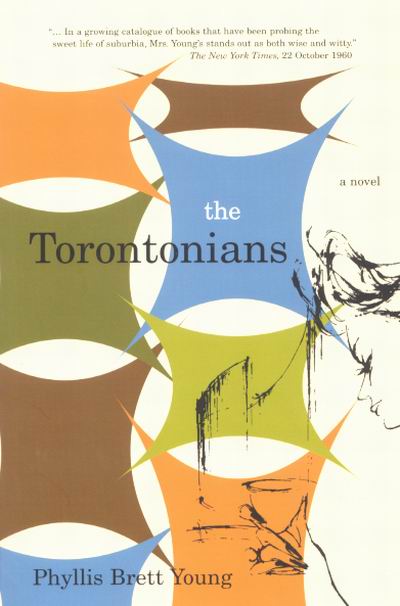 The Torontonians by Phyllis Brett Young: Imagine Betty Draper, but in suburban Toronto rather than Ossining NY, and armed with a buckwheat lawn instead of a shotgun. This novel anticipates Betty Friedan and Atwood’s The Edible Woman, but also invokes a Toronto of which much is now lost to us, and much has also stayed the same. This is the novel everybody wants to read once they’ve finished reading Imagining Toronto (and rightly so).
Elizabeth Bowen by Victoria Glendinning: Oh, the pleasure of a brilliant biography. And so few writers are really  capable of it, but Glendinning is a master. Bowen herself wasn’t even the most important reason why this book was wonderful, but this book was the reason I came away with a whole new appreciation of her work.
 A Complicated Kindness by Miriam Toews: I was officially the very last person on earth to read this book, and had held its hype against it, but that’s ridiculous. The book is amazing. But you already knew that.
December 13, 2011
My Favourite New Books of 2011
It’s been a funny old year for me reading-wise. I read fewer new books in general, and I read a lot of new books that were kind of disappointing. I enjoyed much-hyped American books like This Beautiful Life and The Submission, but found them lacking as literature in ways their NYTimes reviews never referred to. A lot of new releases never appealed to me, and all subsequent success never managed to nudge my prejudices. I read very little little poetry, and focused too much on women writers. And more than anything else, I focused on my vast collection of unread novels acquired at various used book-sales over the years, and found such treasures there once I blew the dust off. Also remarkable is that I read so many great books this year that were written by friends of mine, such as Jessica Westhead’s And Also Sharks and Rebecca Rosenblum’s The Big Dream, and though both of these are among my 2011 literary highlights, I’m aware that I’m too close to be fully objective about them.
When I review any book upon my blog, it’s because I feel that the book is worth my time and yours, and a listing of those that have risen to the top can be found here. And what follows now is the top of the top of another rewarding reading year.
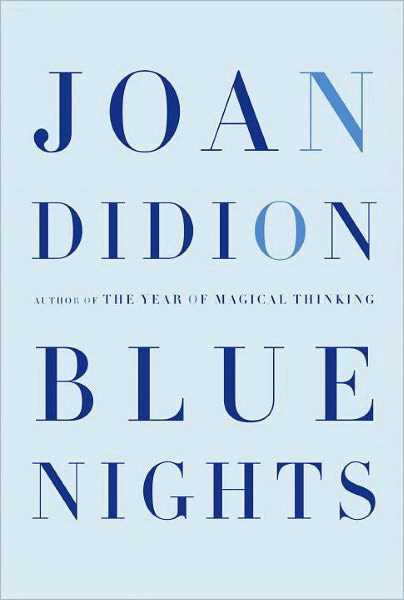 Blue Nights by Joan Didion: Like everything Joan Didion writes, this book is not easily summarized and has been misunderstood, even by people who’ve read it. Though apparently it had its origins in a less personal book about parenting, it became an examination of aging and mortality for one to whom it had never occurred that such ideas could be reality. To compare this book with “Good-Bye To All That” and “On Keeping A Notebook” only underlines its depth– amazing how much about loss someone so consumed with nostalgia never knew, but that’s what age does. Like everything Joan Didion writes, the meaning comes from her articulation of universal experience intersecting with her own particular world view. Part of the attraction is pure Joan Didion allure, yes, but most of the attraction is words unloaded with such remarkable precision.
Outside the Box by Maria Meindl: This is the book I can’t stop talking about, and I’m pleased that I’ve  managed to win it at least a few readers. As noted in a conversation with a friend today, Meindl could write about anything and it would be interesting, but her subject is so interesting too. She chronicles the history of Canadian magazine and broadcast journalism, the history of Toronto literati (and the bohemian Gerrard Street Village in the ’50s), the status of women throughout the 20th century, the dazzling enticement of celebrity, and the story of her extraordinary grandmother whose eccentricities and foibles make her a fascinating character (though undoubtedly a frustrating family relation). But most of all, it’s a really great read, and Meindl proves herself a deft handler of narrative.
 The Antagonist by Lynn Coady: What I’ve only yet confessed to my closest friends is that I’ve never wanted to have sexual relations with a fictional character the way I wanted to get with Rank, Coady’s outsized narrator. My more public declaration was that this was one of the few books ever that I would have read forever and ever, the story and the voice absolutely gripping. I loved the narrative ambiguity, the metafictional elements, the humour, the spot-on portrayal of small town life and also university life (because in many ways, this is as much a campus novel as was Mean Boy). Lynn Coady is amazing, and this book is her very best yet.
 This Will Be Difficult to Explain and other stories by Johanna Skibsrud: Were this the very first book we’d ever read by Skibsrud, I think she’d be the critics’ darling, and we’d all be lamenting her underappreciatedness. But her Giller win last year cast her into the spotlight with The Sentimentalists, which means that all the people who dislike successful people don’t like her and neither do those with little patience for challenging writing (and that almost makes everybody). The Sentimentalists was a divisive book, and though I liked it, I thought it was more interesting than brilliant. Her story collection This Will be Difficult to Explain and Other Stories, however, is excellent and I’m sorry that more people haven’t had the chance to fall in love with it. When I read it a second time to prepare for my interview with Skibsrud, I discovered new depths I hadn’t even detected first time around– these stories are rife with buried treasure. My Mavis Gallant comparison didn’t come from nowhere– in the Year of the Short Story, this book stands out as one of the best.
Never Knowing by Chevy Stevens: I am such a snob that I never get to fall in love with the books that  everybody else loves because I always think they’re terrible. Which means that I never get to wrapped up in fat paperbacks about serial killers, but with Stevens, I had the chance. I’ve heard from those who read her first book that the violence was a bit gratuitous, but I think she dialled it back a bit for this one. I loved that she managed to create suspense with a character who operated like a real person rather than one who committed stupid though plot-enabling conventions such as keeping secrets, and going down to the basement. In a truly remarkable cliche-defying feat, Steven proves that popular fiction is capable of being awesome.
 I’m a Registered Nurse Not a Whore by Anne Perdue: Oh, the gasps, as I read this book on my summer vacation. My husband had to tell me to shut up because I was bothering him, but I couldn’t stop, because Perdue kept delivering one shock after another. The range of stories in the collection is really remarkable, the spectrum including a rooming house resident to one master of the suburban barbecue (and oh, that ending. Gasp. Holy John Cheever). Perdue is Jessica Westhead meets Alexander MacLeod, and I love this book.
The Forgotten Waltz by Anne Enright: I don’t know if I’ll ever understand why this book never made the  awards lists this year, and maybe it’s like Skibsrud and that you get lost in the shuffle when the follow-up to your divisive acclaimed work is even better than what came before. But there is no better novel for 2011 than this one (which I read in its entirety one day in June when I was sick in bed, and it’s the only book I’ve ever read while sick that I don’t feel sick when I think about). It’s about the economic crisis for goodness sakes, and real estate boom and bust, and so this is serious stuff, you know. But it’s also about a love affair, which is the most real thing in the entire world. Enright’s sentences are to die for, but she’s also created an unforgettable voice in Gina, and perfect document of the way we live now.
 Better Living Through Plastic Explosives by Zsuzsi Gartner: Zsuszi Gartner’s success is what happens when great innovative writing is marketed to the mainstream, rather than relegated to a weird literary ghetto.I read its title story first in an issue of The New Quarterly, and I’d never encountered anything else like it. And there is justice in the world in that Gartner made it to the Giller shortlist, because this collection is everything you never imagined that CanLit could be– sharp-witted, biting, urban, satirical, scathing and shocking. It asks more of its reader than the average acclaimed book tends to, but the rewards are plenty. You’ll finish this book and look around you and think, “Truly, this is a place where something is going on.” (Runner up in this category is Carolyn Black’s collection The Odious Child.)
And Me Among Them by Kristen den Hartog: Odd, the second book on my list about an outsized  narrator, this time Ruth Brennan who is seven feet tall and whose perspective beholds remarkable things. From the intro to my interview with Kristen den Hartog: “When I fell in love with And Me Among Them last spring, it really felt like a spring, because it was the first novel I’d loved in ages after a long cold winter. The magical elements of the story about a girl who grows to be seven feet tall and is blessed with a strange omniscience were so perfectly countered with a realism that kept the story’s feet on the ground, and the entire effect delighted me, which is remarkable when one notes my aversion to books about freakish sorts (confession: I am of the handful of people who hated Geek Love).”
 Out of Grief, Singing by Charlene Diehl: On New Years Eve last year, the Globe and Mail published recommendations by Canadian literary types, and this was Alison Pick’s. Part of my attraction to this book is my insistence upon staring worst fears in the face, which is a faulty insurance, I know, but Diehl’s story about the loss of her baby not long after birth is also an affirming tribute to the power of story, and represents a remarkable broadening of the motherhood narrative.
Also: A Visit from the Goon Squad by Jennifer Egan and Burley Cross Postbox Theft by Nicola Barker: I read these books whilst on vacations, therefore leisurely, and never put coherent thoughts together about them except I LOVE THESE BOOKS. Further, this was a year with Margaret Drabble in it, with her remarkable collected stories A Day in the Life of the Smiling Woman. So naturally, it was a very good year.
Coming tomorrow: My Favourite Not -New Books of 2011






