May 10, 2015
Aching testicles, bodacious breasts, and other childhood lessons in anatomy

Image from here.
“My testicles are aching,” my daughter confessed to me the other day, which is the only problem I’ve so far encountered in my experience of having taught her the correct name for anatomical parts. That eventually, one might get mixed up when meaning to say “limbs” and start talking about her balls instead. And maybe this is the danger parents are hoping to avoid, those who pulled their children out of Ontario schools last week in protest of the new sex-ed curriculum. That there are so many body parts and the children aren’t ready, and with everything getting so mixed up, gender fluidity is surely just around the corner. It’s contagious. What else can you expect when it’s scrotums for everybody, and sexual identity is all a slippery slope.
I haven’t actually read the new sex-ed curriculum, because unlike some people, I’m not a total pervert. And I’ve got better things to do than vet school curricula for ways it’s going to warp my child’s mind, because the world is going to warp her anyway, and here is the point where my job as a parent kicks in: I send her into the world and then, when she gets home, together we try to make sense of the mixed messages it’s throwing at her. Like why, for example, in a hyper-sexualized world (ever driven down a highway and looked at a billboard lately?), we are so fearful of teaching our children there is such a thing as sex or that parts of their bodies actually have names.
I can’t do it all on my own though. As Hillary said, it takes a village. From proximity to my body, my daughter has learned about all varieties of skin rash, but that’s only the tip of the anatomical iceberg—there is so much more. And my plan for this education, which I hope will avert much future sextastrophe (the more you know!) involves extra-curricular activities.
My daughter is enrolled at swimming lessons at the university pool, and we strategically avoid the Family Change Room. After her lessons, we head to the Women’s where she has her hair washed surrounded by naked ladies. An invaluable education—how to be subtle, for one thing, and look like you’re not looking, and also how not to pee in the shower, which is mostly “at all”, but if you have to, don’t announce it while you’re doing it.
Mostly, her post-swimming showers are a lesson in the exquisiteness of womankind. Women of all shapes, sizes, and colours, gloriously naked, just having finished some activity that makes her body strong. Beautiful, all of them, stunning in their variety. Contrary to what a series of lingerie ads might have you suppose, there are so many ways to have a body. No two alike. Shockingly, almost all of them have pubic hair. And the bodies themselves are big and small, curved and slender, muscular, wiry, always amazing (because it’s ill-fitting clothing that fails to flatter the body, I find. The body itself requires no flattery at all). Bums, boobs, tummies and, yes, limbs. We’re both kind of mesmerized. What a sorority. You’re a woman, albeit a small one, and you’re part of this, a body-haver. It’s the most incredible way to put the whole thing in perspective.
Of course, it’s not all naked utopia. You’ve got the woman who’s squeezing her ass-zits in the shower, and the other who is shaving her thighs, which is kind of gross because her pubes are flowing across the tiles. But that bodies are disgusting is an important lesson too. And that they’ve got functions, beyond their ability to be stuffed into a bikini and be beholden to the male gaze. We’re getting all of this in the Woman’s Locker Room and I’ve got to shut up about this, or swimming lessons are going to up their fees. And even if they did, I’d probably pay the difference. There is awkwardness, yes, and the pain of aching testicles, but it’s the best basis for sex education that I can imagine—the knowledge our bodies are gorgeous and amazing—and knowing this we’re better prepared to handle whatever this curious world hands us next.
May 7, 2015
Melvis and Elvis by Dennis Lee and Jeremy Tankard
 It’s been over forty years since Dennis Lee invented Canadian children’s literature with the publication of Alligator Pie, following it up with Garbage Delight, The Ice Cream Store, and Jelly Belly, books that have moved seamlessly from my childhood to my children’s, so that we all know Suzy Grew a Moustache, In Kamloops, and Hugh Hugh at the age of two, who built his house in a big brown shoe. Combining the rhythms and touchstones of Mother Goose rhymes with contemporary references (and ones more charmingly dated—I’m thinking the rhyme that mentions Eatons, Simpsons and Honest Ed’s) and unabashed Canadiana and Toronto-Centrism, Dennis Lee has provided most Canadians with their poetic foundations.
And here it is: his latest collection, Melvis and Elvis, is just as good as all the rest.

How does he do it? How has he not yet run out of rhymes? How can something so simple keep seeming so fresh? How can we read a poem that begins, “Mary McGregor/ McGuffin McGee/ Went for a ride/ On the TTC.” and immediately feel as though we’ve always known the poem by heart? How “Is Your Nose Too Small?” (to the tune of “Do Your Ears Hang Low?) so perfectly hilarious? And the collection too with its mix of poems that are tender (“Sleeping With Bears”) and others slightly gross (“In Cabbagetown,” with its exploding bellies) and others naughty (one poem about a stinky friend, and another that ends, “And pounding on your head all night/ Was fun. But very impolite.”). Plus there is a poem about dinosaurs. With a poem about dinosaurs, you can never go wrong.

Dennis Lee is so respectfully and intelligently silly, and so much of the delight of his work comes from words themselves. Because is there anything more fun than rhyming pony with macaroni? Never mind that Yankee Doodle has been doing it for centuries, but in Lee’s “When I Woke Up,” one is reminded of the point of it all. And his rhymes are perfectly complemented by Jeremy Tankard’s illustrations, which seem to combine the otherworldliness (and psychedelic feel) of Frank Newfield’s illustrations for Lee’s first two children’s books, but investing them with far more kid appeal. Returning to the book over and over again, an overarching narrative becomes apparent involving Elvis the Elf and Melvis the Monster of the title, and in the book’s final poem, all the characters from the previous pages assemble to sing a song together, and we delighted in recognition.
May 6, 2015
Small Wonder: A Quarterly Magazine for Kids and Their Grown-Ups
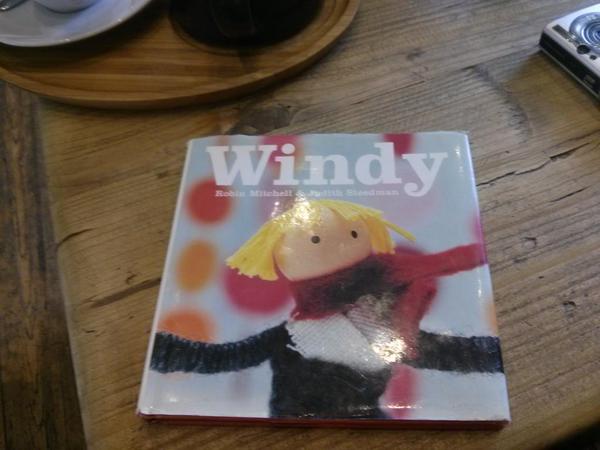 “What a book to discover in a Yorkshire cafe. I want to steal it. No??” I tweeted a couple of weeks ago, delighted to have encountered this wonderful Canadian picture book on a day trip to Ilkley. And I do have a demonstrated history of bibliokleptomania; but no, I determined. The Toast House Cafe in Ilkley was a lovely spot, a worthy home for Windy, I decided. So I left it there for someone else to come across.
But then! The cafe itself joined the twitter conversation I’d been having with CanLit enthusiasts back home about the goodness of Windy and other books in the series by Robin Mitchell and Judith Steedman. “glad u didn’t steal it! I put it in our cafe for others to enjoy. I read it 2 my boys yrs ago.” Oh, how embarrassing. To be caught considering becoming red-handed. And so I tried to pass the whole thing off like a lark, oh, I’d never steal a book, which is a total lie, but at least I didn’t steal this one. (And I hope that no one else does, because I’d absolutely be blamed.)
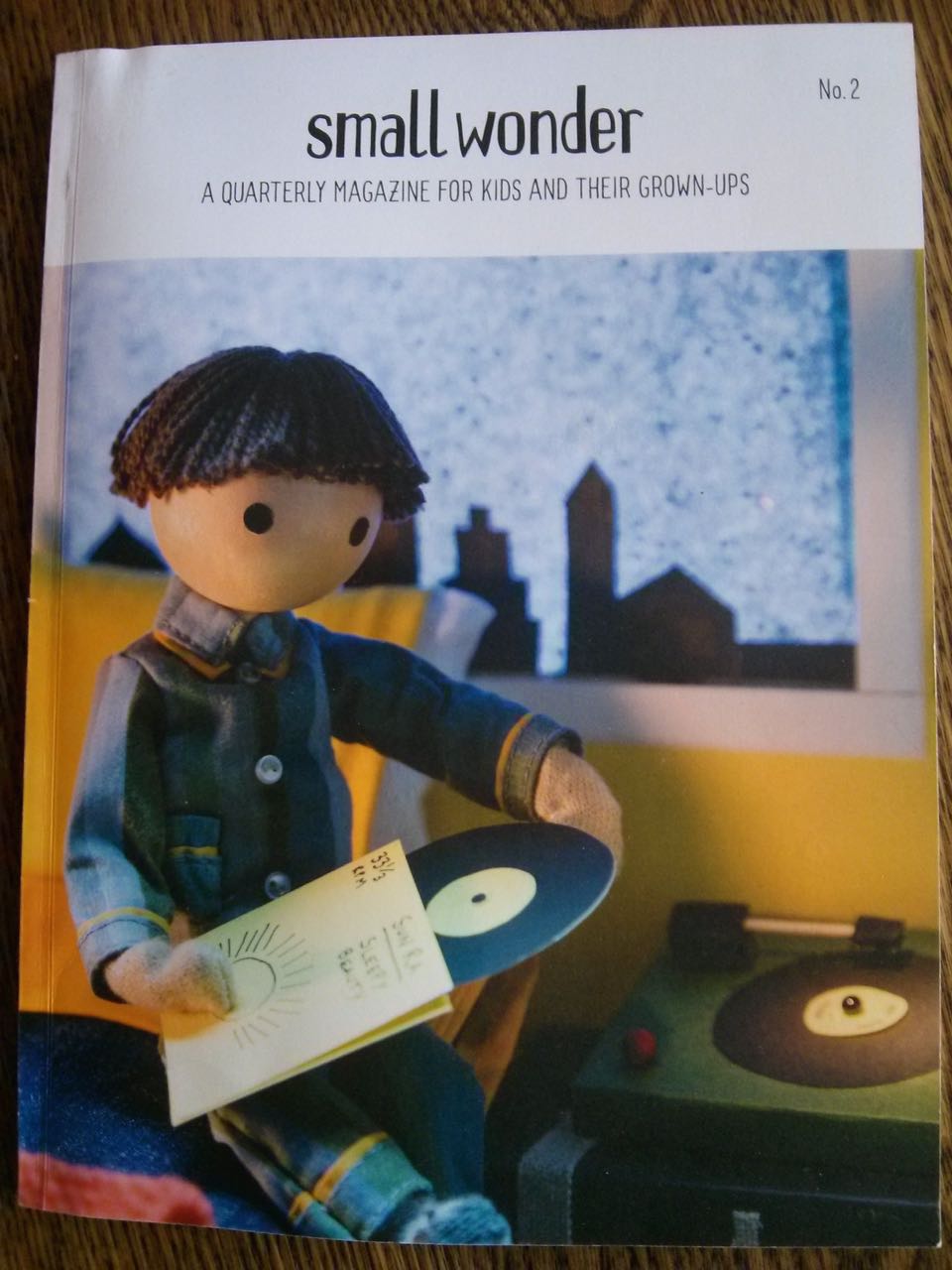 So the creators of Windy got looped into our conversation, and it was here that I discovered that Windy and Friends is now an app. (We downloaded “Sunny’s Dark Night,” and the kids really like it. We will probably get the others.) And from Windy and Friends’ twitter feed, I learned that Sunny is a magazine cover star, and there is such a thing as Small Wonder (subtitled: “A Quarterly Magazine for Kids and Their Grown-Ups”).
So naturally I subscribed, which is far more noble than stealing a book, albeit just as impulsive. But I am so glad I did! Our first copy was waiting for us when we got home from vacation, and it’s just as lovely as I was hoping.
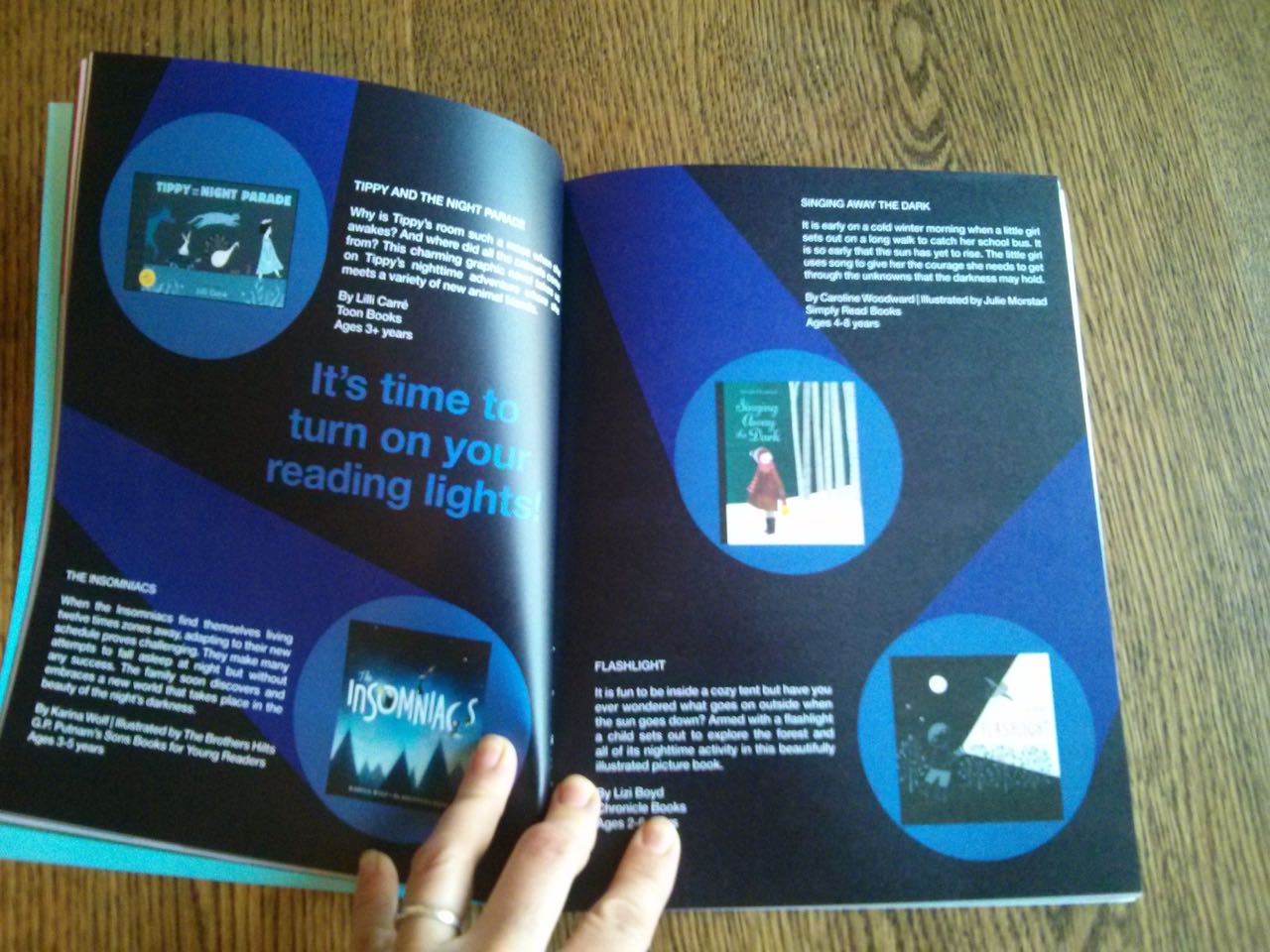
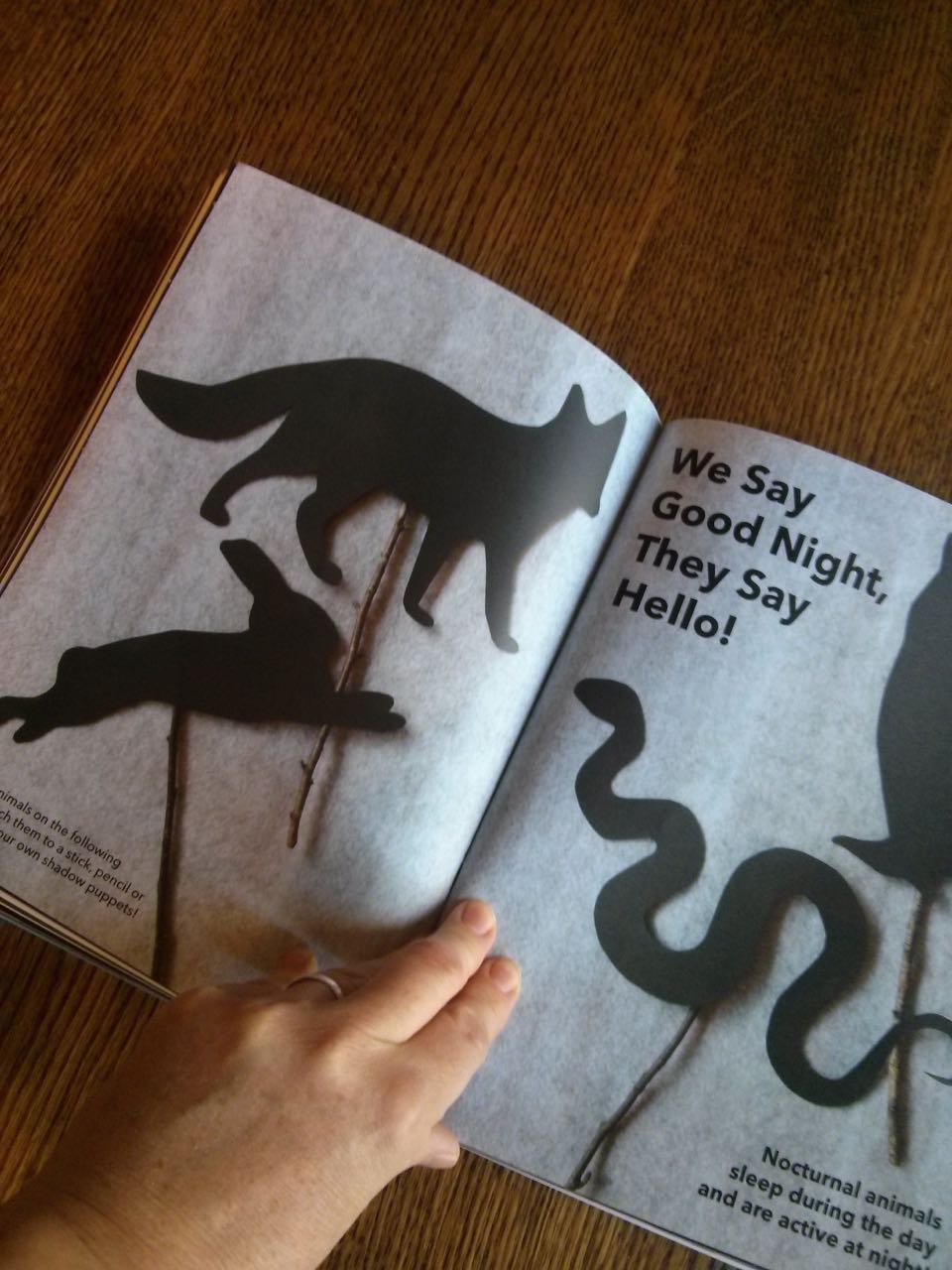
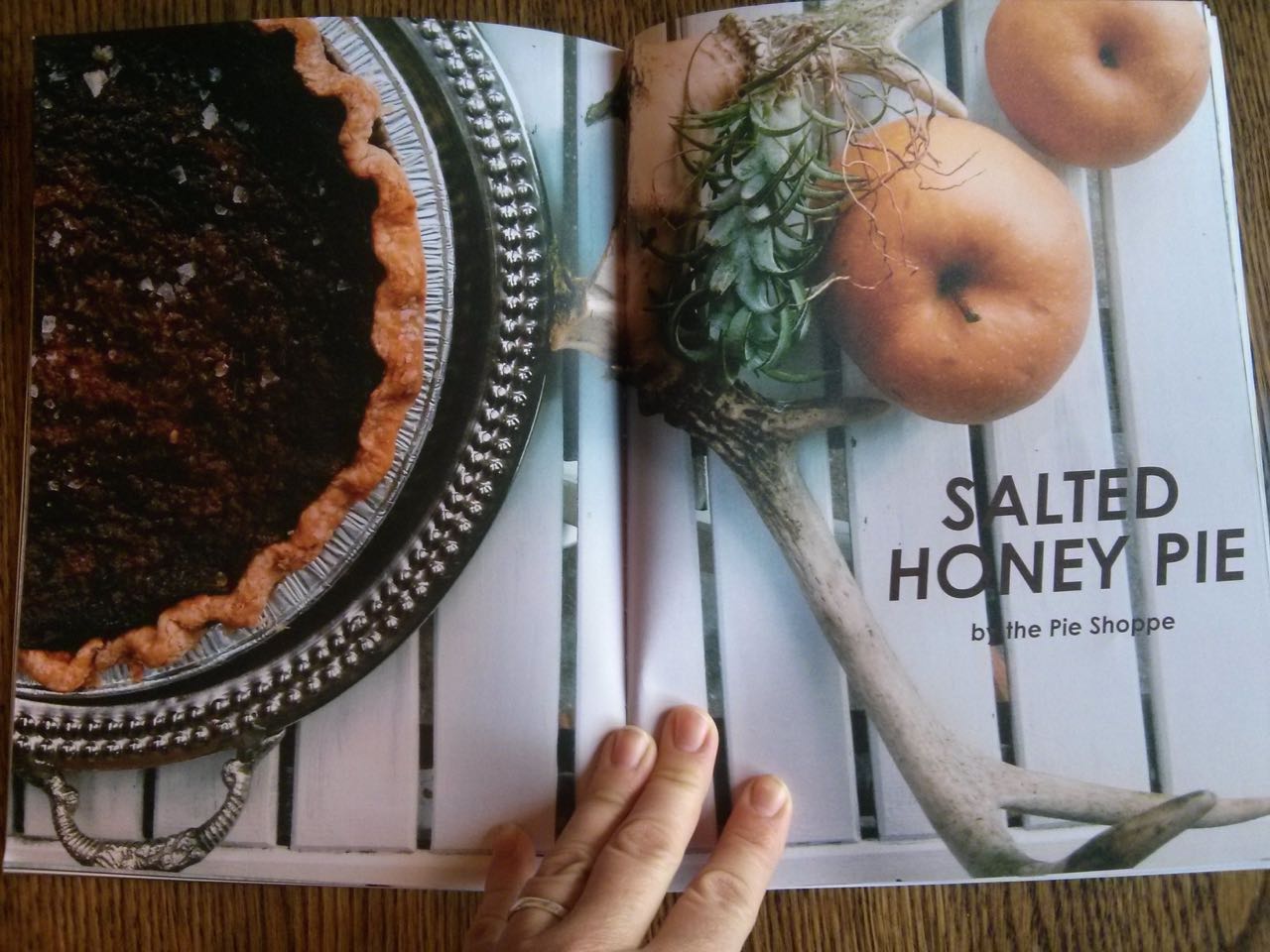
The magazine is a beautiful object with lots of thoughtfulness put into its content. It seems born of an ethos that presumes children are deserving of beautiful things, in addition to stories, adventures and wonder. There is lots of opportunities for drawing, creating, reading and dreaming in the magazine, and the issues are substantial enough that you’ll keep them around for awhile. They also recommend Singing Away the Dark by Caroline Woodward and Julie Morstad, so they clearly have impeccable taste. And pie! There is pie. Plus if you look closely, you’ll see that the pie article AND the animal silhouette feature both have Beatles references in their titles, and I don’t know if that was deliberate, but I’d probably give them credit.
Our first issue is themed for darkness, produced a few months ago when winter was drawing in, and now that winter is done, I’m hoping that means we’ll be getting our next issue soon.
May 5, 2015
Motherhood and Creativity: In Conversation with Rachel Power
 Everything is a circle. I first learned about Rachel Power’s work through serendipity and (what else?) blogging and talking about books. In 2008, the Australian writer and artist left a comment on my blog about the ambiguous ending to Emily Perkins’ Novel About My Wife, and I discovered her blog and her book, The Divided Heart.
At the time, I was pregnant with my first child and so still very much on the periphery of “the motherhood conversations” of which I’d be privy to in the months to come. And so The Divided Heart was my first hint of these, where I first read about maternal ambivalence, the struggle (emotional and practical) for mothers to assert their creative selves, and the myriad ways women find to make it work. It was a hugely important book for me. I read it before I read Rachel Cusk’s A Life’s Work!
And because everything is a circle, The Divided Heart is now back in print as Motherhood and Creativity: The Divided Heart, and where Power left a comment on an interview I’d done seven years ago, I’m now interviewing her—about the book, how it’s changed in its new edition, the ways in which the motherhood conversation has changed since 2008, and how motherhood can connect us to our creative selves and to the world.
****
Kerry: The Divided Heart was one of my foundational texts on motherhood and mothering—I read it while I was pregnant in 2008. Which seems like a lifetime ago now, but I am so pleased that it has found new life as Creativity and Motherhood. The book played a huge role in my own experience of my heart actually not being so divided when it came to motherhood and creativity—you showed examples of how women combine the two, even when the balance is tricky. These women showed me what was possible. So I really like the new title—but how did the title change come about?
Rachel Power: Thank you for those generous comments about the book. It’s very flattering that someone as well-read as you would consider my book any kind of “foundational text”! I know your book has become the same for so many women out there.
 With this new edition, called Motherhood & Creativity, the publishers had some radical changes in mind for the title, which I have to admit I largely resisted. I actually pushed pretty hard to keep “The Divided Heart” in there (it became the subtitle), because I still believe it represents the central drama of the experience for many if not most creative people with children: the desire to be in two places at once; the fear that being properly dedicated to one role inevitably risks neglecting the other. For me, those words introduce the initial question the book is trying to address. But as you say, that doesn’t mean it is full of women who are bogged down by those feelings; rather, it’s full of examples of artists who’ve found ways to forge ahead despite, and sometimes because of, those dilemmas.
As for using the word “creativity” instead of “art” (the original subtitle was “Art and Motherhood”), this felt like a necessary recognition that creativity is an important part of many people’s lives, expressed in different ways, but that doesn’t mean they all identify as “capital-A” artists. That’s why I really wanted craft-maker and blogger Pip Lincolne in this new edition: she has such a strong creative drive—and such a creative approach to life!—but I don’t think she would identify as an artist, as such. I knew that many readers would relate to that.
Kerry: It’s a very different book for me now—not just in title. I’m much more experienced in both motherhood and being creative than I was in 2008, and I relate to different parts of the conversations. How has the book changed for you? Was revisiting it a welcome experience?
Rachel: Like you, of course, I’m much further along in my parenting (my kids are 13 and 10 years old now!), but the issues remain very current to me, so I found it easy to slip back into the mothering and art conversation for the new edition. The demands are different, but just as intense, I find. With my son starting high school this year, I feel like I’m going back to school myself—my weekends have been almost completely hijacked by helping him with his homework!
But one of the main realizations for me, as someone who works full time, is that holding down a day job has been a much greater barrier to creativity than mothering. In the first edition, writer Anna Maria Dell’Oso said that when she was at home with small children she felt much closer to “the centre of her integrity” than when she was at the office, and I totally relate to that now. Finding time for art is a big challenge when your kids are small, but the upside is that in some fundamental way, we are already in a very creative space as parents, even though it’s hard to recognize that at the time.
“Finding time for art is a big challenge when your kids are small, but the upside is that in some fundamental way, we are already in a very creative space as parents, even though it’s hard to recognize that at the time.”
Kerry: What about the book’s actual changes? What else is different in this new edition?
Rachel: The new edition contains around half of the interviews from the former book and the same number again of new interviews. Much like the first time around, I approached women I admire, and was lucky enough to interview one of Australia’s best-loved actors Claudia Karvan; visual artists Del Kathryn Barton and Lily Mae Martin; writers Cate Kennedy, Tara June Winch and Lisa Gorton; musicians Holly Throsby and Deline Briscoe; and craft maker and blogger Pip Lincolne.
The other coup this time around was adding a preface from musician Clare Bowditch, who as an old friend and neighbour of mine, not only witnessed the genesis of this book, but also shared in the early years of child-rearing with me. So apart from my own family, there is really no-one closer to this book than Clare, and her preface is affirming and moving and humbling all at once. I’m very grateful for it.
My introduction and conclusions in the first issue are heavily truncated into one opening chapter in the new book. I had done a lot of research before writing the first edition and basically presented my poor editor with a 140,000-word thesis! This was cut back heavily, obviously, but the new publishers felt that it was still a bit too academic in style. So the new intro is a bit less wordy and hopefully more accessible as a result.

Image by Launch Bubble
Kerry: How did the new edition come to be? What were the signs that the demand for it was out there?
Rachel: The Divided Heart went out of print a while ago, and it was really upsetting me that people couldn’t get their hands on a copy. I was still getting lots of letters and emails from potential readers asking where they could find books, but I only had one copy myself! So it was very exciting to find a new publisher in Affirm Press. Initially, it was just going to be a shortened version of the original. But as we went forward, editor Aviva Tuffield and I decided that it would be good to create a different book, to bring it up to date, and so there was new value for those who already had the original edition.
Kerry: Are you finding the reception different this time around? My sense is that we’re living in a slightly different climate now in regards to talking about motherhood—there is more space for nuance. Though this might be because I’m now in that climate instead of looking on. What do you think?
Rachel: That’s an interesting observation! I think there is definitely more space for nuance in the feminist debate generally, and that we have largely moved on from the dispiriting “mummy-wars” that were dominating the conversation around the time I first published The Divided Heart. Motherhood has definitely taken centre-stage in a way it hadn’t when I had my first child, and so there seems to be less division between the different parts of people’s lives nowadays—and between those who have kids and those who don’t—which can only be a good shift for society, I think. That said, most of the criticisms I’m receiving this time around are the same as last time: chiefly, that this is a bunch of middle-class women indulging their hobbies and complaining about their kids (which is such a tedious misrepresentation of the actual stories it contains).
From the outset, part of what interested me in the subject of artist-mothers was that I saw the unique contribution it could make to the feminist debate, precisely because it is a nuanced issue—both in terms of work/economics and of family/housework. Writer Alice Robinson summed it up beautifully in her recent piece for Overland journal, when she said that “as a stay-at-home parent by day, a writer by night, I am doing what untold numbers of people in each camp, and all those in both, are doing: two challenging but largely unpaid jobs. … each undervalued in the remunerative sense, but fundamental in the cultural.”
“To have a child is to enter into a strange new set of negotiations with society, our partners, our family, ourselves. To also be an artist, it seems to me, is to be dealing with the extreme end of those negotiations.”

Image by Lily Mae Martin
To have a child is to enter into a strange new set of negotiations with society, our partners, our family, ourselves. To also be an artist, it seems to me, is to be dealing with the extreme end of those negotiations, because of the self-driven nature of art and the lack of guaranteed compensation. At a personal level, asserting your need to create; to carve out the time and space that art demands; to feel confident in the validity of what you have to say–requires a special kind of drive and determination for anyone. Doubly so for mothers, whose own interests and desires are expected to be sublimated to the needs of others.
So, in my mind, endeavouring to be both artist and mother raises some of the biggest questions about how we choose to live and view the world: self versus society, partnering versus independence, feminism versus masculine, sacrifice versus self-interest, creativity versus economics… In this way, I think the experience of artist-mothers can speak to the feminist debate at a particularly subtle and sensitive level.
 Kerry: Motherhood is so incredibly interesting, the ideas around it far-reaching and important. I’m thinking about the book On Immunity by Eula Biss, a vast and important sociological text, and in her acknowledgements, she thanks the mothers in her community who made her realize “how expansive the questions raised by mothering really are…”
I didn’t really understand this when I first read your book, when I first became a mother—the ramifications of the ideas you’re talking about, we’re all talking about. (I certainly had no idea that motherhood would be so interesting that I’d end up editing an anthology about it too years later….)
Another interesting thing is that it’s ever in flux. What are the questions and ideas around motherhood that are preoccupying you these days?
Rachel: As you say, mothers are raising the next generation, so their actions and decisions are far-reaching and important indeed! Mothers have a unique stake in the future, and that’s why they are spearheading so many campaigns and movements around the world. In Motherhood & Creativity, writer Tara June Winch, who herself set up onethousand.org (a charity to promote female empowerment), says, “I’ll argue that most NGOs, globally are run by mothers in one way or another.”
 Motherhood is a galvanising force—and one of the best things about writing The Divided Heart was that it connected me to an incredible community of mothers, who think very deeply about the way they parent but also about the world that they have brought their children into. Fathers are there too, of course. But among the families I know, while fathers are very much involved, it’s largely mothers who are still doing much of the logistical work as well as the theoretical thinking behind the parenting—and most of the worrying, sadly!
Personally I have always found mothering hugely confronting; the role presses me to be a stronger, braver, more industrious person than I feel capable of being most days. And we are raising kids in unusually complex times. I’m very conscious of wanting to raise children who feel empowered in a culture that is: 1) largely driven by a consumer-capitalist ethos; and 2) facing potential catastrophe as a result. The big question for me is: how do we raise kids who are critical and creative thinkers, who will make ethical decisions, and who will treat the environment, themselves and other people with respect, when right now all they want is a PlayStation 4 for Christmas?!
I think creativity can play a big role in all of this. I love Pip Lincolne’s comment in the book: “There’s a forgiving, nurturing quality about handmade that should be applied to life. Not everything is perfect, but it was made with good intentions and there were so many little, meaningful decisions along the way. I think that mindful approach is such a good thing and an ace ethos for a family.”
Could there be a better approach to bringing up kids? I reckon Pip has it pretty sorted!
May 4, 2015
Mad Miss Mimic by Sarah Henstra
 I’ve spent the last couple of days enjoying Mad Miss Mimic, the first novel by my friend, Sarah Henstra. It’s not normally a book I would have sought out—it’s published under a YA imprint, and historical fiction—but then there’s that cover, plus I so admire Sarah’s work and intellect. She’s an English Professor at Ryerson University where she teaches courses in Gothic Horror and Fairy Tales and Fantasy, and way back, years before we met again socially, she was my TA for the Literature in Our Time course at UofT, and I never forgot her—not something I can say about most of TAs from nearly 20 years ago.
So I was confident that the book would be smart, and once again the arbitrariness of genre and marketing distinctions are made to me, because I delighted in Mad Miss Mimic. The novel takes place in London during the 1870s, a young woman endowed with good looks and great wealth and she’d be considered a match for any worth gentleman, save the matter of her debilitating stutter and her tendency to compulsively take on the inflection and tones of others’ speech and parrot it back at inopportune moments. But has Leonora finally met her match with Francis Thornfax, a colleague of her brother-in-law who is not unnerved by her outbursts? Alas, she is too smart to be completely won over by his affections, and can’t help noticing shady dealings going on between Thornfax and her brother-in-law, a doctor, whose charity patients keep dropping dead, and there is the matter of her sister’s reliance on laudanum, all this against the backdrop of a series of bombings whose credit is claimed by the Black Glove Gang, acts of terror in protest of the government’s proposed opium ban—which would serve to put a stop to Thornfax’s import business.
Leonora’s affliction (which is imaginary) causes her to be literally silenced in her efforts to hide it, and therefore not so different from most women of her time who were powerless and without a voice In moments of crisis, however, Mad Miss Mimic (the name given behind Leonora’s back to the force which causes strange voices to emerge from her lips) turns out to be a source of strength instead of trouble, and perhaps she is closer to Leonora’s true self that she even realizes—or maybe Mimic needs only needs to be claimed. And all of this is a bit ambiguous, mysterious, and interesting enough to add real depth to the novel, discussed on a symbolic level. Leonora is skirty and she and her talents remain slightly unknowable to her reader, these loose ends worthy of further reflection, all the while a love plot is resolved in a way that is wholly satisfying.
Mad Miss Mimic put me in mind of other books I enjoyed last year: The Miniaturist by Jessie Burton in its vivid historical depiction and Jo Walton’s Small Change series too for its conspiracy theories and bomb plots. For readers who enjoyed these books, Sarah Henstra’s debut novel would be a great suggestion for what to read next.
May 3, 2015
My bookselling dreams come true

Book City, Behind the Scenes
Was Authors for Indies Day just an elaborate ruse to make all my dreams come true? Because if it was, it worked. After a very fun morning of Jane’s Walking through our neighbourhood, I took to the subway over the East Side to Book City on the Danforth. I met up with friendly authors including Alissa York and Jessica Westhead, and we took to selling books. My best pitch was for Where’d You Go, Bernadette?, which I’d read gleefully, staying up all night the night after Iris was born. I’d read it again recently, I’d assured customers, and still loved it just as much, so it wasn’t simply the effect of drugs. It turns out I have a talent for enthusing about books in public though—I sold copies of Ellen in Pieces, On Immunity and The Bookshop Book (though all I had to do was show them the pictures…). And I also sold Jessica Westhead’s And Also Sharks, Arguments With the Lake by Tanis Rideout, Mating for Life by Marisa Stapley, and Fauna by Alissa York. Plus, Everywhere Babies and Swimming. Swimming, for the picture book crowd. It was ridiculously fun and there was baked goods.

And then my family arrived, and my shift was up. And naturally I had to buy books of my own, and then we went out for Greek Food, and then gelato, and I really don’t know how you can’t say that Authors for Indies wasn’t the success to end all successes.
So many thanks to everyone who came and went shopping!
May 1, 2015
Authors for Indies: Tomorrow!
See you tomorrow at Book City on the Danforth between 2-4. I will be pushing these fine books, which will make many readers very happy.

April 30, 2015
Swimming Swimming by Gary Clement

I love so many things about Gary Clement’s picture book, Swimming, Swimming, whose text is the lyrics to the traditional song that begins, “Swimming, swimming, in the swimming pool…” First, that it’s a book to be sung to, which is often engaging to readers who might not be engaged by being read to or partial to sitting still. It’s a song that’s fun to sing, even more fun to howl. Second, that it’s a summer-in-the-city book, celebrating the goodness of the public pool, an institution as vital as the library (which is saying something). In our family, we’ve become fond of swimming in the summer at the pool at Christie Pits, which is always crowded and attracts a more diverse crowd than anywhere else we ever go. There’s never any room to actually swim, I’m always irritated by teenage boys plunging in and splashing my children, and probably everyone is peeing, but friction, close quarters and pee are an inevitable part of urban life. There is beauty in the chaos, in the unabashed humanness of it all, and on hot summer days, there is no sweeter relief.
In fun, vintage style cartoon drawings (a style he used to similar effect in the nostalgia-driven Oy, Feh, So?, written by Cary Fagan), Clement depicts a summer day in the life of a swim-obsessed boy—obsession demonstrated by posters on the his walls, a diving trophy on his bureau, the fish in the bowl. And I love too this portrayal of a young person’s singular passion. The boy’s pals come by to pick him up, and together they make their way to the pool, practising their strokes along the sidewalk in a funky choreography.
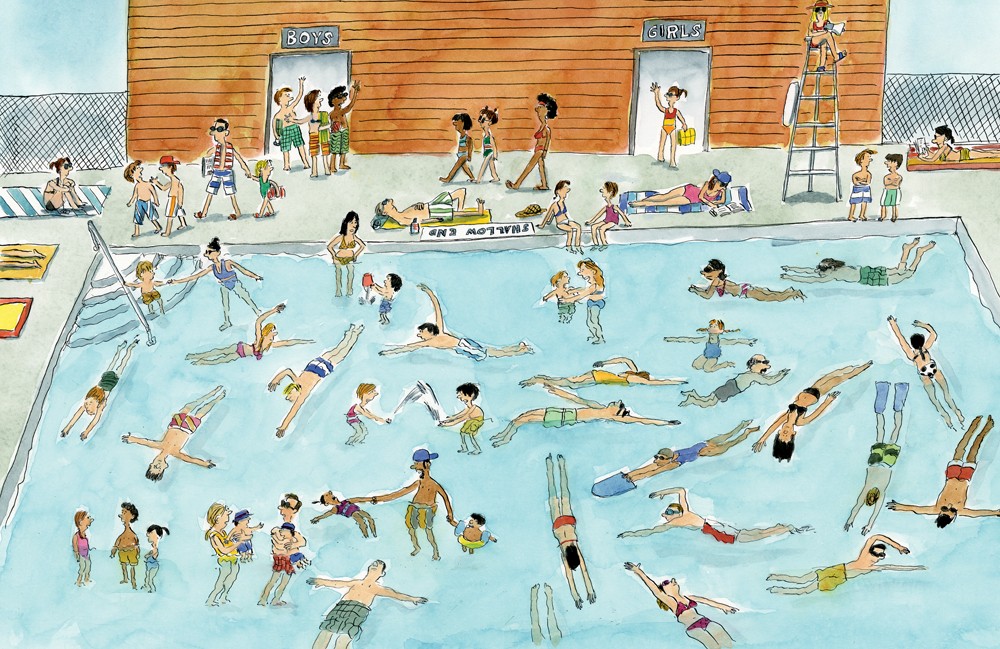
They get changed, shower, arrive on deck—which is crowded with people of all ages, sizes and colours—and the song begins. It begins with the boy and his friends (the text in voice bubbles), but those around them join in the for the next line. The characters play off each other, acting out their signature strokes (and do like “fancy diving too!” in big rainbow letters, the illustration a vertical spread, as the girl of the group of friends leaps from the diving board in a loop-de-loop). And by the end of the song, everyone in the pool has stopped to face the reader and deliver the song’s final line, a very worthy question: “Oh don’t you wish you never had anything else to do?”
But alas, the pool is closing. (Or has their been a fouling?) Everybody packs up their towels and sunscreen, and makes their way for the locker room, a mirror image of the first half of the book augmented by a quick trip to the nearby ice cream truck (and this is summer-in-the-city indeed). The boy heads home, eats his dinner, feeds the fish, and collapses into bed, the goggles he’s still holding in his hand as he sleeps suggesting that tomorrow might be a day just like today was.
April 28, 2015
Destination Bookshop: An English Journey
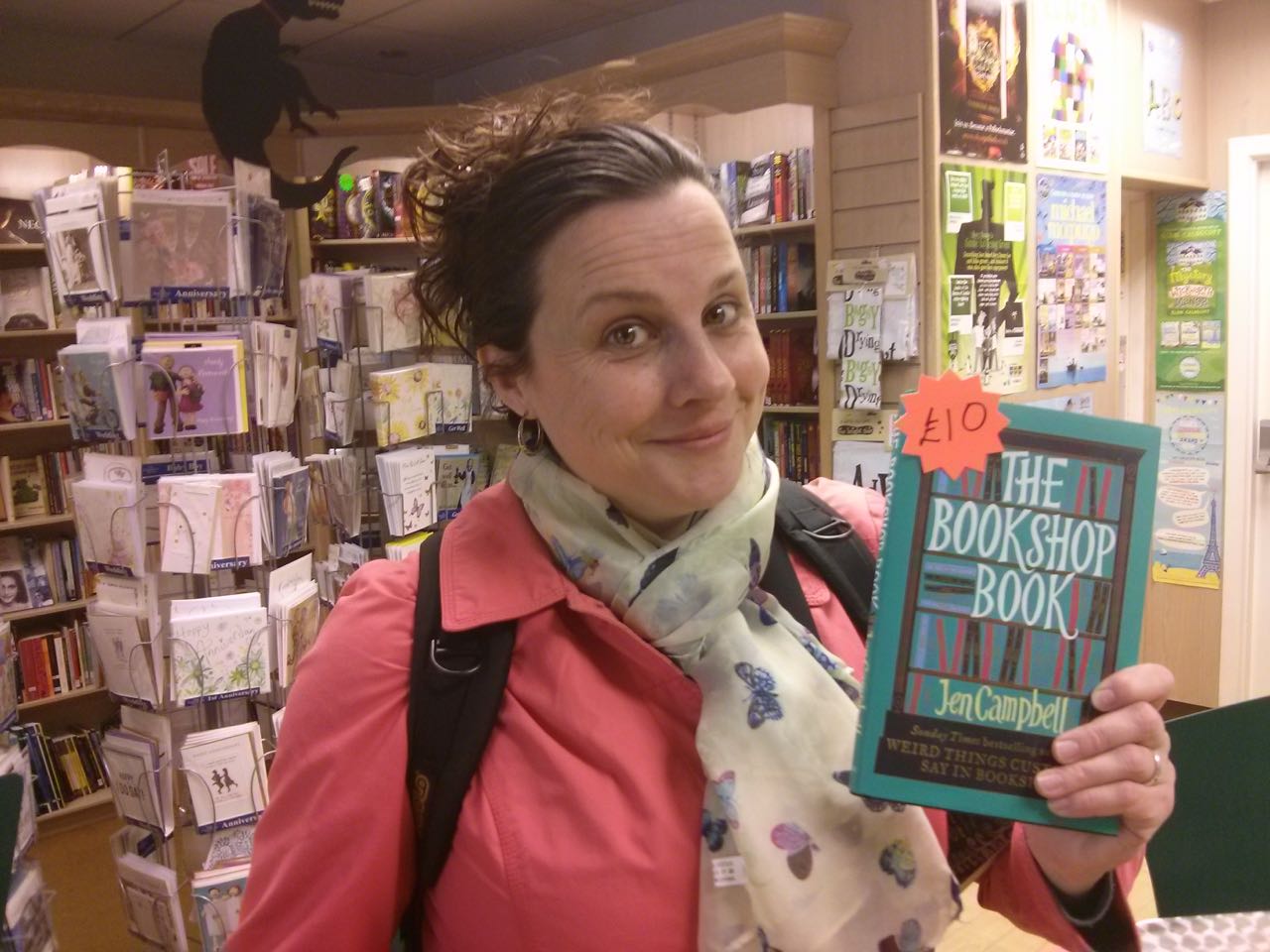 And so, with The Bookshop Book in hand, I set out to plan our trip to England. Inspired partly by specific bookshops mentioned in the book, but more so by the notion of an indie bookshop pilgrimage. Not everywhere we went was included in The Bookshop Book, because, while you might hear otherwise, there are still, mercifully, far too many excellent bookshops in England—in the world, even—to all be included in one single book, and we surely missed many a key bookshop in our journey because, believe it or not, we had not arrived in England for just the purpose of visiting bookshops. Oh, no! Because we were there to eat cake too, and merry were the days in which we could combine these occupations.
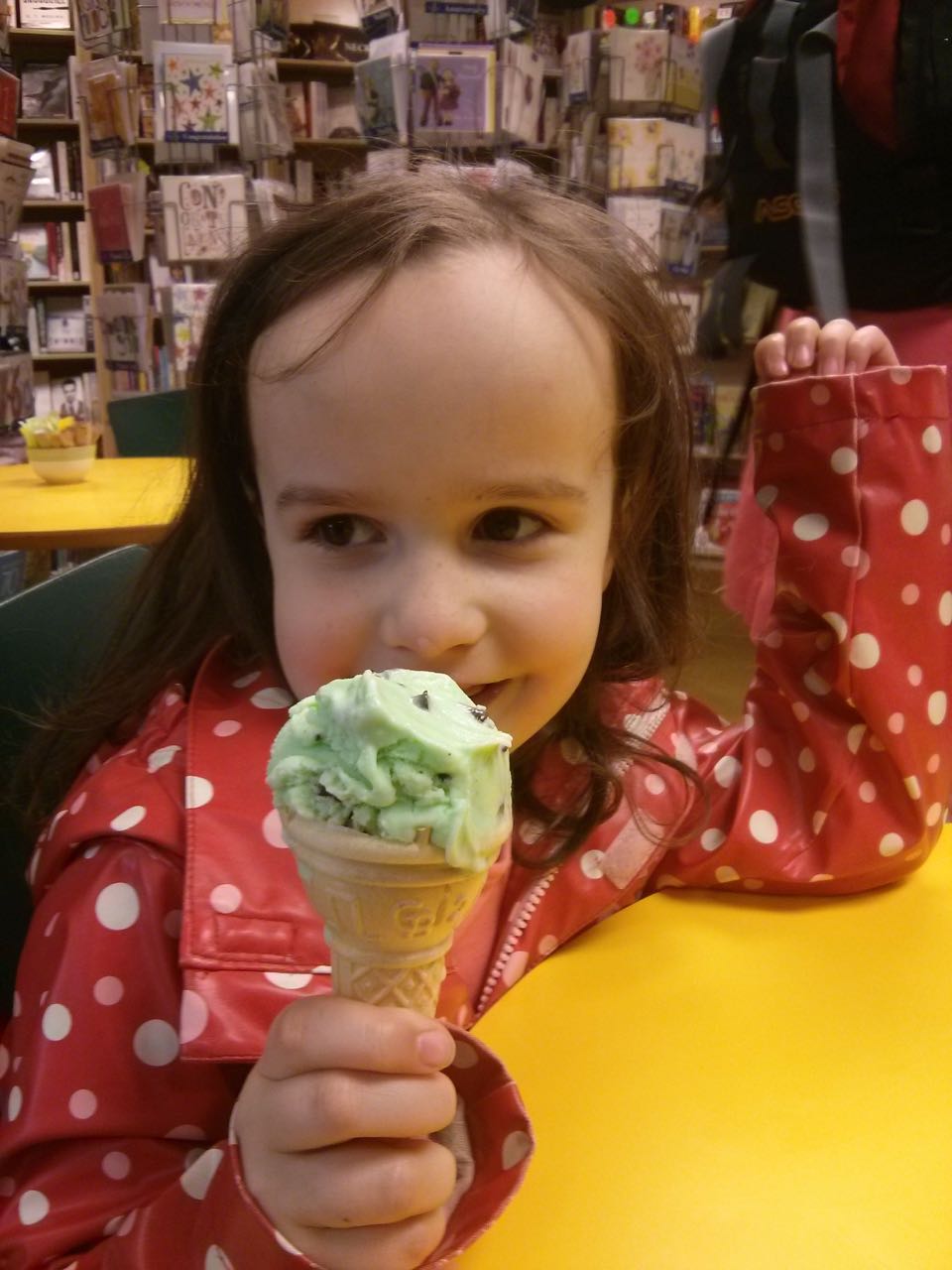
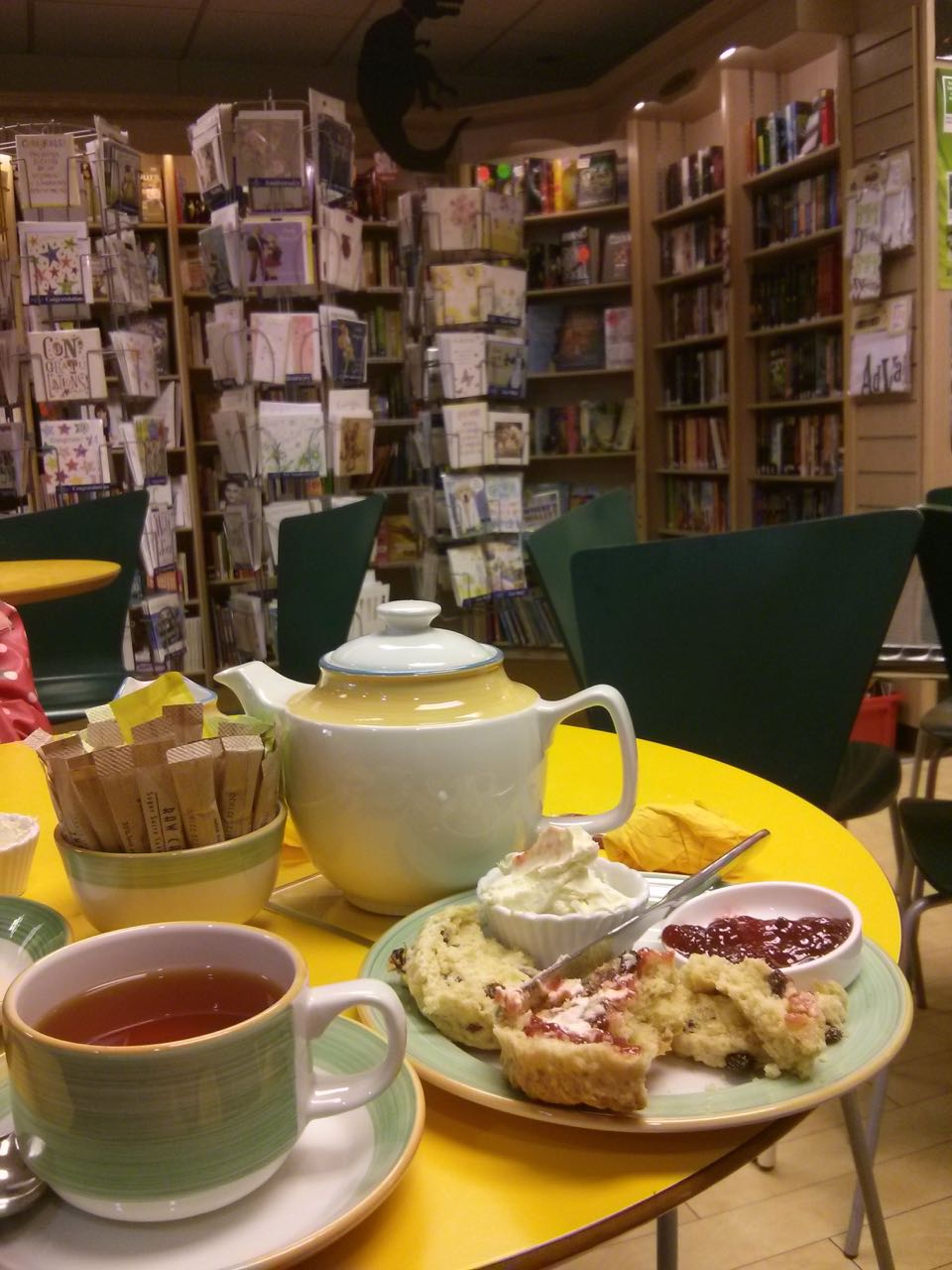 Silverdell Books in Kirkham, Lancs: We discovered this shop from its mention in The Bookshop Book, and it was just a few miles away from where our family lives. Most remarkable of all: it’s a bookshop/ice cream parlour, featuring award-winning homemade ice cream they make it the back (and you can watch through the viewing window). They also serve tea and cakes, and so I partook in a cream tea in a bookshop the day we visited, and all my dreams came true. The ice cream was delicious, and the children were most enthusiastic about this stop-off. There wasn’t a huge selection of books, actually—ice cream is more the draw, I think. But they had a respectable stock of second-hand copies, some new ones, and many of these signed from their regular author events. The kids book section was also excellent, I picked up The Jolly Rogers and the Ghostly Galleon for Harriet, which we read in a day. A good selection of local interest books too. I love that Kirkham has a literary hub. And the scones were perfectly delicious.
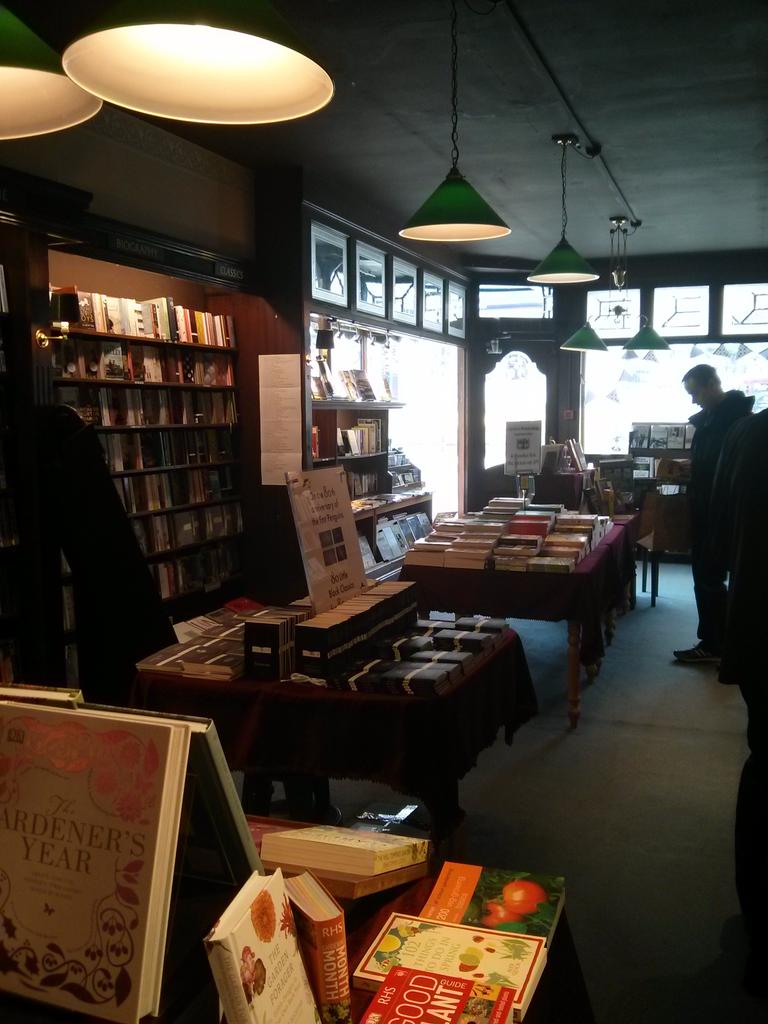
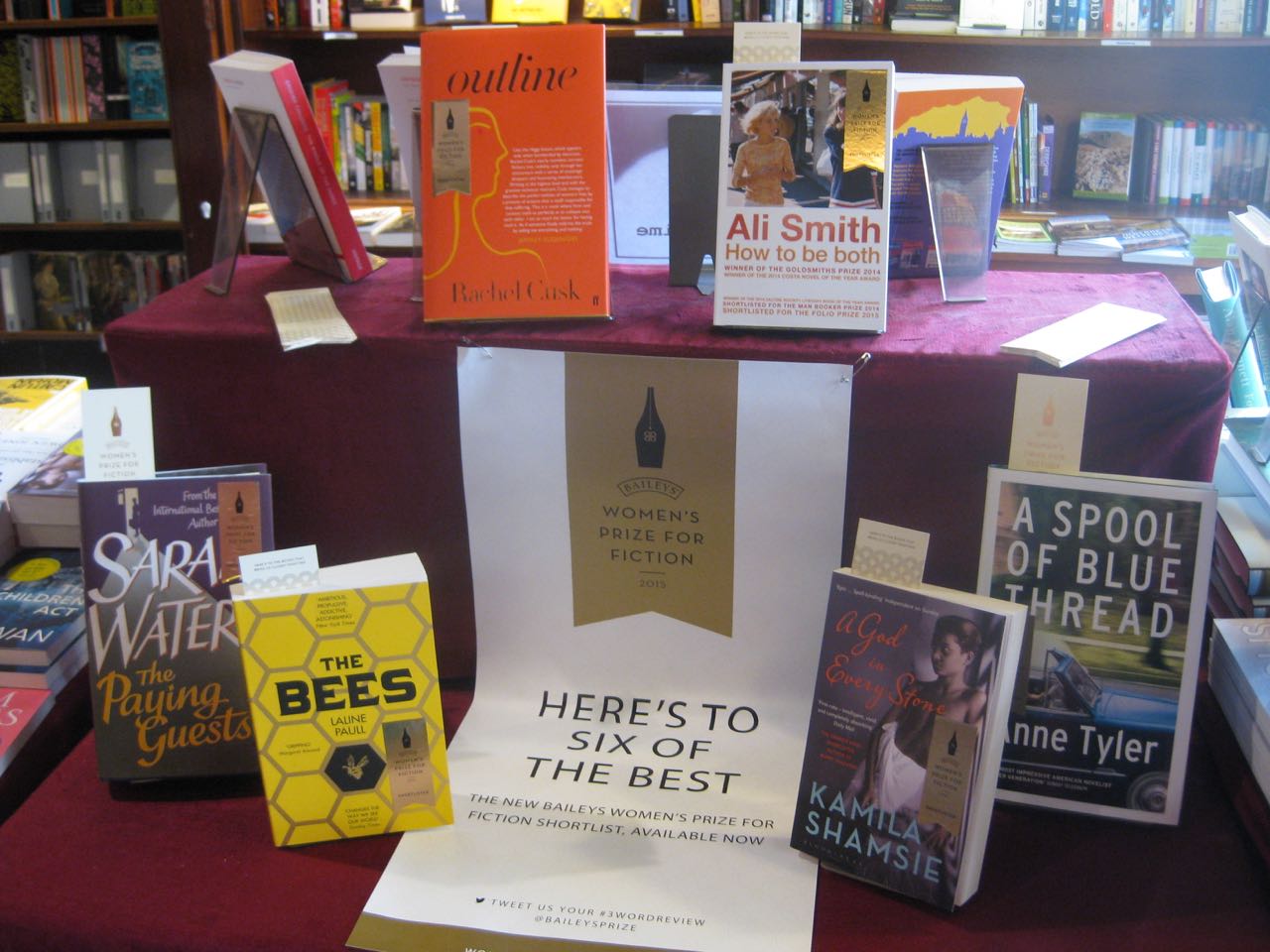
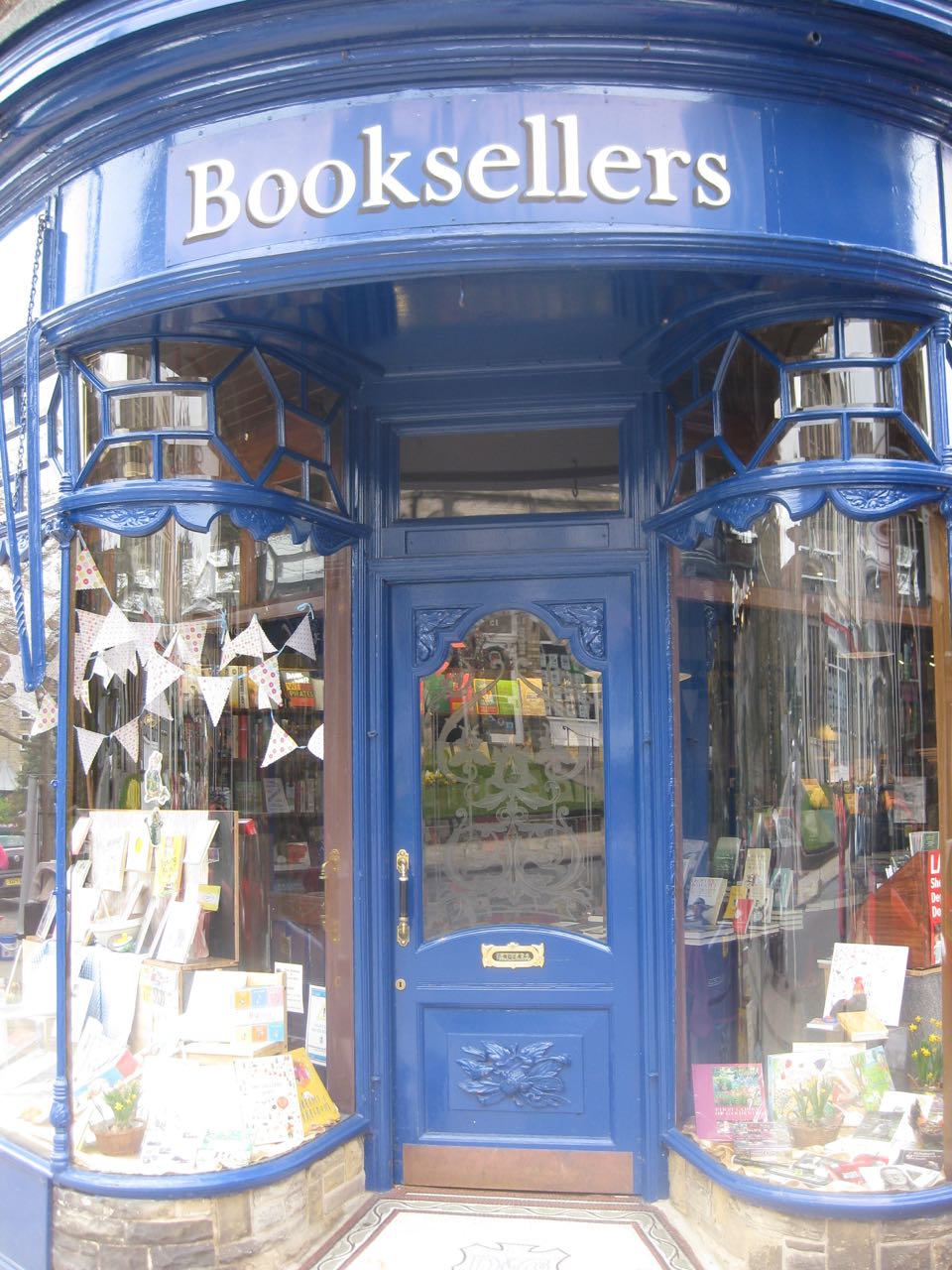 The Grove Bookshop in Ilkley, Yorkshire: This was my second visit to The Grove Bookshop, which I’d like to declare The Most Perfect Bookshop in all of England. After a few days of chain bookstores’ disappointing stock, it was a pleasure to walk into a shop that had all the best books. Plus there was bunting in the window, and the shop is just so beautiful with dark wood and careful lighting. I was able to get a couple of books from the Bailey’s Prize shortlist (prominently displayed), plus some picture books for our children, who we’d left with their grandparents for the day. Browsing, our stack just kept getting higher, and then the pleasure of chatting with staff at the till when it came time to pay for it. Keep in mind that we’d just come from afternoon tea at Betty’s, just down the street, so all in all, the day we went to Ilkley was pretty much perfect.
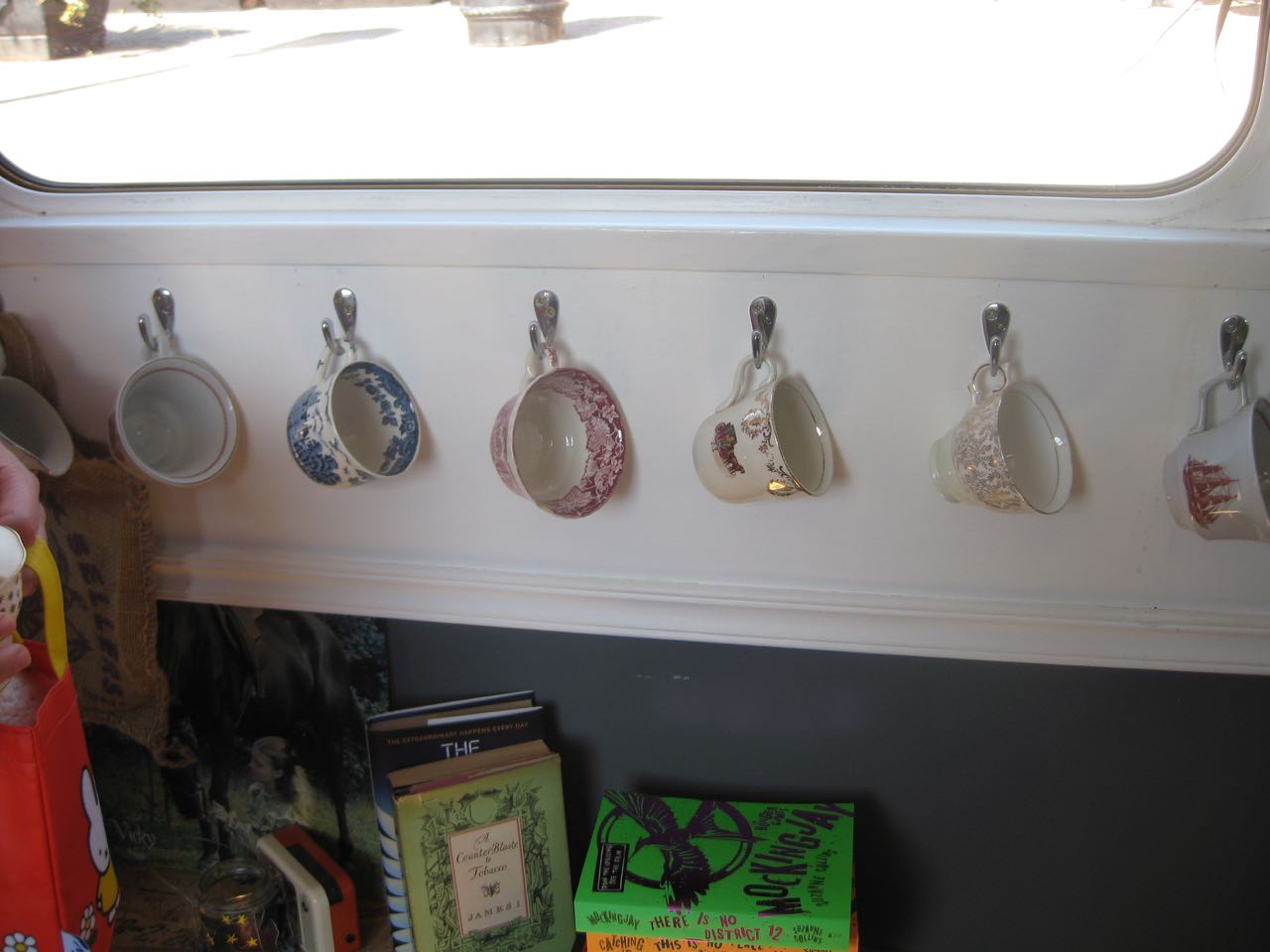
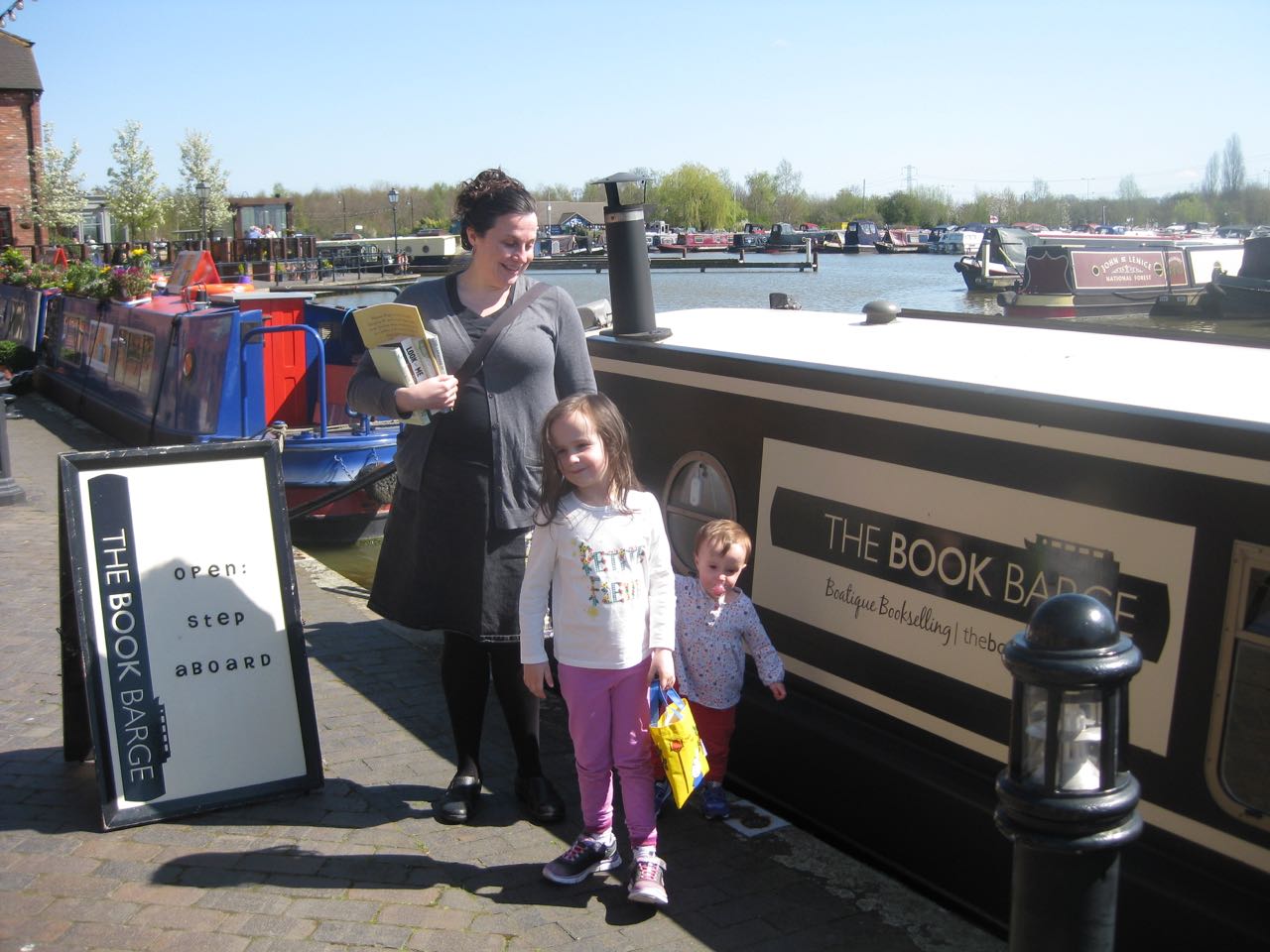 The Book Barge, Barton Under Needwood, Staffordshire: Finally visiting The Book Barge (which I’d learned about from The Bookshop Book) was surreal in the absolute wonderfulness of the experience—when can a single thing ever be so good? I know I wrote about it already, but I’m going to do it again. It was a brilliant, sunny day at Barton Marina, and the sun shone through the Book Barge windows, illuminating the beautiful space, the gorgeous books, and my children chased the resident rabbit (but of course!) under the sofa while I browsed, and we had tea. The cups were hanging on hooks in a row.
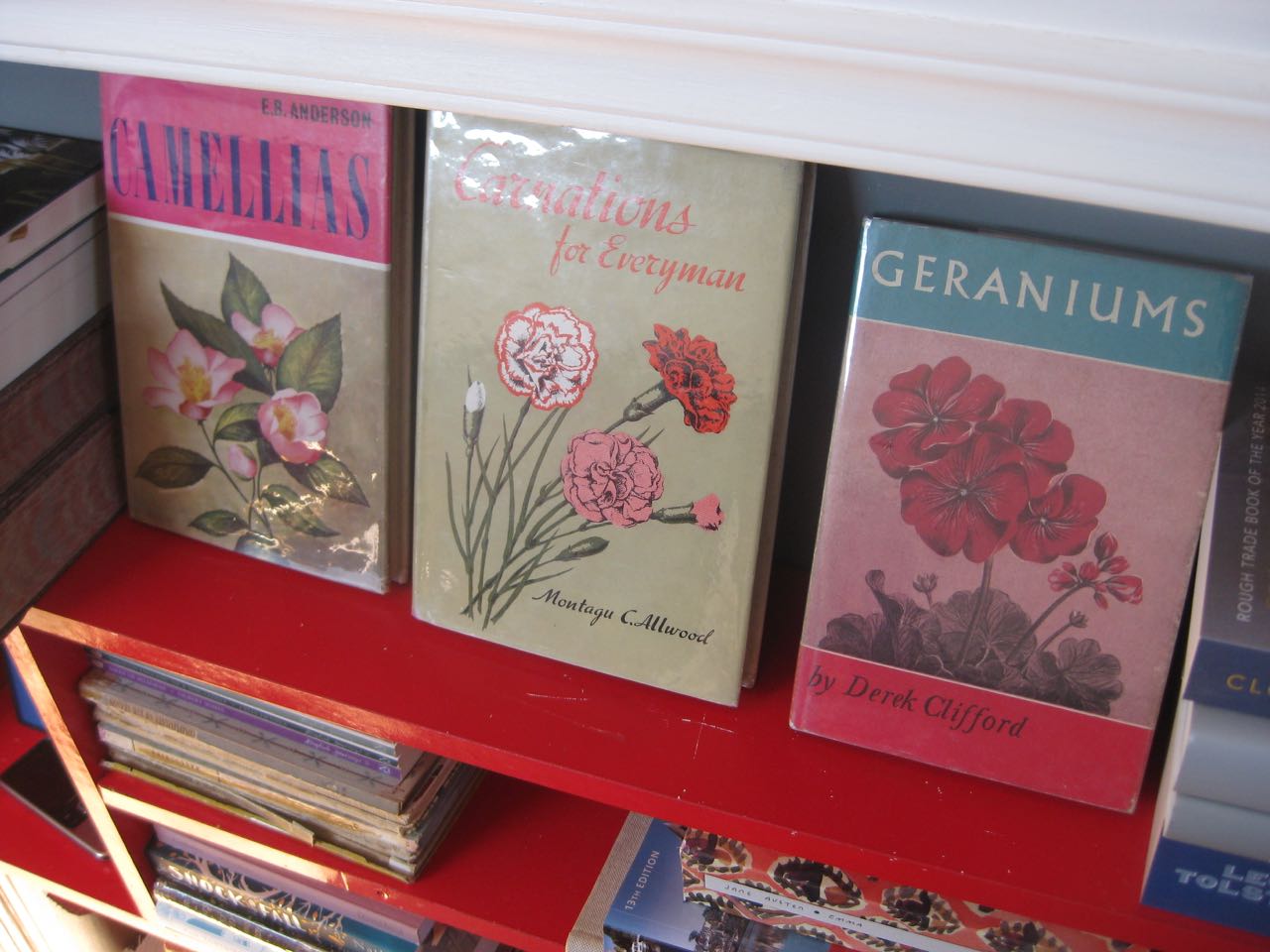
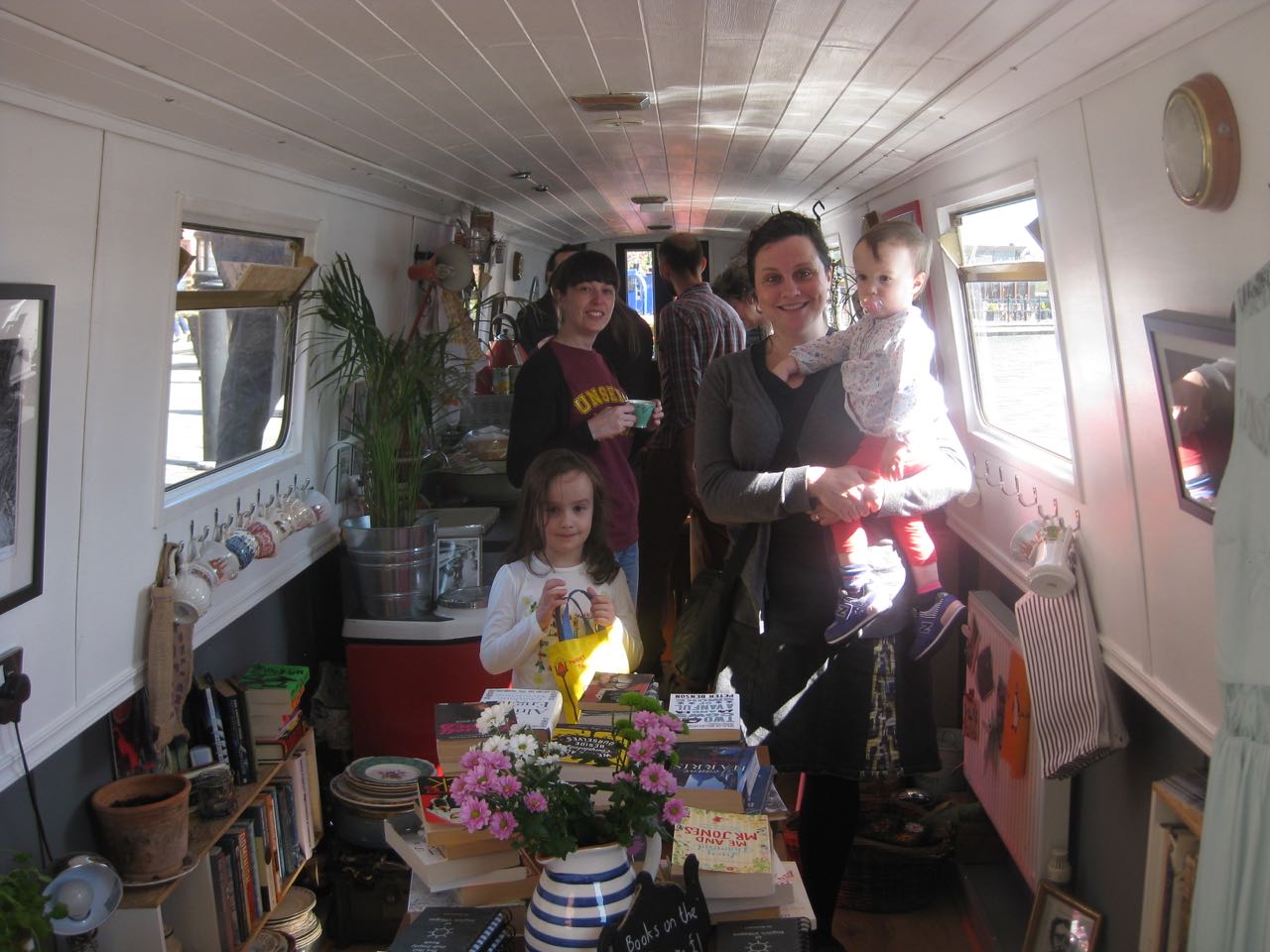
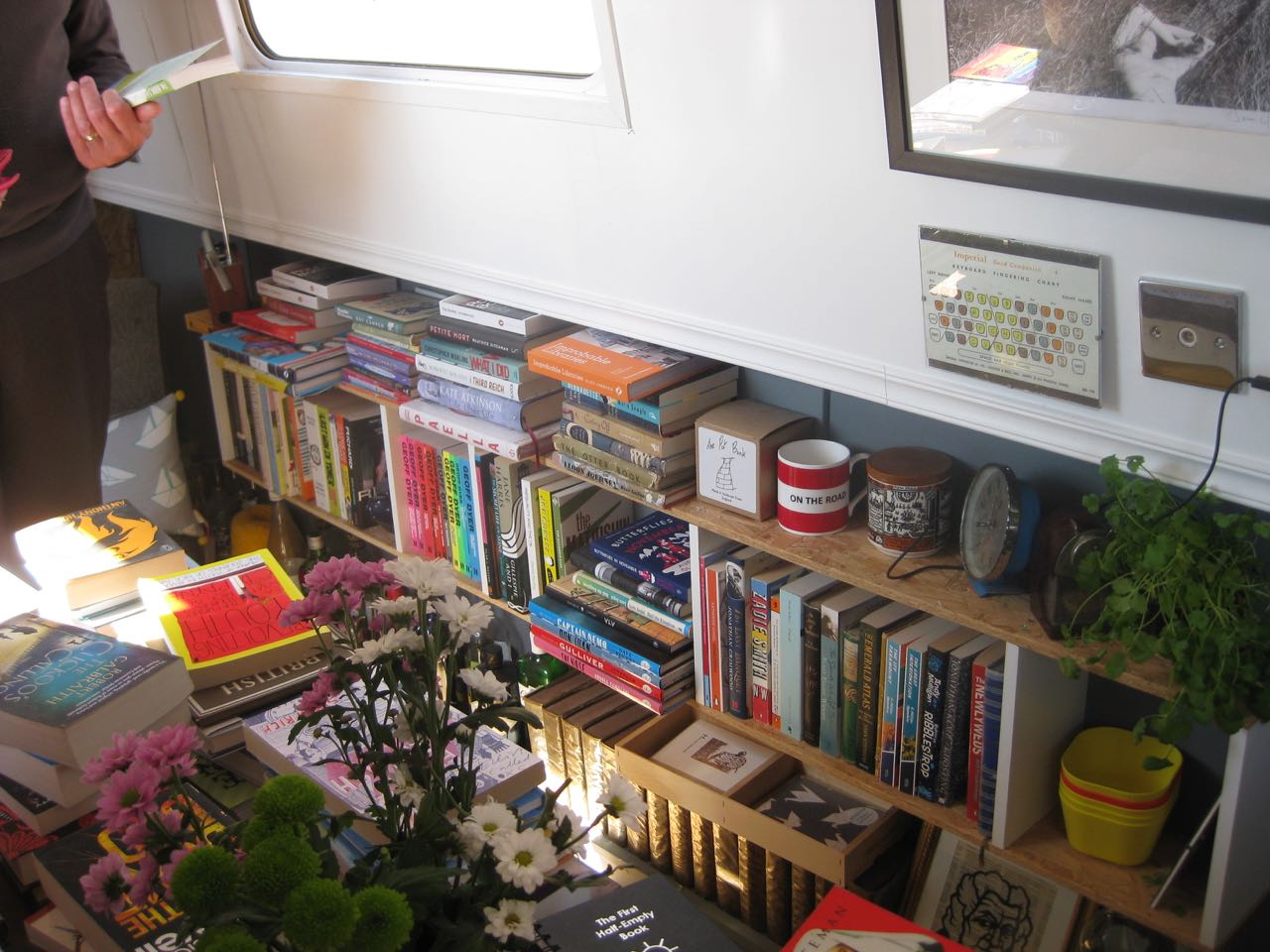
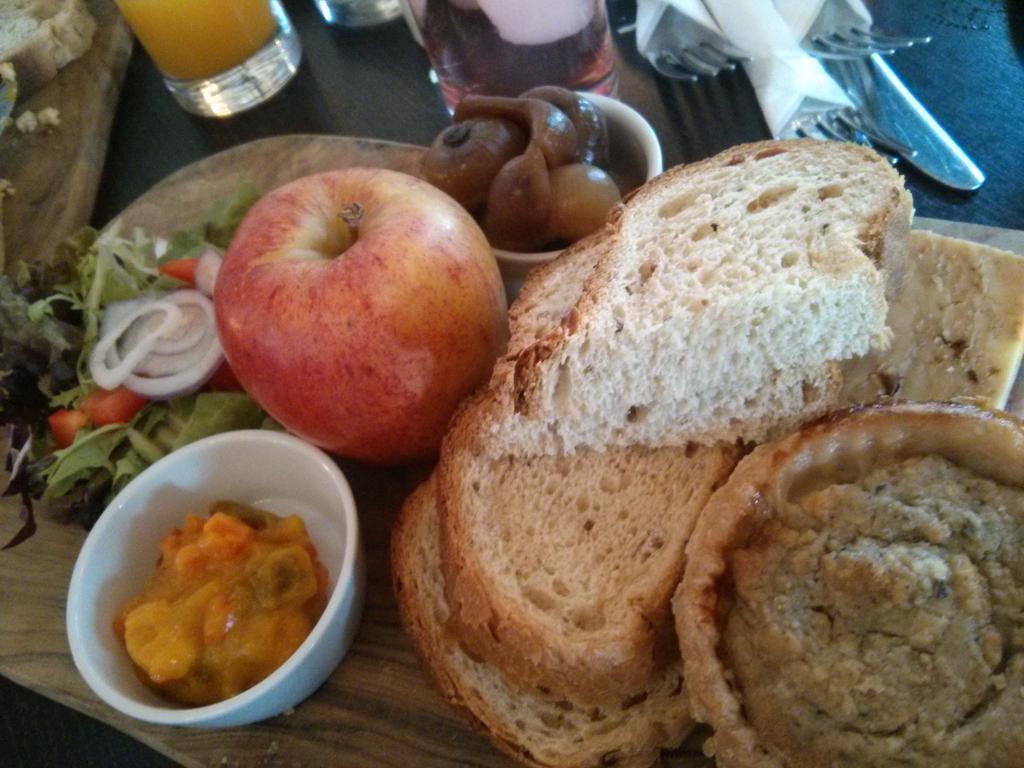
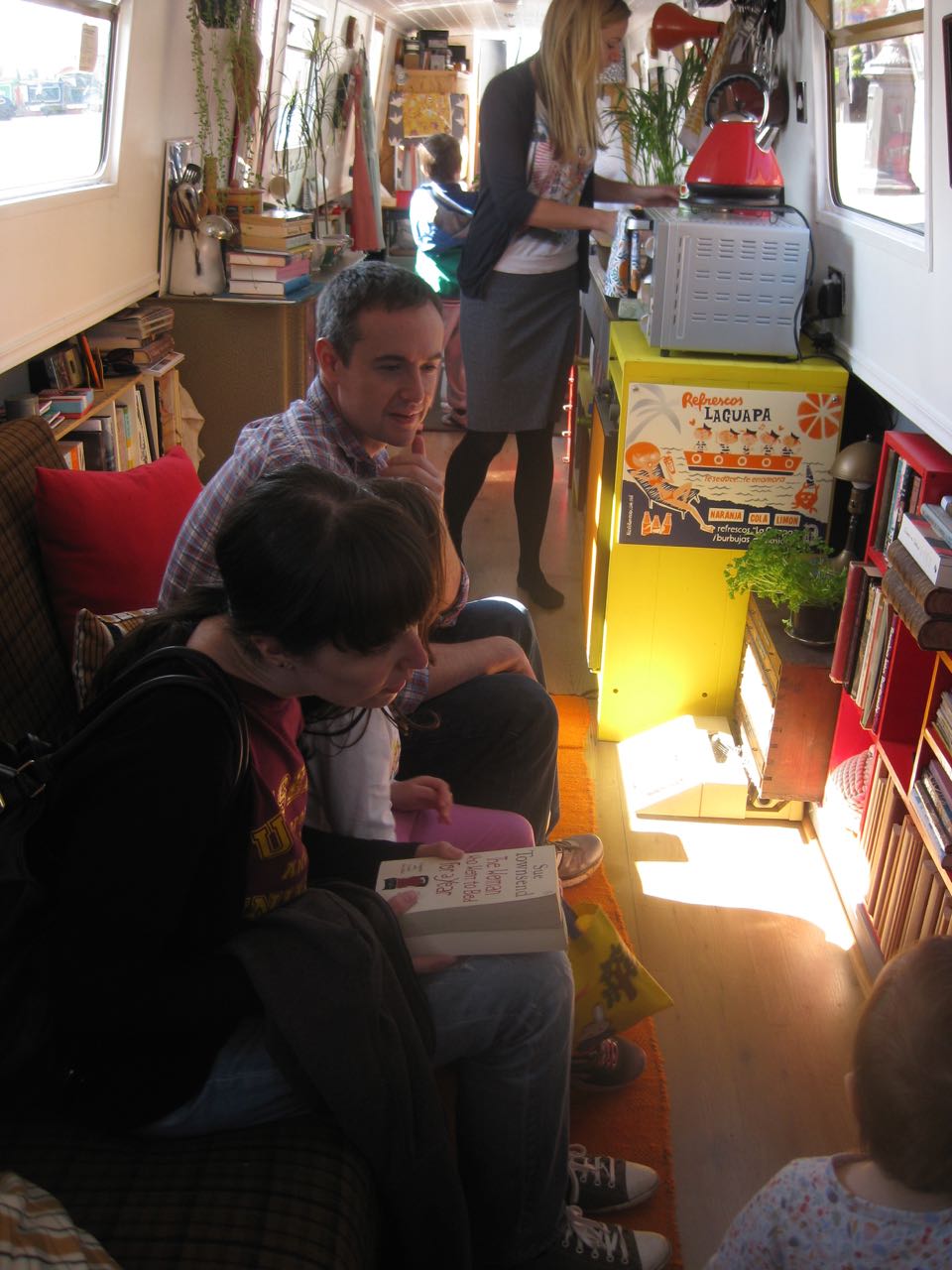 The books were lovingly and carefully curated, collection in odd ways that made perfect sense. Lots of titles were on sale for a pound (and some of these were really good), and the more coveted titles lined the barge’s shelves. It was a pleasure to meet proprietor Sarah Henshaw, who now lives on the barge (which is open Saturdays from 10-4) and who is author of a splendid memoir about book barging—The Bookshop that Floated Away. And having read the book, actually being there was like a story come to life, and so delightful. I bought a huge stack of books, which I enjoyed rifling through as we had lunch at the The Apple Tree Cafe beside where the barge was moored, and the bargeman’s lunch was enormous, weird, and perfectly delicious.
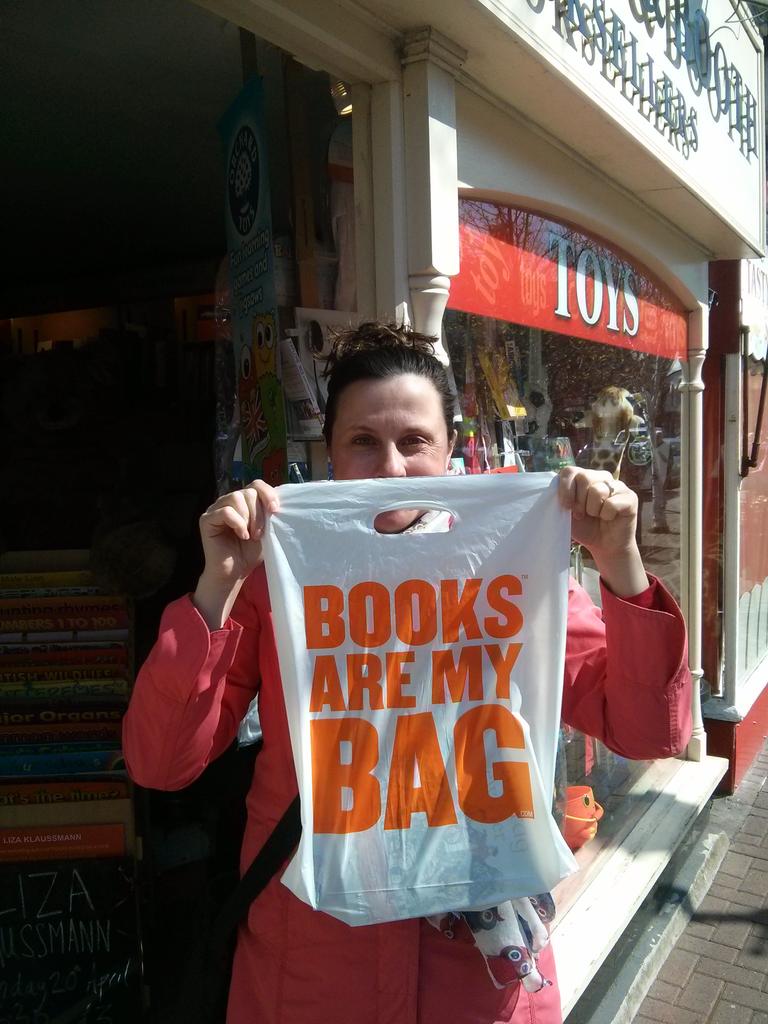 Plackitt and Booth Booksellers, Lytham St-Anne’s, Lancs: I can tell I’m in a really good bookshop by the calibre of conversation I get at the till, and Plackitt and Booth in Lytham St-Anne’s did not disappoint. It was not her shop, the woman working there told me, but she loved it, and she might have been wary when they’d decided to start selling toys as well as books, she’s so happy with how the whole thing worked out. The toys (a wonderfully curated selection) bring people into the shop, she told me, and these same people usually come out buying books. And then we started talking about books, and The Bookshop Book, and she recommended other shops I ought to try on my next trip, and we delightedness in bookishness in general. Certainly, I had found my people.
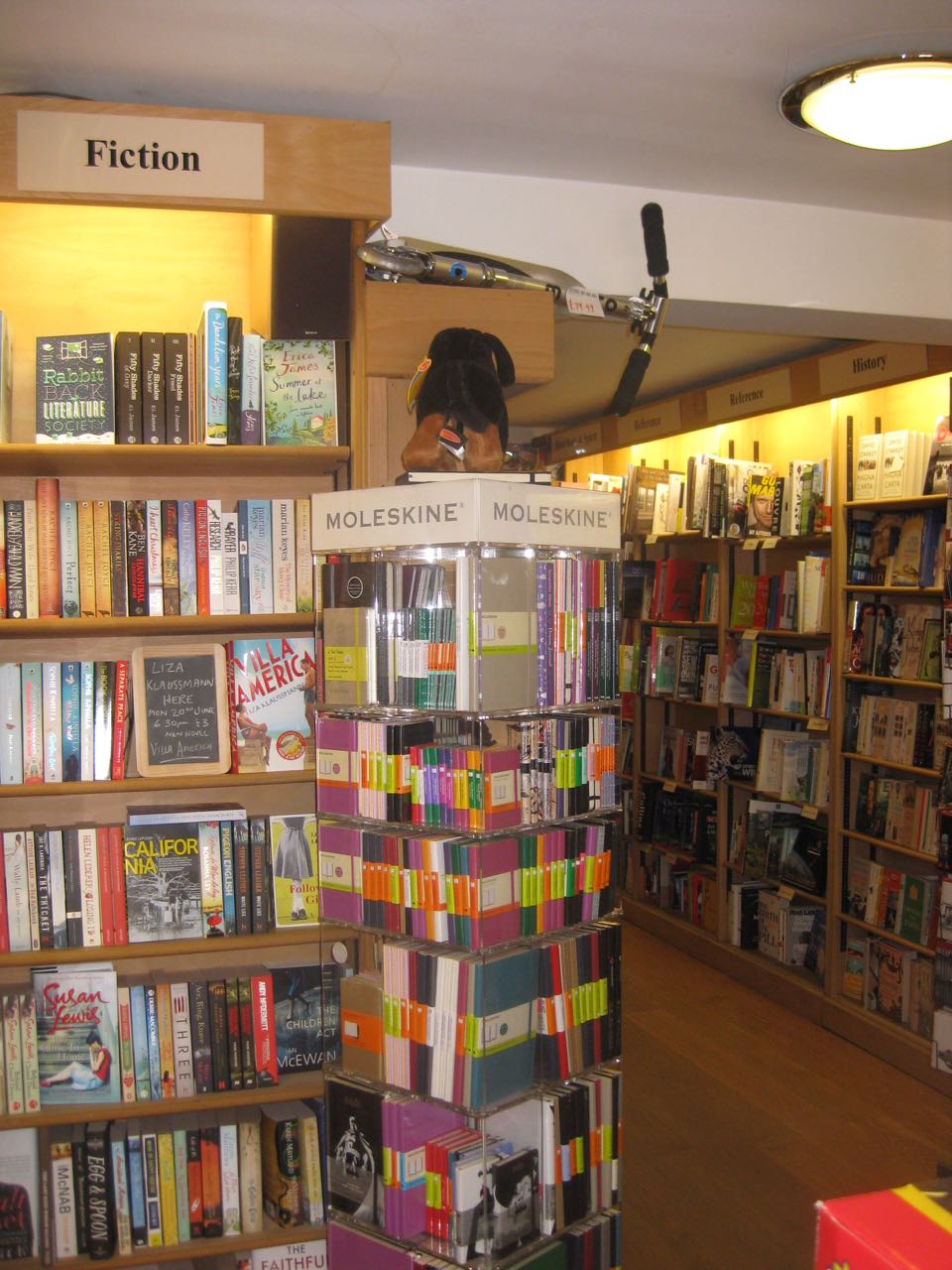 And my children were just as happy as she was about how the whole half bookshop/half toyshop scheme had turned out. The best bookshop since the ice cream one, they reported, as they played with the toys in the back of the shop (and came out with two girl pirate figurines to their credit). And while they played, I browsed, so impressed by the selection, and pleased to see so many Canadian authors on the shelf. The store was bustling too, which is such a nice thing. I really loved it.
We followed our visit with lunch at The Lytham Kitchen down the street, which was so good. I also heard reports of nearby Storytellers, Inc., which specializes in books for children. We will definitely check it out on our next visit!
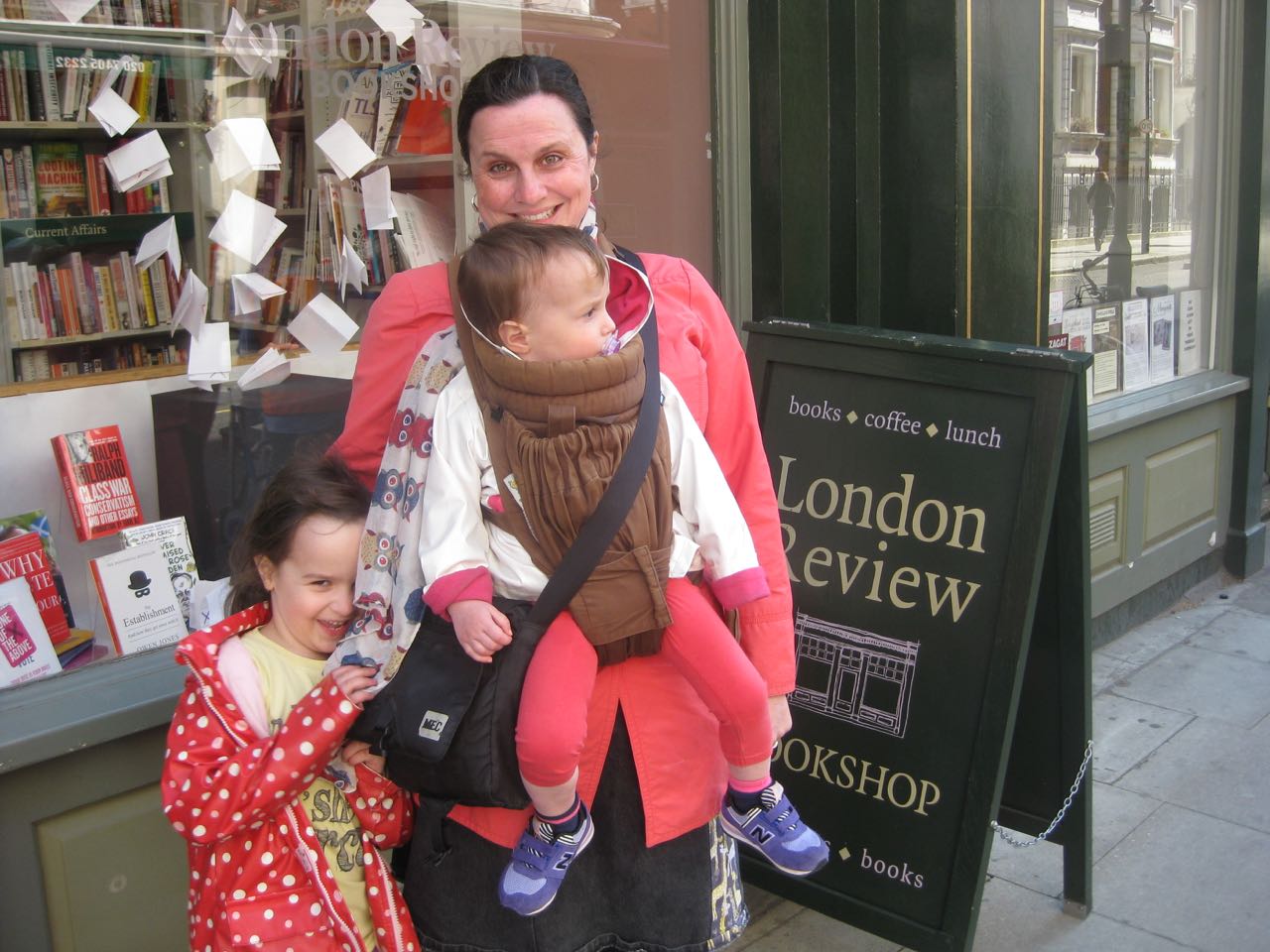 The London Review Bookshop, London: I love the LRB Shop! After a week of looking for Samantha Harvey’s Dear Thief all over England, I finally found a copy here. And so many other wonderful books to choose from. Lots of important nonfiction, and books in translation, and best of all? My husband and children were in the adjoining cake shop enjoying themselves while I browsed. Has anything ever been more perfect?
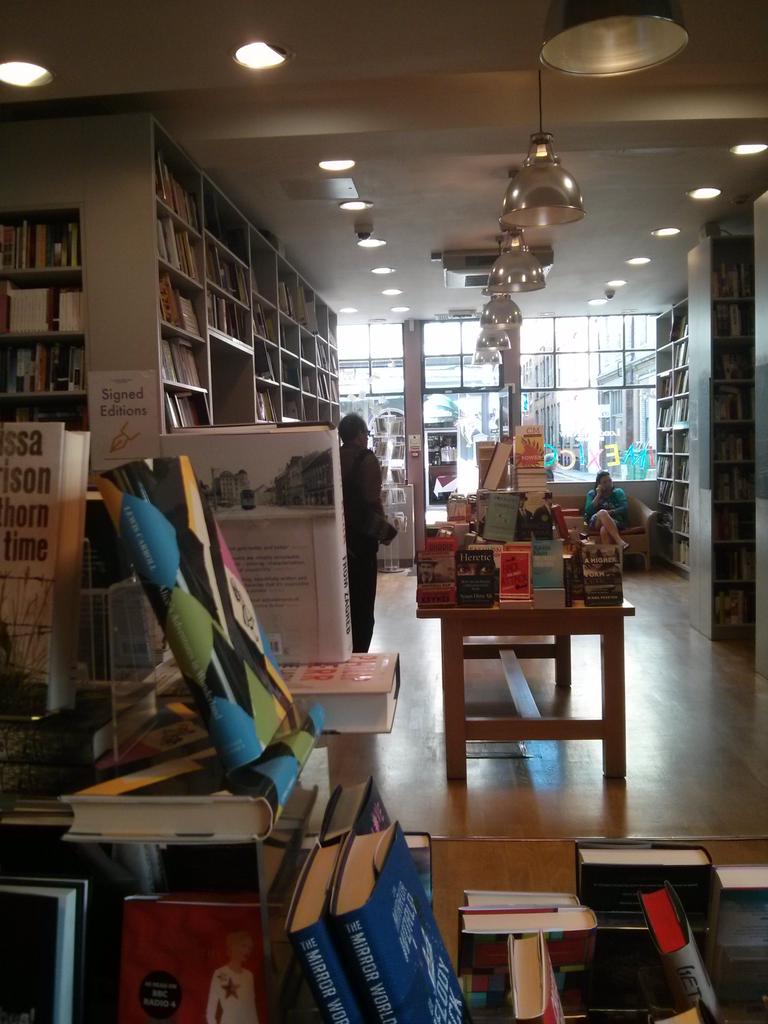
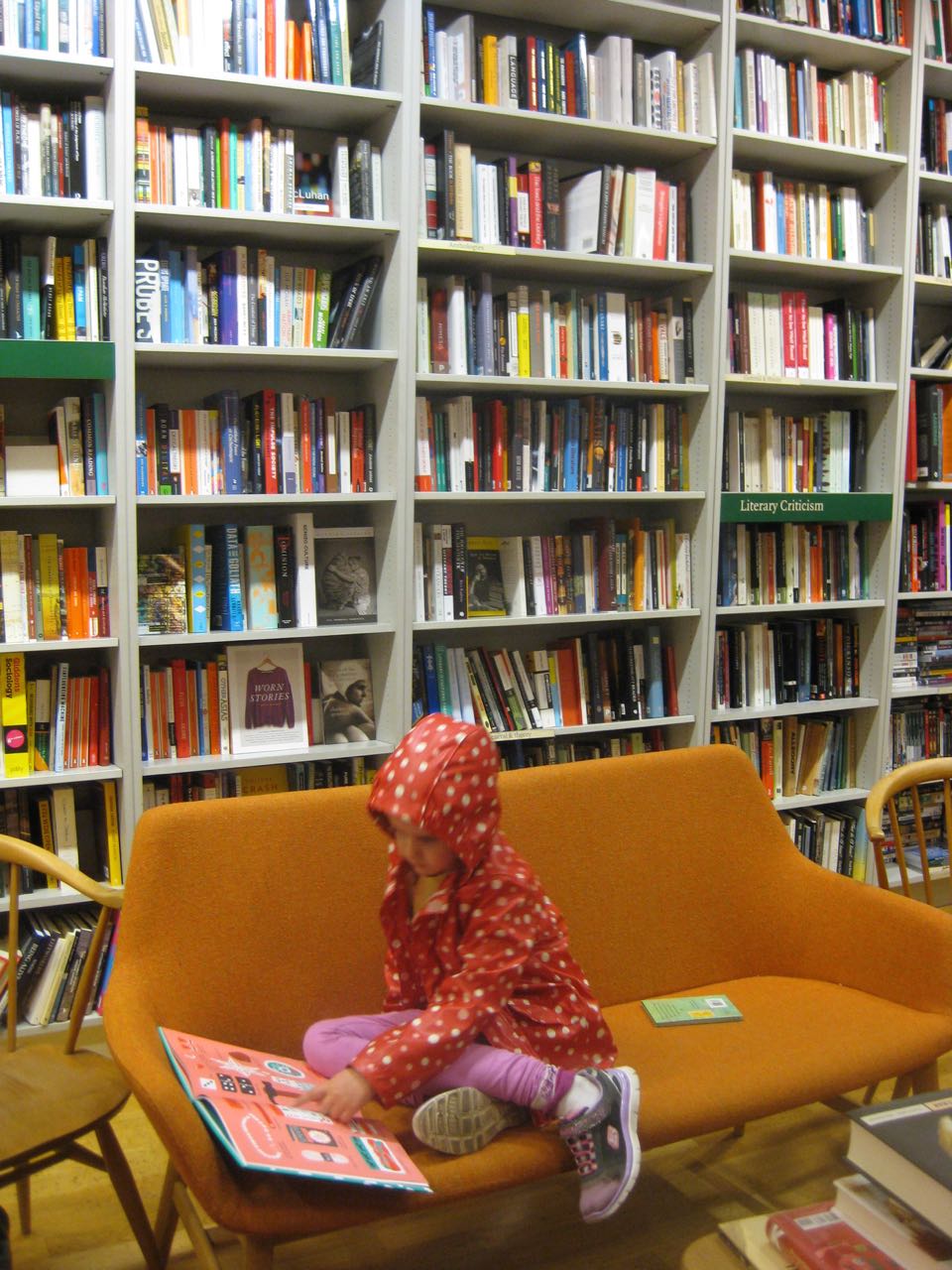 Downstairs, the shelves stretched high, and Harriet and Iris sought out the books that were just for them (which were placed amongst the books for grown-up readers in a way that accorded the children great dignity, I thought). We weren’t actually planning to buy the children books, but we never are, and then we couldn’t help ourselves. Harriet got the fabulous and fun book/game, What’s Inside?, and we also got My Pet Book by Bob Staake, who illustrated Cars Galore, a book we all love. The London Review Bookshop was the perfect way to start our bookish London Day, and I didn’t mind having to to cart around my new LRB book bag (heavy already) for its entirety.
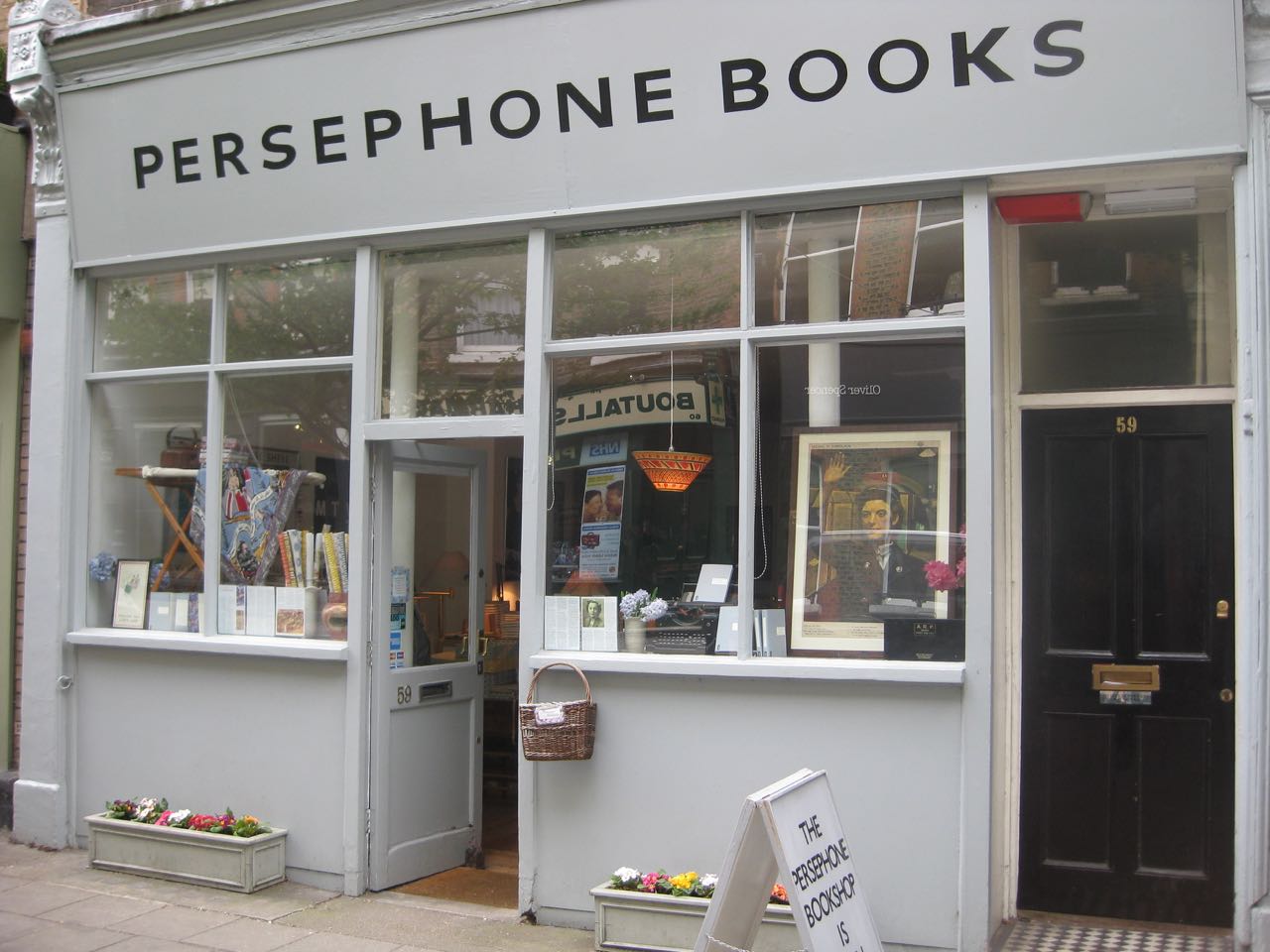 And then finally, Persephone Books, London: Everyone who knows Persephone Books responded to our plans with visit there with a gasp and a frisson of excitement. Persephone is a press with a shop devoted to selling their own books, gorgeous reissues of 20th century books by women (and not just women anymore). All the books are uniform blue, distinguished inside by stunning endpapers whose prints are specially selected (and which also appear of a variety of textiles for same throughout the store—and what I wouldn’t do for a Persephone throw cushion, but alas).
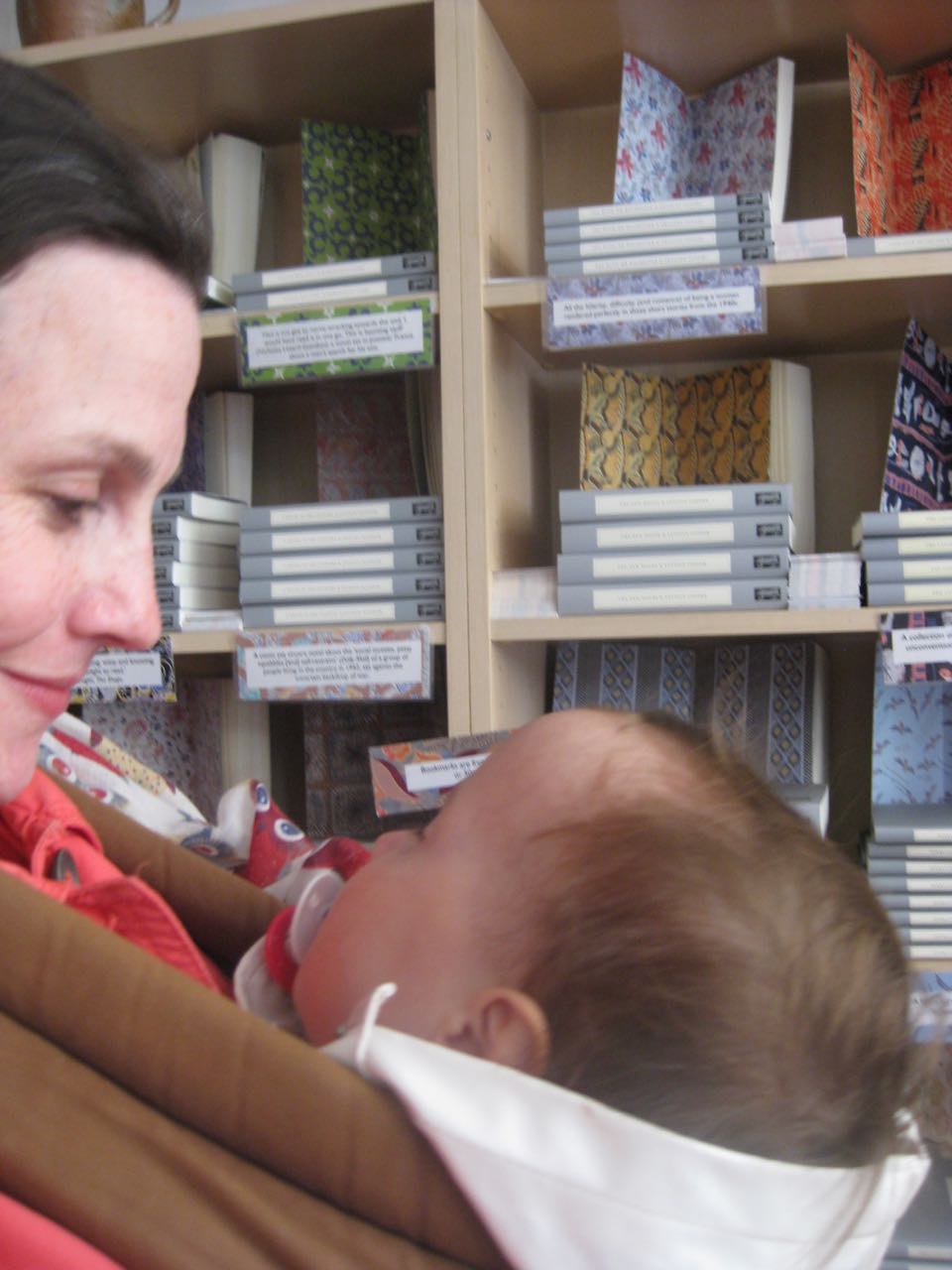
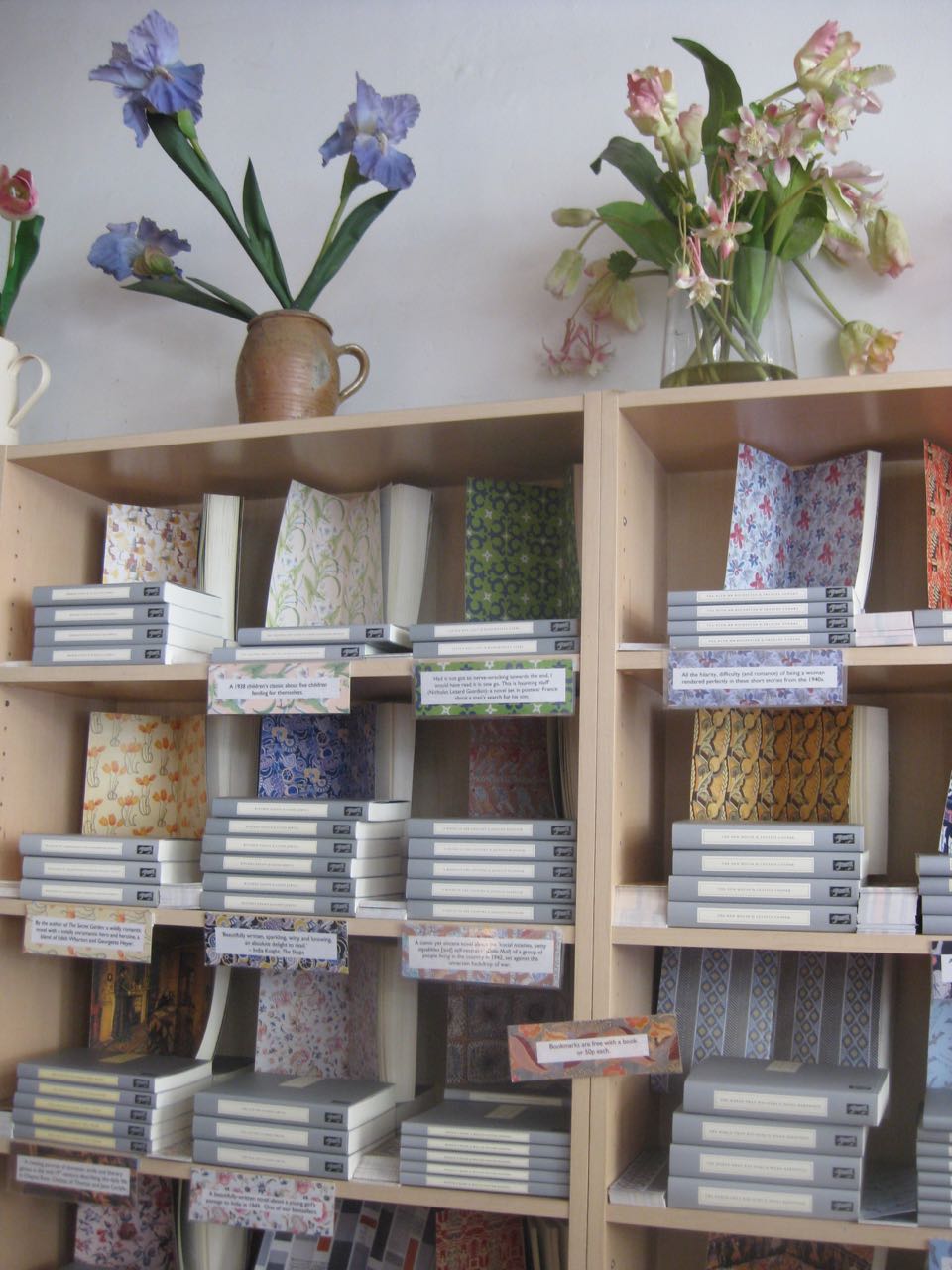 I visited the shop with Iris asleep in her carrier, and didn’t have so long to browse (and browsing is tricky anyway—the book all look the same) so I’d already decided I was going to buy a book by Dorothy Whipple, whose appeal was her Lancashire roots and Harriet Evans’ preface to Because of the Lockwoods: “the case does need to be made for Dorothy Whipple’s entry into the pantheon of great British novelists of the twentieth century. Not just because she can so deftly spin a cocoon of a story around you, swiftly rendering you transfixed (the art of which is severely, crucially underestimated by reviewers and readers alike) but because she wrote books quite unlike any others, for all their seeming “ordinariness”. One might say the time is long overdue for a Barbara Pym type rehabilitation. I am as ambitious [for this to happen] to Dorothy Whipple. Her scope is larger, her own ambition grander, the results hugely satisfying, often thrilling.”
I can’t wait.
April 28, 2015
The M Word: It’s funny!
 The M Word is a heavy book, but there are certain moments of levity throughout that continue to delight me. Heather Birrell and “get off my tits;” Diana Fitzgerald Bryden chasing a runaway dog into the Don Valley, an infant tied to her chest; when Kerry Ryan gets test results back that say she’s as fertile as a 70-year-old woman—because her results have been mixed up with those of a 70-year-old woman; Priscila Uppal hiding in the kitchen at baby showers; Carrie Snyder’s childhood family packed into a VW for a tour through Europe; Julie Booker kicking garbage cans; Maria Meindl’s amazing firstborn, the grotesque doll christened “Junior”.
And so it doesn’t feel that incongruous to me that The M Word has been included on Brain Child Magazine‘s Top 10 Humour Books about Parenting, alongside Erma Bombeck, Anne Lamott, and the Honest Toddler. In particular, Hilary Levey Friedman cites Ariel Gordon’s “Primipara” as the essay that made her laugh out loud and stayed with her afterwards—especially the part where Gordon notes that if she’d had twins, she would have eaten one or sent it back.
Even better: Ariel’s poem, “Primapara” (which appears in the essay of the same name) is from her collection, Stowaways, which was winner of the 2015 Lansdowne Prize for Poetry / Prix Lansdowne de Poesie at the Manitoba Book Awards last week!