April 20, 2018
The Bagel King, by Andrew Larsen
 We love Andrew Larsen’s new book, The Bagel King, about Eli, whose Sunday morning ritual involves his grandfather arriving with bagels fresh from the bakery. Sometimes Zaida lets Eli come with him, and Eli gets a pickle from the big jar behind the counter, but usually Zaida comes to him. With the bagels. Except one Sunday he doesn’t! Turns out Zaida slipped on some schmaltz and hurt his tuches—and one of the best parts of this book is the Yiddish glossary which means we now know how to say “tuches.” Zaida’s injury has taken the best thing out of Sunday for not only Eli, but also for Zaida’s neighbours, who’d come to rely on his bagel deliveries as well. And so the next Sunday Eli steps in to fill the gap, and it becomes apparent that the bagel kingdom is something a person can inherit. And good thing—because what’s a Sunday without bagels, Zaida asks, in this story about intergenerational relationships, family and neighbourhood connections, the importance of ritual, plus pickles and carbs. “Warm. Chewy. Salty. Bagels were the best thing about Sunday. The best thing, that is, except for Zaida.”
April 19, 2018
What that chip means
 Everything about the world that I didn’t learn from reading I know about from the stretch of city block below our front windows which are usually open in the summer. Every few months, a couple breaks up while sitting on our garden wall, and other couples break up elsewhere but not before fighting on our curb in the middle of the night. I’ve learned so much from snippets of conversation from people passing by, from people riding by on their bikes screaming at someone on the phone, and from the disproportionate number of individuals who stand outside rapping, beat-boxing or singing acapella. We still wonder about the person who once breezed past on his skateboard while demanding of someone on the phone this curious question, “Who goes deep inside you?” Who indeed?
I don’t get out much. And can you blame me? I’ve got British crime dramas on Netflix, and plenty of books, and venturing outside would only mean engaging with all the weirdos outside my door. Next year I’m turning forty, I work from home, and I’m pretty ensconced in my bubble. I like my bubble. But the price of my bubble is that whenever I go outside of it, I’m tremendously uncomfortable. It is most likely that I’ve been more socially awkward in my life than I am right now, but I’ve never been so aware of it. It’s like walking around with a sign on my back, but I’m not wise enough to decipher it—so I imagine every possibility.
The other week I spent the afternoon in a coffee shop while waiting to pick up my daughter, and while the place had a certain charm and also wifi, it was kind of shitty. But crowded, so the only place available to sit was at this counter at a window where the sun was too bright even though it was overcast. Two hours on a stool made my back hurt, because I am old, and there was no place to rest my feet because the part of the wall that was under the counter was a part of the wall that was nearly falling off the wall. But the tea was good, and there was baked goods. I had work to do, so I sat at my laptop, feet dangling, and listened to curious conversations from young Bohemians, like about whether it was a good idea to apply for a job at Soulpepper (“because of all the drama” [ha ha, but it wasn’t a joke]); about “Savoury Scone Lady” who comes and clears them out of the cheddar thyme scones on most mornings and refuses to make a special order so that they never have any left for the rest of the day, “But it’s good for business,” and there’s the quandary; and about the differences between math metal and Dungeons and Dragons metal, which are both genres of nerd metal—who knew? What a think to imagine yourself as a central character, and then to receive these glimpses into worlds, cultures, stories, in which you do not remotely factor.
It was not a bad afternoon. It was just strange to think about how much of the world goes on without me, how much of the world manages not even to ride its bike past my house screaming obscenities. My angst was existential, but then it usually is. I’d posted a photo on Instagram of my tea cup, which was a chipped cup. And then someone posted a comment: “Oh, Kerry, I don’t even want to tell you what that chip means.” I didn’t know this person. I thought, “If you don’t want to tell me, then why even let me know the the chip has meaning?” I’d just assumed it was part of the wall-falling-off-the-wall aesthetic of the place. I’m pretty accustomed to crockery chips—have you looked in my cupboards? But it turns out that I had been had.
Because I am totally normal, I went for the logical conclusion regarding what that chip means. Naturally, it’s the mug they all ejaculate in. Obviously. All coffee shops keep such a mug in reserve, maybe having a ceremonial communal wank at closing time on Fridays. And everybody knows about this except me, and I’m such an idiot that I unwittingly took a photograph as evidence and posted it on Instagram.
I couldn’t think of any other possibility, and did what I always do it times of distress, which is, I called my husband. I said, “I think I drank from the jizz cup.” He said, “The jizz cup? What’s a jizz cup?” I said, “It’s the cup they keep at hipster coffee shops and all ejaculate into, and then they serve people with ugly winter coats their tea in it.” He said, “What are you talking about?” I said, “I don’t know, but this person on Instagram doesn’t even want to tell me what that chip means, and what else could it mean?” He said, “I don’t know, but probably not the jizz cup.” He said, “There’s no such thing as the jizz cup.” And I said, “How do you know? As Princess Diana’s butler Paul Burrell once reported the Queen informed him, ‘There are powers at work in this country about which we have no knowledge.’”
We googled it. I am still not sure what the chipped cup means, to be honest, and maybe I am only underlining my humiliation, but the most we were able to discern was that chipped mugs are extremely unhygienic. Chips can harbour all kind of bacteria that cause disease…but honestly, who cares? It’s the reason I was born with an immune system. And if I seem particularly blasé about it, it’s only because it’s better than the jizz cup.
April 18, 2018
My Garden, So To Speak…

The internet is awful, and this week I met the exciting milestone of my first report of a threat to my personal safety on Twitter. Obviously, they found the threat doesn’t violate their terms. To suggest the comment was something I actually find threatening is to give some sad little worm too much credit, but still, what a sorry thing when this is how people communicate, and somebody else decides it’s acceptable. Even sorrier that someone like that gets to define our online experience—and so he doesn’t. I also love the internet. I’ve also spent this week jumping through portals into rich and colourful stories and experiences, and I share links to these places on Twitter. Where, I find, there isn’t tremendous engagement anyway. And so in celebration of the goodness, I’m going to bring back the links round-up to my blog, that little corner of the internet that is mine. My garden, so to speak.
- “I find minimal design beautiful, but boring. Give me tchotchke, colour clashes and contradictions.”
- “I will take Kathleen Wynne’s arrogance over [Conservative leader] Doug Ford’s stupidity any day of the week.”
- “I have spent most of my adult life worrying I have inherited my father’s darkness.”
- “The aroma emerging from your oven while this baby bakes is enough to make you believe any world that smells this divine must inherently be safe.”
- “The Second Shelf Rare books, modern first editions, manuscripts, & rediscovered works by women. On mission to balance the bookshelves.”
- “…when I see her photo, I see Tina Fontaine as every high school kid who could land in my first-year university classroom, the one where I teach Marilyn Dumont’s poem, a class where she’d hand in essays and I’d write on them Good point! and I like how you’ve figured this out.”
- ‘“Worrying about its worth and value to others before it exists,” she remarks in a later section, “can keep us immobilized forever.’
- “My noticing, if I may call it that, is part of the way I remember, the way I try to keep intact the world I cherish.”
- “I found my new favorite spring lunch salad while I was hiding from a pot of brisket…”
- “But of course I also love talking about the things a novel in particular does that, say, the 24-hour news cycle doesn’t. The slow, deep dive into a world that a novel gives you.”
- “I wish I could apologize to Tante Geneviève for questioning her wits…”
- “Sourdough made me both crave spicy soup and freshly made bread.”
- “It’s strange that my only material evidence of the Barred Owl also happens to be the worst photo I’ve ever taken.”
- “There is a reason we have foods like pickles, and it is the same reason we crave good art.”
- “My friends, it is a long time since I’ve had a solo visit to the park, a hike, and a chance to observe the park’s abundant wildlife. And I’ve missed it. Terribly.”
- “Another thing I find useful to remember is that all of the secrets to writing are also secrets to living.”
April 17, 2018
1979 and That Time I Loved You
 Ray Robertson’s new novel, 1979, is set in Robertson’s hometown, Chatham, ON, the story Tom Buzby, of a small town paperboy who once come back from the dead and now everybody thinks he must have some uncanny knowledge of the world and its workings. Which he does, actually, but in a more practical sense than assumed, the way he’s privy to glimpses of private lives, and wise to the cycles and seasons of the town and its residents. He’s not sure either why everybody thinks he’s got access to wisdom, but that’s because he takes his point of view for granted, his unique perspective on ordinary lives, and the fact that there is really no such thing.
Full disclosure: not a long happens in this book. Tom dies and comes back from the dead before the story starts, which is also when his mother, a former stripper turned religious zealot, runs off with the pastor, leaving her tattoo-artist husband to care of Tom and his older sister Julie. There’s a simmering tension involving Tom’s dad finally buying his own property, and the destruction of a local building to make way for a downtown mall, but otherwise it’s Tom on his paper-round, listening to his sister’s records, hanging out with his friends, thinking about his mother, checking out the books at Cole’s, and trying to impress an older girl by lying and telling her he’s read Fear of Flying. All of these characters are richly and sympathetically imagined, and realized.
It might be a two hour drive from Chatham to Wingham, but I still got an Alice Munro vibe from Robertson’s small town scenes, and this was underlined by the “newspaper stories” that are scattered through the novel. Imagined stories (‘Young Woman Finds Ontological Comfort in New Pair of Pants:’ “When I Look at Them, They Remind Me of Who I am”; ‘Man Grows Old and Cranky:’ “I Knew it Happened to Everyone, but Somehow I Thought in My Case There Might Be an Exception”; ‘Man Found Dead in Next-Door Neighbour’s Swimming Pool:’ “I didn’t Necessarily Want to Die, but I Didn’t Want to be Alive Either”) providing readers with access to the inner lives of the people who are secondary characters in Tom Buzby’s own tale, giving answers to questions that Tom does not yet have the age and experience to be asking—although he’s already haunted by a sense that they’re coming.
The book is rich with allusions to literature and music, and one reference specifically informs the project, the poetry collection Spoon River Anthology, by Edgar Lee Masters, which narrates the epitaphs of residents of a small town. Robertson’s take with the newspaper stories is similar in approach, and connects with Tom’s job (and downtown circuits) in a meaningful way. The result is beautifully crafted, a rich and textured perspective of small town life, a nostalgic journey that resonates with the world of today.
 When I picked up Carrianne Leung’s new book next, That Time I Loved You, it was purely a coincidence, and I wasn’t expecting a connection. Until the first paragraph, of course: “1979: This was the year the parents in my neighbourhood began killing themselves. I was eleven years old and in Grade 6. Elsewhere in world, big things were happening. McDonalds introduced the Happy Meal, Ayatollah Khomeini returned to Iran and Michael Jackson released his album Off the Wall. But none of that was as significant to me as the suicides…”
These two books are excellent companions, perfect contenders for “If you like this, read…” pairings. Instead of small town Ontario and the past meeting the future, Leung is chronicling the suburbs and the possibility of escaping the past. The setting is Scarborough, where brand new houses with their leafy lawns on winding streets represent fresh starts, new beginnings for the immigrant families who imagine they’ve finally arrived after years of struggle. There’s even a kid with a paper route, Josie, who’d inherited the route from her big brother: “Josie loved her routine and the sense of purpose her job gave her. She loved collecting the money at the end of the week from the neighbours, who often slipped her cookies, candy or even a tip.”
Although the centre of this novel is Josie’s best friend June, another first-generation Chinese-Canadian who revels in the expansiveness and freedom of her childhood, playing outside with her packs of friends until the streetlights come on. Like Tom Buzby, June has her eye on things, and she’s got surprising insight into the lives of her neighbours, although she doesn’t understand everything she learns either—least of all, why there’s been a suicide epidemic, and whose parent was going to be next?
A novel in stories is a perfect container for this book about the suburbs, every chapter a different house on the street. Open the door and go inside to find a different story, a closet full of secrets, a peek out the window to a new view of the street. The Portuguese housewife who is tired with putting up with her abusive husband; the young Italian-Canadian wife who has moved to Scarborough away from downtown, and who longs for a baby that doesn’t come; the neighbourhood social butterfly who is secretly a thief, and whose habits eventually get found out by her neighbours. Plus June’s friends, sweet and effeminate Nav, Darren whose academic potential is undermined by a racist teacher, and Josie, whose uncle is sexually abusing her. As with Robertson and the news articles, Leung’s structure permits her to include a wide range of different voices, and to suggest there is no such thing as a central narrative, but instead to shine a light on these remarkable places where stories intersect.
April 12, 2018
The Soup My Children Eat

Having children is a challenge to any notion of living in the moment, not just because children rarely sit still, but also because a moment in the life of a child is as changing as a garden in May. And so the closest I’ve come to really being present is looking back on five minutes previous and saying, “Well, thank goodness that’s over, and isn’t it amazing to be here right now.” Which is basically what I’ve been saying for my children’s entire lives, the first six weeks of their existences notwithstanding.
Of course, it helps that I am an insufferable diviner of silver linings. I also know that it’s not always going to keep getting better and better, this experience of raising children. Life is complicated. Although I am so insistent when it comes to those silver linings that I might possibly end up deluding myself into thinking this is the case—I’m an unreliable narrator. But still, here we are, with my children on the cusp of being five and nine, and we’ve never had it so good. Sometimes we go out for dinner, and I don’t even need to be bring crayons. All those terrains that were unnavigable by stroller are now ours for the taking—I look forward to a summer of walks in ravines. And when we wet our pants, it’s a special occasion instead of a regular occurrence. We’re capable of having interesting conversations that 35% of the time don’t descend into an in-depth analysis of farts. We can all go to the same movie and enjoy it, and even Iris has been following along with our reading of A Wrinkle in Time. But what makes me happier than anything else is that finally everybody likes soup.
It has taken years to get here. I don’t know why. You’d think that soup would be child-friendly, as it doesn’t even require teeth to eat it, but my children were soup-intolerant from the get-go. And in some ways, I understood—small children like food to be straightforward and not touching, and soup was everything mixed up in a bowl. I would puree it, but they always claimed it tasted terrible. Chicken noodle they would tolerate, but only because they’d just pick out the noodles. And all of this was very hard on me, because soup is one of the things I love best in the world. Warm and comforting, full of nutritious goodness, handy for leftovers, and how it warms the house and steams everything up so you can draw hearts on the windows. I really love soup, and I never gave up serving it to my children in the hopes that one I’d finally succeed at making them love it too.
The tide finally turned about a year ago. I remember the night it happened—I served the soup thinking, “Will tonight be the night?” As I’d done numerous nights before, but this one did the trick. Everybody ate the soup. The blandest soup, it was true, but I was not going to quibble about details. Soup was soup and we were eating it together, and I kept serving it, gradually adding flavour. Originally it was sweet potato and I started using butternut squash instead, but not telling them. They kept eating it. I added a bit of curry—nobody complained. And now I serve it weekly, and everybody’s the teeniest bit sick of it, but they indulge me and also they don’t get a say because I’m the one cooking. We like to have our soup with a loaf of oatmeal quick bread and hummus and cheese on the side, as well as a drained can of chickpeas roasted in the oven with salt and olive oil as the bread is cooking.
The Soup My Children Eat (Adapted from here)
Ingredients:
2 tablespoons coconut oil
1 onion, chopped
4 garlic cloves, minced
1 teaspoon curry powder
1/2 teaspoon chilli powder
3/4 teaspoon salt
1 butternut squash, peeled and diced (or 4 sweet potatoes)
6 cups of chicken or vegetable stock
1 can of coconut milk
Instructions:
Melt olive oil in a stock pot. Add onion and garlic and let them soften, then stir in spices. Add diced squash, and then stock. Bring to boil and simmer for 20 minutes (or longer?) and then add coconut milk. Puree with an immersion blender.
April 10, 2018
A Dangerous Crossing, by Ausma Zehanant Khan
 Everything is a little too close to home in Ausma Zehanat Khan’s latest mystery, A Dangerous Crossing. Inspector Esa Khattak’s best friend Nathan Clare’s sister Audrey has gone missing from the migrant camp in Lesvos where she’d been working for a Canadian non-profit, fast-tracking Syrian refugees to Canada. An Interpol officer is dead and Audrey has disappeared—is she responsible for the murder? Where has she gone? Has she been taken, and by who? And how to account for the discrepancies between Audrey’s official business with the non-profit and what she’s actually been up to?
To stave off a diplomatic nightmare, Esa and Rachel fly to Greece and are overwhelmed by what they find there—the enormity of the need, the scarcity of resources, the boatloads of people that continue to arrive on the shores. And the people themselves, each with their own stories, people who balk at being considered part of a refugee “crisis.” Words matter, as Khan makes clear throughout the novel. What is the crisis? Are these migrants or refugees? All of these questions (and the story of the refugees in general) distracting from the matter at the heart of it all, the brutal war and tyranny in Syria, torture and war crimes, the devastation from which people are running for their lives. The details are hard to stomach, but necessary to witness, especially to understand their ramifications. Which manifest in so many ways—human trafficking, the rise of violent nationalism, the arrival of refugees, PTSD, corruption and abuse of power, and more.
This is a powerful and moving story that manages to weave these huge narrative strands together in a believable fashion. I had a harder time with the personal stories of Esa, Rachel and Nate—part of it is that Esa and Rachel are both characters who seem to be at a remove, and so these rare glimpses into their souls can sometimes only reveal a stranger. (Oh, Esa! How could you!!) I also got the feeling that this was a transitional novel in terms of the characters’ personal lives and some of the scenes in the middle felt like work to get to arrival, but I really like where they end up—Rachel’s revelations about her feelings towards Esa in particular was really beautiful.
Khan is a gorgeous writer, her prose is backed up by her background in international human rights law, and—though her previous novels suggest it this one definitely confirms it—she can craft a detective story up there with the best of them.
April 5, 2018
Love and rope and goddamn determination
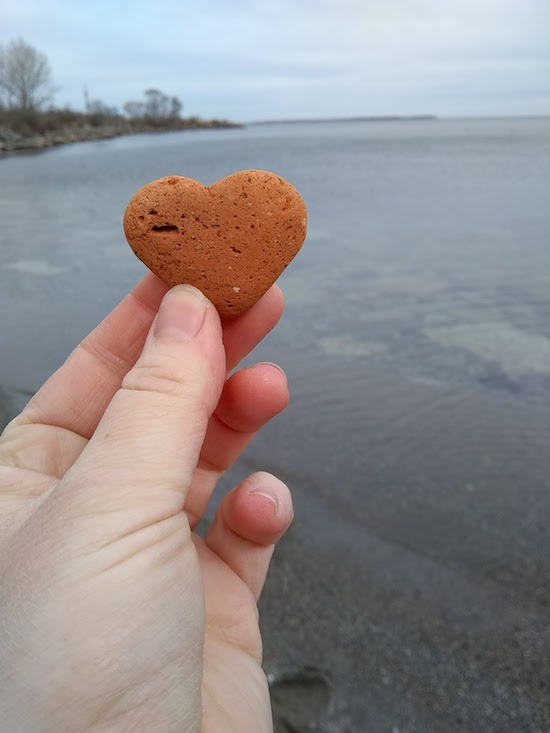
“If there is wisdom, it’s nothing I know. It’s all just birds and storms and hauntings. We look behind and scoff, as if those ahead aren’t doing the same.” —Rachel Lebowitz, The Year Of No Summer
I’ve been thinking this week about conciliation, about reconciling disparate things. All week I’ve been reading Ausma Zahanat Khan’s latest Esa Khattak novel, A Dangerous Crossing, which takes place in communities of migrants and refugees in Lesvos, Greece, who are hoping to be in transit to elsewhere. The thing about the book is how Khan shows how civil war has undermined notions of community. A point I’d never considered—how Syrians arriving in Canada don’t necessarily want to live among other Syrians, because after a Civil War there’s no longer an assumption that these people are your neighbours. The notion of a camp in Turkey for refugees who are dissidents from Assad’s regime, and who need to be protected from other Syrians who were brutalized and traumatized by these very forces. And then in the Greek camps, Greek Neo-Nazis on the fringes—there’s a terrifying scene of a group torching one of the camps. All the other countries being stingy about helping people in need, and amongst those people in need will inevitably be some who are corrupt and criminal—particularly since these are qualities that would help one survive in a war zone. And there will be rotten people in every population—including amongst the NGO and aid workers, those there to help but who instead are preying and abusive. How far go the waves of people’s capacity to be broken and awful?
I’ve also been listening to the CBC Podcast Finding Cleo, by Connie Walker, this week, another story of violence and trauma, improbable connections, and the ways in which abuses are replicated over and over. I’ve got three episodes left, but have been riveted by the story telling, by the personal stories, but also how the personal stories stand for what happened to thousands of Indigenous children across Canada for generations (and keeps happening today). A failure of systems, just like in Khan’s novel, and a failure of humanity. All these broken parts—how do we make something out oflf the pieces? Conciliate. Not to make a story, as Connie Walker has done so brilliantly, but instead to create something tangible that offers more than a promise that the story we tell in the future could be a different one.
I became unnerved on Tuesday evening after commenting on a Facebook thread (I know: why?) about my recent essay on family and abortion. This reminds me of a comment I’d heard years ago with Gloria Steinem in conversation with Jian Ghomeshi (I know, right?) about how when she first woke up to the message of the women’s movement, she thought creating change would be as simple as just explaining things so people would understand. Which was my intention with the essay, really. I will lay it all out and people will get it. Or if they don’t get it, they will still comprehend that there are things beyond their understanding—what a thing. But no.
I hope that some readers did come away from the piece with a different understanding of abortion than they had before, but these weren’t the ones posting on Facebook. I decided to leave polite comments anyway, thinking that even some dim awareness that the person who wrote that piece was a human being could represent progress. A tiny light bulb. I said, “Thank you for reading. I hope you might have learned something from considering my point of view.” But no, again.
“I have learned nothing,” one person responded. “I’ve just had it confirmed that we live in an evil world where people try to justify murdering children.” And sigh. Because what do I do with that? Furthermore, I know that many people who hold these beliefs do so because of deeply entrenched personal experiences—parenting a disabled child, experiencing miscarriage. These people’s convictions are so fundamental to who they are—I understand that. But what do we do with that? How do I, as a person without religion, reason with someone who tells me that one day I will have to atone to God for what I’ve done? And what does that person, for whom faith is everything, do with the fact that my own beliefs undermine the foundation of their moral universe? I could see how that would rankle. How do we put these pieces together? (Although the other person would posit that we don’t, that it’s the next world, the world I don’t believe in, in which all the pieces will finally fit.)
Can you see how my sleep on Tuesday night was restless and uneasy? And then I woke up on Wednesday morning and the weather was calling for high winds, and we were to beware of falling trees and flying objects. Which seemed, as my friend Nathalie put it, like perfect pathetic fallacy. I’d been wary of such things all week, metaphorically speaking, at least. And how exactly is one supposed to take care? Even wearing a helmet won’t suffice, and also wearing a helmet would be totally weird.
I was still thinking of my exchanges with the pro-lifers, the one who could not comprehend what I meant when I said that my daughter had really only existed when she was a five week old fetus because I was visualizing her as a baby, the one I desperately wanted and already so desperately loved. Because a five week old fetus is almost literally nothing, is what I meant, physically speaking. Pregnancy at five weeks is overwhelmingly perilous, but even still, I bought my daughter her first book when I was five weeks pregnant and read it to her before she had ears. But no. The woman on the Facebook thread didn’t get it. I’m not going to go back and recall what she said, but it was something along the lines of how horrifying it was that I’d be so narcissistic as to think that a person’s existence was determined by my perception alone. Which was ironic, because this person had no qualms about thinking that a person’s existence could be determined by her perception alone. Which was kind of my point all along, the way that one person’s embryo is another person’s baby. But this person was not in the mood for duality; she didn’t understand at all.
I was still thinking about this exchange when I read my All Lit Up Poetry Cure for the day (I’ve signed up to receive a poem a day in my inbox from All Lit Up Canada for National Poetry Month). The poem was “Five Weeks” by Rob Taylor (and aren’t they doing an uncanny job of very specifically curing our existential ailments; who planned that?):
Anonymous. A lima bean, they say.
No eyes or brain beneath
the flesh and blood and membrane
of my wife. But O my burning baby
anchors love within me. One day
you’ll wonder if any of this matters,
if you and it share a common bond,
if Love’s a word we pin to things
thin-skinned enough to pierce…
And here is where I thought perhaps there were answers. That I could send this poem to the woman on Facebook, and say, “This! This exactly.” Though I feel as though she’d appreciate the poem just as much as I’d appreciate her advice about what to tell God when I finally get to heaven.
While my own heart was mollified with the “Five Weeks” poem, it was still very windy, and I didn’t know how to watch out for falling trees and flying objects, let alone to make sense of the tragedy of Syrian refugees and cultural genocide. But then another poem arrived via one who knows well that poems are an everyday necessity—Vicki Ziegler. The poem was “Problems with Hurricanes,” by Victor Hernández Cruz:
A campesino looked at the air
And told me:
With hurricanes it’s not the wind
or the noise or the water.
I’ll tell you he said:
it’s the mangoes, avocados
Green plantains and bananas
flying into town like projectiles.How would your family
feel if they had to tell
The generations that you
got killed by a flying
Banana…
Which is just it precisely, reconciling the miracle and and amazingness of life itself with the absurdity of flying bananas. Later, “If you are going out/ beware of mangoes.” Always, I am aware of mangos. Of the strangeness, the sweetness, the awful violence, the golden flesh, the miracle of life, the inexplicability of everything.
“You think sometimes that things are holding still, or that just one thing is happening. That the volcano is erupting. That the Thames is freezing. That these men are fishing. That this couple here is drinking coffee, and all that is happening is the coffee in the cups, but all this time, the earth is changing, the babies and men and women are blowing off the cliff, or being held on by love and rope and goddamn determination.” —Rachel Lebowitz, The Year Of No Summer
April 3, 2018
“Enlarge and Complicate”
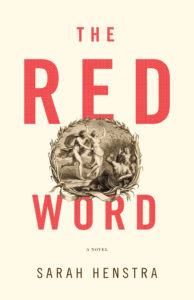 I’ve been reading so much lately—book after book, and while my backlist TBR shelf is suffering from neglect (I have a Penelope Mortimer book waiting, for heaven’s sake…) the wonders of Spring 2018 Canadian books are overwhelmingly good. I’m averaging about three books a week, and it’s still not enough for me to read everything I want to read, which is why I cannot be entirely despondent about the state of “CanLit” even as its politics give us very good reason to wonder what the point is. But the point, of course, is the books, and the books are excellent, and I’m also grateful that so many of these excellent books are written by people of colour (even if I think it’s a bit of a dry season for books by Indigenous writers, Terese Marie Mailhot’s amazing memoir Heart Berries—which I read last week—the only one that’s really on my radar…)
Anyway one book that stands out even though I read it in a whirlwind in early February (to see if it would be a good addition to the 49thShelf.com “#MeToo Reading List” I made; and hey, it was!) was The Red Word, by Sarah Henstra. It was a mindfuck of a book, such hard work, but also impossible to put down, incredibly compelling, a novel about campus culture, sexual violence, culpability, and the meaning of justice. I had the opportunity to ask Sarah some questions about her book over at 49th Shelf, and her answers were fantastic:
49th Shelf: The Red Word is hard work, in the very best way. It complicates binaries, messes with our notions of right and wrong, justice and injustice. Why was it important for you that this book not be a polemic? And was it difficult to make that happen?
Sarah Henstra: The Red Word tackles complicated subject matter, so I felt it warranted a complicated treatment. My decision to have the Raghurst women stage their attack on the fraternity the way they do arose from two separate impulses I felt as a writer, one having to do with what story I was telling and the other with how to tell the story. In the 1990s on college campuses (as elsewhere), the dice were so loaded against the survivors of sexual violence that justice seemed an impossible prospect. The young women in the novel are so frustrated with inequality, so sick of recording and reacting to the misdeeds of the frat boys without seeing any real changes, that they believe this is the only way forward, and they’re convinced—for a while, at least—that the ends will justify the means.
In terms of the story’s structure, I sought a scenario that would leave open the maximum number of possible resolutions in order to allow readers to remain curious and to consider a wide variety of perspectives and points of view. After all, it’s the unexpected consequences of the plot—those surprise moments when events blow up way past the characters’ intentions—that keep us reading.
I’ve always liked Susan Sontag’s assertion (in her 2004 lecture on South African Novel laureate Nadine Gordimer) that good novelists are “moral agents” precisely because the stories they tell don’t moralize but instead “enlarge and complicate—and, therefore, improve—our sympathies. They educate our capacity for moral judgment.” It definitely took this book longer to find a publisher because of its lack of a “redemptive” or “hopeful” resolution, though. “What is the takeaway here for feminism?” one editor asked me. Luckily, the editors who strongly connected with it (Amy Hundley at Grove, Susan Renouf at ECW) loved it precisely for its refusal to come down cleanly on one side of the conflict.
March 29, 2018
The Triumphant Tale of the House Sparrow, by Jan Thornhill
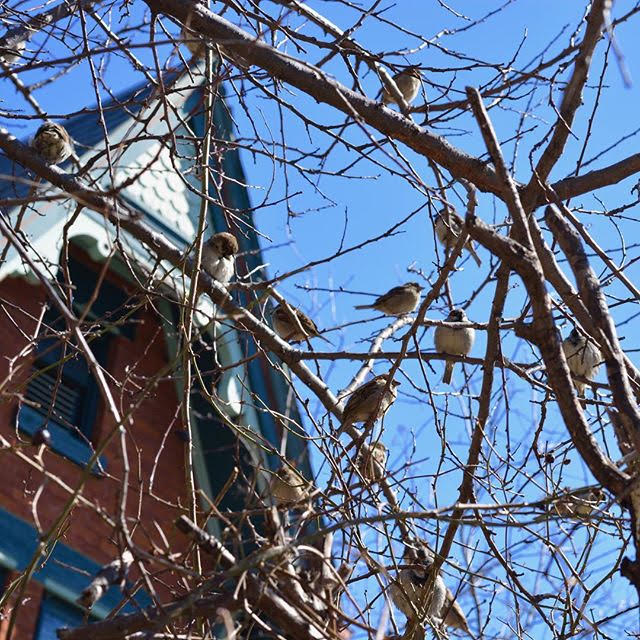
My husband got a new camera, and has been snapping photos all over town, including one shot of a ubiquity of sparrows in a tree, hopping from branch to branch and singing their song. He’d taken the photo after we all encountered the sparrows on our way to the library, pausing to watch them sparrowing. The sparrows were fascinating, and later as we looked at the photo we started talking about sparrows, how they were an invasive species, and I’d read once that that campaigns had used their domesticity (‘house’ sparrow) to have them further reviled—so it’s a gender issue, naturally. And then I realized that here was the segue I’d been waiting for.
“We have a book about sparrows, you know,” I said. A book that is absolutely gorgeous, Jan Thornhill’s The Triumphant Tale of the House Sparrow, which follows up on her award-winning The Tragic Tale of the Great Auk. I’d been intrigued by the sparrow book, but wasn’t sure what to do with it—it’s too long for bedtime reading, but looks like a picture book, so my biology-obsessed reader might not be inclined to pick it up on her own. So this was a perfect opportunity, and I started reading it out loud over dinner, and all of us were absolutely riveted.
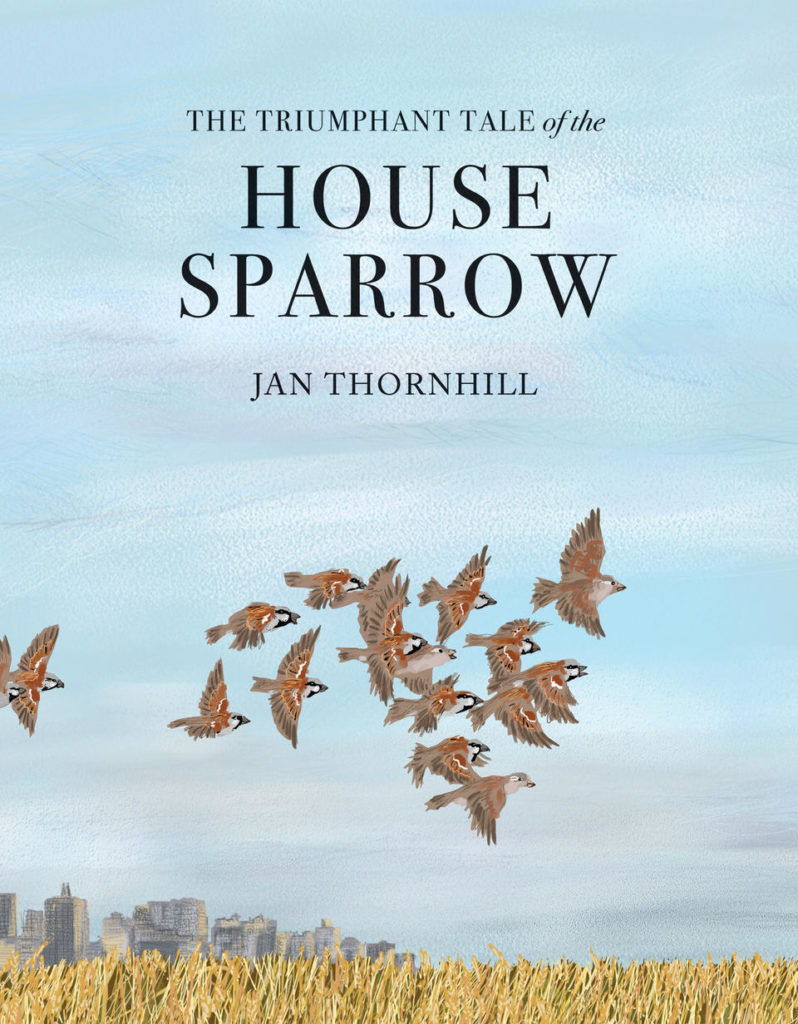
Honestly, I’m not going to tell you everything, because I don’t want to deprive you of the experience we had again and again in this book, of beginning a new paragraph only to have our minds blown. We learned how sparrow species date back to prehistoric times and how populations of sparrows grew and changed their habits when humans discovered agriculture and started harvested the sparrow’s favourite food, which was grain. And now humans and sparrows have been living side-by-side ever since.
Sparrow populations spread as human populations did, house sparrows displaying their signature adaptability. But, Thornhill writes, “We humans have never been very good at sharing the food we grow with other animals—unless those animals are pets or livestock. The ones that eat our crops, we consider pests…and we always have.”
The remains of sparrows have been found in the stomachs of mummified falcons from ancient Egypt, and ancient Egyptians used a hieroglyph of a house sparrow to describe something as bad or evil. House sparrows would stow away on ships carrying the Roman legion. They grew so numerous that “sparrow catcher” became a legitimate occupation and sparrow bounties were demanded—although their meat was spare. “In fact, one old recipe for a simple sparrow pie calls for the meat from at least five dozen birds!”
But the house sparrow is not just detested. Thornhill underlining our own experience with the following paragraph: “[The house sparrow] can be fun to watch, particularly since it will go about its business—eating, preening, dust bathing, feeding its young—much closer to humans than other wild birds.” (We have spent hours over the years stopped at a house around the corner with a feeder in front watching the sparrows do what sparrows do. It never ever gets old…)
Sparrows were brought to North America and soon spread across the country, even hitching rides on boxcars with livestock and sharing their dinner. There were sparrow crackdowns even here eventually, though sparrow populations would soonafter decline for a different reason relating to the advent of automobiles, which was our favourite fact of the book (and such a neat lesson in unexpected consequences…). In 1958, Chairman Mao declared war on the Eurasian Tree Sparrow, which he saw as depriving food from Chinese people…and the decimated sparrow population that resulted would lead to a plague of insects, crop devastation, and a famine in which thirty million people starved to death.
The history of the house sparrow would turn out to be the history of everything, but the future of the house sparrow is also important. In some regions, sparrow populations having been declining for reasons scientists don’t understand, and while Thornhill is not an alarmist, she speculates that this reason might be important, and that the status of any species so connected with our own probably matters a lot. Because everything is actually connected, which is the very point of this wonderful, fascinating book.
March 29, 2018
The Apocalypse of Morgan Turner, by Jennifer Quist
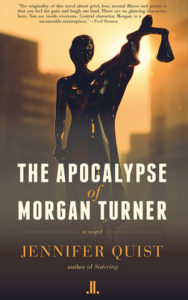 I listened to a wonderful segment on CBC’s The Current this morning about the necessity of changing our relationship with death, of re-familiarizing death as a concept and inventing (or rediscovering) rituals for it to be woven into the fabric of our lives. This same directive has also been the force behind Jennifer Quist’s first two novels, both of which were odd and oddly compelling, books that particularly preoccupied with death and the macabre. I read both of them and found them well-written and remarkable, but never quite knew what to make of them as a reader, let alone a reviewer. However Quist’s third novel, The Apocalypse of Morgan Turner, is the one I finally feel as though I’ve got a handle on—and I’m grateful to her publisher, Linda Leith Publishing, for their investment in voices who are a little outside the ordinary, in writers who are daring to do something different.
And of course, The Apocalypse of Morgan Turner is also about death, but the lens is wider here, and so too is the story’s resonance. Whereas Quist’s previous novels were concentrated on individual families and their esoteric habits and rituals, The Apocalypse… involves two very families, the interactions and intersections between those two families, and also with other individuals with a wide range of cultural and socioeconomic backgrounds. At the centre of the novel is Morgan Turner herself, three years after the brutal murder of her sister Tricia. Three years after so that some of the shock and trauma of such a violent crime has faded away, and the narrative can consume itself with ideas beyond conventional grief and loss. Important too: Morgan and Tricia were not especially close, and her sister’s death has not left a gaping hole in Morgan’s life. Also, Morgan Turner is not a person who demands a lot of life or the world anyway—she’s content enough taking the bus every day to her job washing dishes in a fast food restaurant. So that she might not rail at the universe for all its injustices the way another character would who’d see herself at that universe’s centre.
Which is not to say that Morgan isn’t questioning: how does a person begin to move on after such a tragedy? The question particularly relevant as the trial for Tricia’s accused killer is coming up, and he’s planning to plead that he’s not criminally responsible for what happened to him. Which, naturally, is upsetting for the entire Turner family, although they all handle it in different ways. Morgan’s parents, Marc and Sheila, are divorced, and Marc has made himself a (rather self-serving) media sensation for his forgiveness of his daughter’s killer—and Quist’s black humour is apparent here with her poignant portrayal of the pretty ridiculous Marc, as compared to his ex-wife:
Sheila’s anger is always raw and steaming, irresolvable. Her story is tenacity‚ chasing Finnemore toward a crushing, punishing destiny she has already publicly denounced as insufficient. When she and Marc divided up their archetypes, he chose the wrong side. His story of cooling and moving on—a loud, public claim of letting go. Soon, he will have to stop talking about it, stop posing for it, stop pleading for it, and do it.
Morgan’s feelings manifest in stranger ways—she becomes preoccupied with horror films, she ones she remembers from during the brief time her sister had been a film studies major before she dropped out of school. She also becomes obsessed with the abattoir where her brother works, and ends up getting job in the factory kitchen, where she connects with Chinese colleagues over an obsession with Korean soap operas. Meanwhile, she’s attending meetings with the crown attorney who’ll be prosecuting the case, not her lawyer, no. The family doesn’t have a lawyer, of course, or a real place in this process (which is part of the reason that Morgan doesn’t know what to do). The lawyer prosecuting the case has a family of his own, a sister Morgan encounters one day while she’s clearing tables in the restaurant where she works. This is Gillian, “a Mormon do-gooder,” who pops in and out of Morgan’s life after that. And Gillian’s other brother, Paul, who is schizophrenic and who is grappling with his own problems with the legal system. And together, all of these characters provide Morgan with the spiritual scaffolding to process what happened to her sister and her family, and to begin to move on with her life.
I loved this book. Quist’s narratives are always rich and compelling, and this latest novel is no exception. It’s sad and brutal, but also sweet and funny, and all its characters are so real. It also becomes such a page turner as the story progresses, the trial nearing its end, Morgan’s desperate attempt to be there for the verdict—there is so much tension. We’re also been privy to the lawyer working into the early hours of morning on the case, and how high are the stakes, and what does it all mean? And where do we find that meaning, which is the novel’s central question, and Morgan Turner’s revelation. Revelation being another word for “apocalypse,” which is only just about destruction and devastation as we understand it in the pop-cultural sense, but instead what is revealed by devastation, a divine truth. Or truths, maybe, which is what happens here with the generosity of the people Morgan meets, with what they show her, unwittingly, or otherwise, about this awful, amazing, brutal, beautiful world.






