August 14, 2026
The Fall-Down Effect, by Liz Johnston
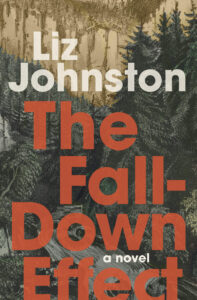
Last weekend—as wildfires continued to burn across British Columbia—was a strange and uncanny time to finish reading Liz Johnston’s debut novel, which ends with a 2020 forest fire forcing a fractured family back together again after decades apart. The story starts three decades before that, as homeschooling mother Lynn chafes at the smallness of her life raising her child in a small BC mill town, and longs for the purpose she’d found in her youth as an environmental activist in Vancouver. Her husband Tom, however, has wholly left that life behind, and worries about his wife exposing their children to off-beat ideas that will alienate and isolate them in their community.
The novel picks up again ten years later with Tom and Lynn separated and in new relationships, with their middle child, Fern, committing an act of violence in the name of environmental protection that tears their already-severed family even further apart. Fern goes on the run from authorities, while her siblings and parents (who are now separated and in new relationships) struggle among themselves to decide who’s to blame. Elder sister Sylvia’s in university studying forestry, younger brother River works as a tree planter, each of the siblings complicit in the system their sister has blown up her life to fight against, and also wise enough to know that that system, along with of notions and good and evil, is more complicated that Fern thinks that is. But is that really wisdom?
The Fall-Down Effect is not a novel that promises easy answers, or swift resolutions. The world, like the families that help comprise it, is messy and tangled, best intentions turning into disaster, good and evil intertwined, often irrevocably, and grace can be hard to come by. This is a book about both climate disaster and family disaster, the difficulty of engaging with reality as opposed to the stories we tell ourselves, and how it’s actually possible, if we open our minds, to learn to hold it all.






