February 10, 2026
In Winter I Get Up at Night, by Jane Urquhart
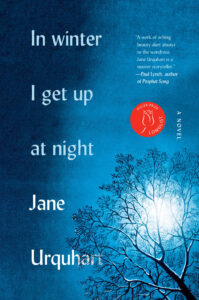
Jane Urquhart’s In Winter I Get Up at Night is plotted more like an epic mural than a straightforward novel. Instead of straightforward chronology, time is a tangle, the past ever present, memory heaped on memory, some of it imagined, some of it otherwise, the line between fact and fiction blurred, mythical figures appearing as men, other men as myth (maybe). As Emer drives down snowy roads in Saskatchewan, on her way to work as an itinerant music teacher at rural schools, she recalls the story of her one great love, and their illicit evenings together at railway hotels. She also thinks about her family’s journey from Ontario to the Prairies, the great storm that unsettled their settling there, and the months she spent as a patient in a children’s ward in the hospital recovering from catastrophic injuries. In some ways, this is a quiet novel, a subtle novel, but only if one is not reading very carefully, skimming over the clearing of Indigenous peoples from the plains, the presence of the KKK in prairie communities, the xenophobia that gets in everywhere. Symbols of Canadiana woven into the tapestry—the railway, its castle-like hotels, Frederick Banting, Pullman porters in all their gallantry, a powerful invitation to look again and consider what the true stories of this country actually are.






