October 2, 2025
Gliff, by Ali Smith
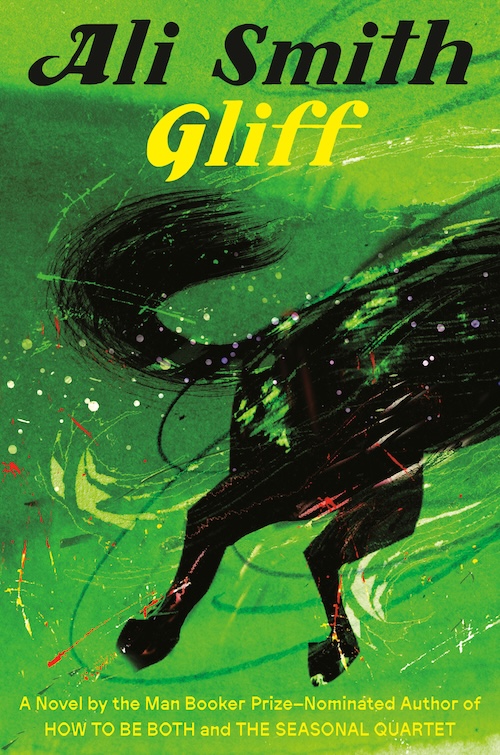
I’m not a horse person, and my Ali Smith mileage varies, so I approached her latest novel, Gliff, most tentatively, plucking it from a library display and not reading it for weeks and weeks (it’s already been renewed twice) before I finally picked it up, the description of its setting in a dystopian future not exactly a draw either. But oh, I really loved it, and read it as a extension of the Seasonal Quartet more than I did her previous novel Companion Piece, which I didn’t love as much as I’d wanted to. Gliff is the story of two siblings in a world that feels torn from contemporary headlines—masked thugs are grabbing people off the streets and throwing them into vans. Vast swaths of society are being determined as UVs, or unverifiables, red circles painted around their homes, which are then bulldozed. And to be unverifiable is to be not quite one thing or another, in all kinds of ways, involving ethnicity, religion, gender, class, and an infinite list of other distinctions. Bri and their sister are holing up in an empty home awaiting the return of their mother, which they both know is actually unlikely to happen. And in the field behind their garden are horses destined for the abattoir, and Bri is glad their sister doesn’t know that “abattoir” means. Words and their meanings (their sparkly meanings, their slippery meanings, their strange and unverifiable meanings) the engine of this novel, along with the horse(power), and also names and re-names, and the power to name oneself, to escape the boxes into which the algorithm would like to squeeze us.
Gliff might have been a heavy and depressing book, but it isn’t. It reads up quickly and breezily, and is infused by a spirit of hope and possibility, even in its darkest moments. It’s a novel about the power of refusal and resistance, about the actual smallness of tyranny. “His opponent is everywhere. His opponent is everything.”






