July 9, 2025
Winter (of Strout) in July
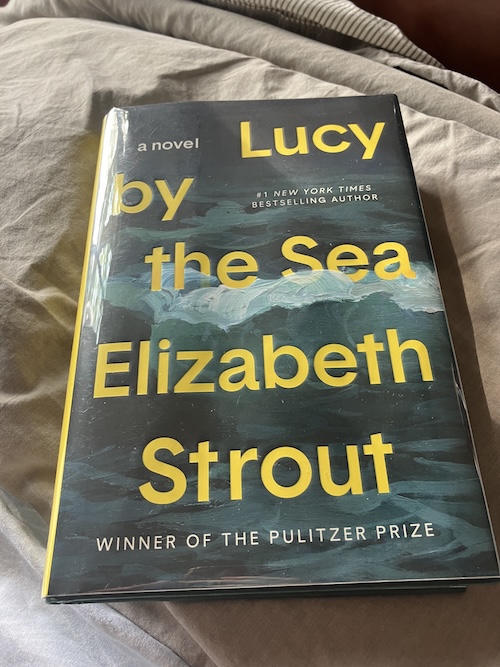
In so many ways, Lucy by the Sea was where it all began for me, the #WinterofStrout. Albeit in 2023, when I finally read it after avoiding Lucy Barton for a long time. I’d read My Name is Lucy Barton when it first came out, and I did not like it. But by the time Elizabeth Strout’s third book about Lucy Barton, Lucy by the Sea, was published, I was willing to give them all another chance, so I reread the first book, read the second (Oh, William!), and finally LBTS, which is where all the pieces began to come together.
During my #WinterofStrout, I’ve been reading all of Strout’s books in chronological order, beginning with her lesser known first two novels, Amy and Isabel, and Abide With Me, which I loved so much. And then Olive Kitteridge, and The Burgess Boys, which I’d read before after the first time I reread Lucy by the Sea, because by then I was in love with Bob Burgess. And it was kind of amazing to meet him again upon rereading Lucy by the Sea, to recall meeting him for the first first time in this book, and how I know him so much better know having read so many other Strout novels in which Bob appears—including Tell Me Everything, which came out last fall, and which Lucy by the Sea is like a bridge to. It was also nice to be rereading Lucy by the Sea as my husband is reading The Burgess Boys, both of us side-by-side in bed reading about Bob. I love the intimacy inherent in that.
The part about rereading Lucy by the Sea that was less delightful was how, when I first read the novel in 2023, and the parts about rising political polarization and tensions in American society reaching a boiling point (the novel is set in in 2020 and 2021, the January 6 insurrection unfolding on its pages) it would have made me think, “Ooof, we dodged a bullet there.” Biden was elected in 2020, and I really supposed the chaos was behind us, that people might actually begin to settle down, that William’s observations about the simmering rage of American people resulting from a very human kind of cruelty and also inequality might have been overblown instead of prescient.
I did appreciate how much less viscerally I experienced the 2020 parts about Covid than when I read it in 2023, that so much of that seems far away from where we are now (which is FINE!).
There is so much that’s wild about this book—that it’s the first time I met Charlene Bibber and Kathryn Caskey too. The torture and sadness of Lucy’s love for her daughters, and all the ways she’s failed them, and all the things that they need from each other that none of them are able to give. The way I’m now fascinated with Margaret, Bob’s wife, the Unitarian minister, who Lucy doesn’t really like, and neither did Bob’s sister-in-law, Helen, and she doesn’t come out great in Tell Me Everything, really. I want to read HER story now. How there’s a part in this novel where Lucy quotes a novel she once read, and while she didn’t cite the novel, I recognized it as a line from Olive, Again (“‘I think our job—maybe even our duty—is to…bear the burden of the mystery with as much grace as we can.”) Imagine the audacity of putting your words from one book in the mouth of a character in another? Imagine how I’d read that line the first time, back when I’d not yet read Olive, Again, and just skimmed right over it like it was no big thing? (And what ELSE did I miss, even this time?)
My #WinterofStrout, stretching all the way to SUMMER, has been such a wonderful, powerful reading experience, lending shape and cohesion to my reading life. I will likely be rereading Tell Me Everything sometime this summer (I read it twice last fall), to see how it reads differently having read all of Strout’s novels now, and no doubt I will find new treasures (and oddities) to discover inside it.




Love this. I feel the same about the Lucy books…