April 8, 2025
25 Years of Dar Williams; or I am the One Who Will Remember Everything

In the 1990s, interesting culture circulated via scenes, and zines, underground movements, and pre-internet online communities, and I didn’t know about any of it. Everything I learned about culture in the 1990s I learned from the movie Reality Bites and from pop-culture phenomena my best friend brought home to us from her all-girls summer camp, so I only knew about Lisa Loeb, smoking, the Gap, Ani DiFranco, and flared jeans, and imagined that was enough to built a life upon. Until the internet arrived in 1997 or so, expanding my universe infinitely, though not quite at the start when the internet was still fundamentally unorganized, the only really worthwhile thing I could think of to do there was to log onto random chat rooms and start talking to strangers.
I can’t remember now how I located these chat rooms, how I would have vetted them to discern if they’d be delivering me a salubrious experience, but I was also 19, and not all that discerning. My username was HitMeBaby1MoreTime, so you can probably tell. I actually didn’t get up to this kind of activity all that often, because meeting strangers on the internet was still perceived as fairly embarrassing in mainstream culture, for good reason too, because every time I did so, I’d end up talking about sex, but sometimes life was boring so what else were we to do?
Anyway, I met someone, a philosophy major who lived in the wilds of Iowa and we fell in love, as you do over text when you’re 19 years old and full of angst and longing, and we confessed such longing, and he mailed me a copy of Still Life With Woodpecker, which I thought was oh so romantic, and we exchanged photographs, and I knew that our love was different and extraordinary, though tried to be cool about it in a Tom Robbins fashion, and I kept listening to the Dave Matthews band’s “Lover Lay Down,” and he started emailing me less, and I started making out with my co-workers, and it was 1999, the year with the greatest soundtrack, and soon our undying love died and that was mostly fine.
But I wouldn’t let it go, and the internet enabled me not to do so (the internet is the opposite of closure) and there were search engines by then, so I could keep tabs on the guy, just to see that was he was out there and what he was up to, and he was friends with this woman who had a blog and wrote about music, in addition to writing stories in which he was a character, and it was from her that I first heard of Dar Williams, who had a song called “Iowa,” which brought it all full circle. And by this time, in addition to search engines, we also had Napster, so I could go listen to that song called “Iowa” myself, and unlike anything by Ani DiFranco, whose songs I never liked as much as much I wanted to like them, that song, and all Dar Williams’ music, felt like it had been directly tapped into my soul.
I’ve never been as sad and yearning as I was when I was in my early 20s, so much unrequited love and undelivered feelings, which swirled around my bloodstream in a crazy-making fashion, but Dar Williams felt like a channel for it. She had a sense of humour too, and I appreciated that, that she didn’t take herself too seriously all the time, but that she also knew the tragedy of wanting, and also of February, which could sometimes be so long that it lasted into March, and people who didn’t know how much I adored them.
I didn’t have Napster at home, only at the office where I was a section editor of our college newspaper, so I bought Dar Williams’ CDs (and of course I bought her CDs; I was always buying CDs; a CD was a piece of the world and I could hold it in my hand). Mortal City was my favourite, and I listened to it over and over in my final year at university, 2001/02, a funny year spent in the shadow of a terrorist attack whose ramifications would still be going on by the time I was entering my late 40s (and beyond?), and also on the cusp of the rest of my life. “Once I had everything, I gave it up/ For the shoulder of your driveway and the words I’ve never felt/ And so for you, I came this far across the tracks/ Ten miles above the limit and with no seatbelt, and I’d do it again.”
In 2002, after going through some real things, I took my CDs away with me to England, a huge book of them, taking up most of the space in my backpack, and a few months after I got there, I fell in love with a boy who loved me back and was my match in all the best ways. On Saturdays, we’d wander around the city centre, and flip through CDs together, even though our tastes weren’t identical. Dar Williams released The Beauty of the Rain in 2003, her first new release since I’d become a fan, and once again it felt like we were in sync, with songs like “Farewell to the Old Me,” and “The Mercy of the Fallen,” and songs of love that was actually requited: “I Have Lost My Dreams” and “The One Who Knows.”
I went to see Dar Williams in Sheffield that year, which was about an hour on the train from Nottingham, where I was living at the time. I can’t remember how I’d even heard about the show, or from where I got the wherewithal to plan the journey—I didn’t have the internet at home or work, and would visit the library a couple of times a week to use it—but maybe it was easier to be proactive before I’d come to take for having access to the world in my pocket via a smartphone. I went to that concert all by myself, and I can’t fathom it now—having no phone and navigating a strange city and taking the train home again in the darkness. My boyfriend didn’t come with me, and it’s possible I didn’t even mind that much, because our lives were not so connected then, I’d been independent enough to move across the world on my own, and my love of Dar Williams had always been something of a solitary pursuit anyway. Apart from the blogger who didn’t know I existed who’d been a friend of my internet boyfriend, I didn’t know anyone else who was a fan.
In 2005, my non-internet boyfriend and I got married, and moved back to Toronto, and I enrolled in Grad School, which, much like my early 20s, was more full of hardship and longing than I’d been hoping for, and Dar Williams released her album, My Better Self, which was the last Dar Williams album I’d get deep enough into that I would know every song, and I listened to it when I was sad about school, which it turned out I wasn’t very good at, though I think it was there that I learned the word “hegemony,” which Dar Williams rhymed with “enemy” on a song on the album. I loved her song “Teen for God” and this was a real Bush-era album, really. I loved her cover of “Comfortably Numb.”
In 2009, I went to see Dar Williams at The Mod Club when she was touring her album “Promised Land,” and my husband came with me, now ashamed for having left me to make my own way to Sheffield back in 2003. It was a fun show, and I was pregnant, just a few months away from becoming a mother. She returned to Toronto in 2011, and I had this idea that I’d gone to see her then too, but I can’t find any evidence that this ever happened. She released “In the Time of the Gods” in 2012, and the stories in her songs had drifted far enough that I couldn’t quite catch them anymore, couldn’t hold them and feel them as viscerally as I’d felt the stories she’d written in her own 20s and released on her albums in the 1990s. I did particularly appreciate one line from her song “I Am the One Who Will Remember Everything,” however, as my own life was wrapped up on the wonder and experiences of my own small child “Oh come over here, kid we’ve got all these books to read,/ With the turtles and frogs, cats and dogs who civilize the centuries,/ And in a world that’s angry, cruel and furious,/ There’s this monkey who’s just curious,/ Floating high above a park with bright balloons.”
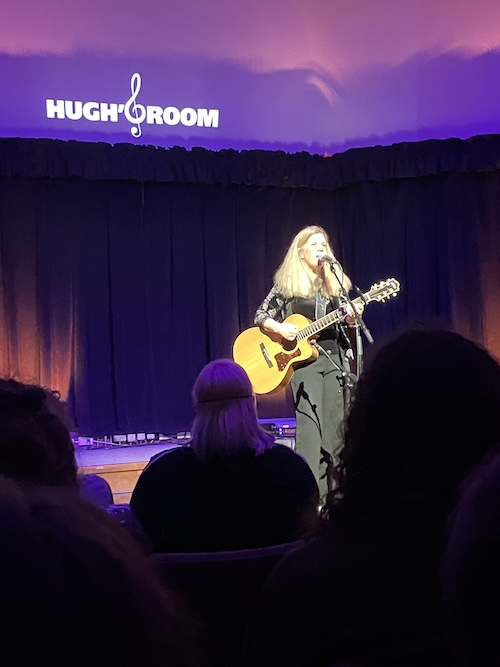
Last Saturday I went to see Dar Williams again at Hugh’s Room’s new location on Broadview Avenue. And once again, my husband came with me, in atonement for Sheffield more than 20 years ago now, and we had a great time, and were surprised that almost everyone else in the audience was old. I sat beside a woman called Barb who lives in my hometown, directly across from my high school, and it felt a bit like a Dar Williams song, as did reflecting on how I came to love her music like I do. I listened to those songs, and felt like I was listening to my history, especially “As Cool as I Am” and “Iowa,” which we sang along to at her encouragement, and all the people whom I’d ever been came in on the chorus.
April 7, 2025
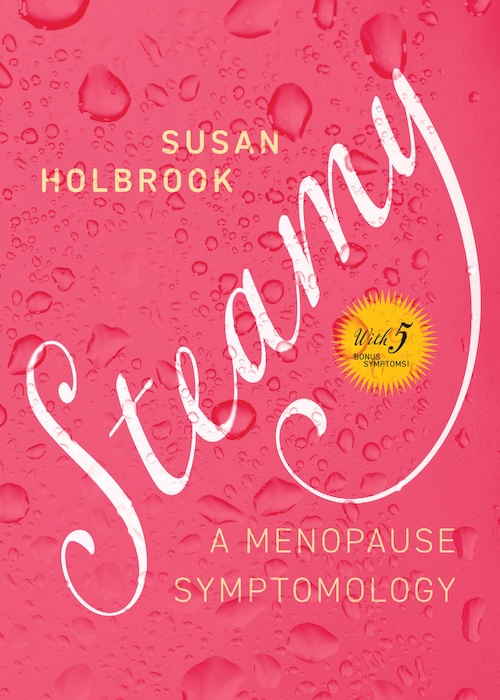
Steamy: A Menopause Symptomology, by Susan Holbrook
My first child was born in 2009, which was the year that Susan Holbook published her collection JOY IS SO EXHAUSTING, a book bursting with life and bodily fluids. I felt so seen by her epic poem “Nursery,” twelve pages documenting breastfeeding from side to side: “Left: Now that you’ve started solids, applesauce in your eyebrows, I’ve become a course. Right: Spider on the plastic space mobile, walking the perimeter of the yellow crescent moon. Left: Dollop. Right: Now it’s on Saturn’s rings; if it fell off, it would drop right into my mouth. Left: I take 2%, you take hindmilk. Right: Fingers shrimp their way through the afghan holes. Left: I have hindmilk.”
And now that I am 46, constantly itchy and getting my period every nineteen days, signalling the beginning of my perimenopausal journey, Holbrook has delivered STEAMY: A MENOPAUSE SYMTOMOLOGY, a poetic memoir that’s hilarious and searing at once. The baby from “Nursery” is all grown up now (see Symptom 29, “Dry Eyes,” in which the grown child is dropped off at university, and the poet does not cry. “For most of my life you could count on me to descend into blubbery convulsions at a filmic dog death or an airport farewell or, of course, a real dog death. I would readily cry for sad or happy reasons any old time. Now you can rarely squeeze a sob out of me. Maybe I’ve used up all my tears along with my eggs.”) and the poet is contending with other changes (see Symptom 3, “Cessation of Menses”: “I’m not sure why I never went to the doctor./ Maybe because I was so relieved each time my tsunami ended that I didn’t want to think about it again until three weeks later when I ruined the *other* side of the couch cushion”).
Like the symptoms of menopause themselves, Holbrook’s symptoms can go off on a tangent and sometimes end up being about raccoons or the time she broke her arm at age 11, which I don’t mind in the slightest because, like menopause, this book is full of twists and surprises, and, unlike menopause, it’s also very funny and rich with meaning (see Symptom 33, “Reduced Libido” for former, which is mostly about her grandpa, and Symptom 30, “Panic Disorder,” for the latter, “A year later my heart dances with the daffodils. I found a drug that muffles my panic but not my joy.”).
April 3, 2025
How to Survive a Bear Attack, by Claire Cameron
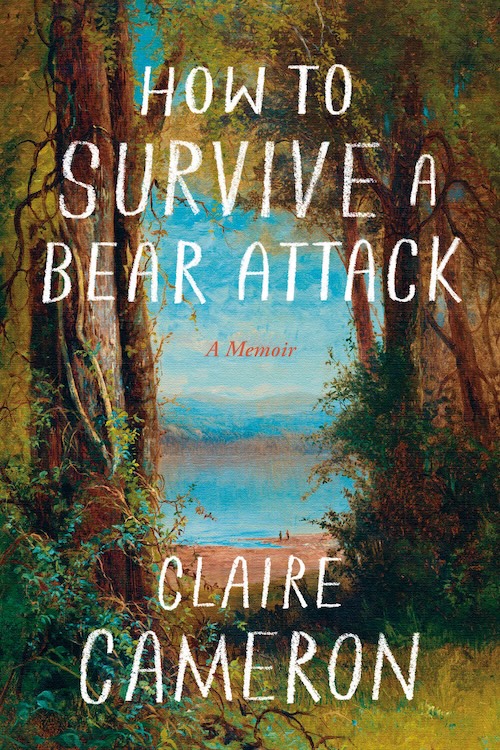
I never read Claire Cameron’s 2014 novel The Bear. My kids were 5 and 1 when the book came out, and at the time (and even now) I felt far too tender to contend with a story in which parents are killed in a bear attack and their small children are left to fend for themselves in the wilderness. Not unrelated to the arrival of my children OR my aversion to reading the story was also an anxiety that had settled into my consciousness like a fug and years later would knock me totally flat. (It’s curious to read my first novel and see it there, when my protagonist takes in the big old trees in her neighbourhood, and how vulnerable she is to dangerous objects falling from the sky, how vulnerable even her home is, and that safety is an act of faith more than it’s ever a fact). But that same anxiety, which I’m learning to live with and understand better, was absolutely why I very much wanted to read Cameron’s latest book, the memoir How to Survive a Bear Attack. Because it’s a book about anxiety and fear, and living with them both, and the fact that maybe we’ll even be strong enough when we have to step up to fight, but we can’t plan these things, and the danger is never quite where we imagine it will be.
Cameron’s father died of skin cancer when she was nine-years-old, and in the years after, she found her way back to herself, and through the weight of her grief, by immersion in the great outdoors. She became an avid canoeist, wilderness trekker, rock climber, tree planter, finding solace in nature and wildness, and also power in her own strength and abilities to succeed at the challenges the wilderness threw up at her, including run-ins with bears. She even fancied that she’d know what to do if the unlikely event of a bear attack occurred. Such attacks were rare, but Cameron she was interested in stories of these outliers, like the Canadian couple killed in Algonquin Park in 1991. Understanding what happened to them became an insurance of sorts, because if she could just figure out what they’d done wrong and do it differently, then she would be fine. It was also gateway to her literary breakout, with her second novel’s great success.
But when the danger finally arrived, it came from a place that Cameron had never seen coming. At 45, she was diagnosed with skin cancer, and learned she had a rare genetic mutation making her especially susceptible. She was advised by her doctor that her optimal UV exposure was precisely none. Facing her own mortality brought her back to her memories of her father, a professor of Old English, and the stories he’d taught and shared with her of monsters and dragon slaying. She calls on his courage and strength to help get her through her diagnosis, and many surgeries, and also begins to consider anew the story of the couple killed in Algonquin Park all those years ago. What had she missed from the story the first time? What other lessons might there be? How was she to find her home in nature again when parts of her life she’d always taken for granted—paddling in the sunshine on a lake that reflects the light like a mirror, for instance—had suddenly become perilous. And what of the bear itself? Where, exactly, was the heart of this story?
I tore through this memoir in a day, absorbed by every thread in this multifaceted narrative. The bear stuff BLEW MY MIND and Cameron’s own journey is gorgeously and emotionally wrought, and I came away with just the kind of perspective I’d been hoping to get. “Being alive is one big risk and it will end in death, but the bridge between those two things is love.”
April 3, 2025
New Book News!
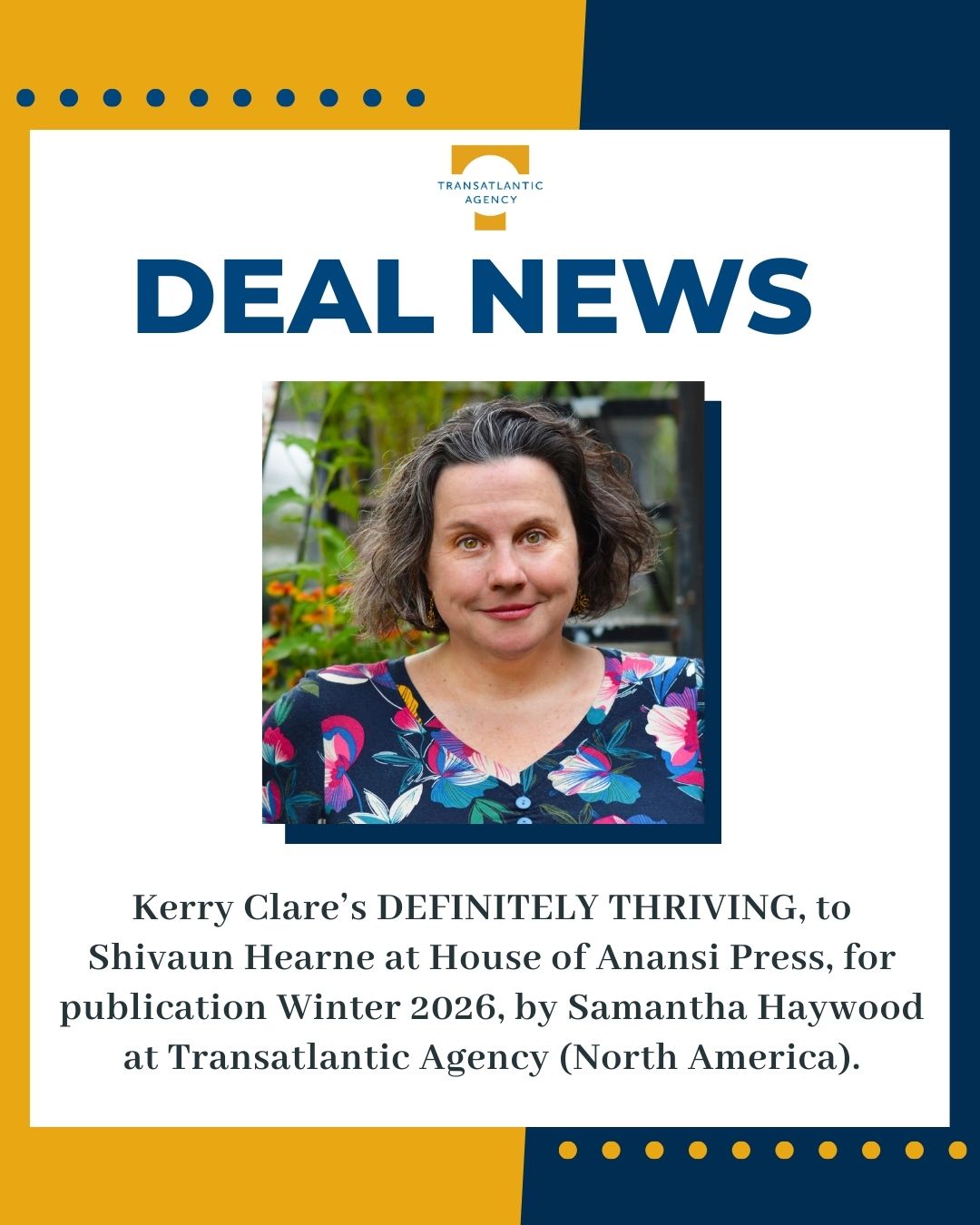
This is my big news! It even made Publisher’s Lunch! I’m really really happy and looking forward to sharing this book with you.
April 2, 2025
#WinterofStrout Update
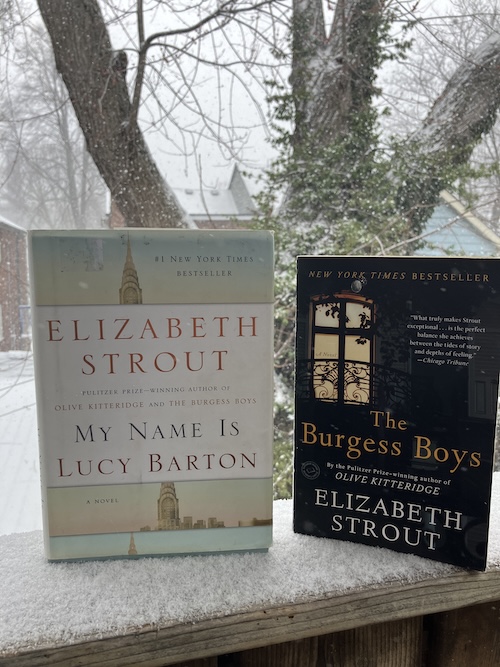
I was going to talk about how my #WinterofStrout had gone on so long that it was finally spring, but now there’s a blizzard outside, so I guess I don’t have to. (There are now ice pellets blowing against my window.) After Olive Kitteridge, The Burgess Boys was my next Strout reread, which I first read almost exactly two years ago and adored. And having read Tell Me Everything since then, I love it even more now, and it seems less an outlier among Strout’s novels structurally speaking now that I’ve also read Amy and Isabelle and Abide With Me. It’s definitely a companion novel to Tell Me Everything, just without Lucy and Olive, but with the brothers, and a court case, the setting of Shirley Falls, and a consideration of class. And then I reread My Name is Lucy Barton, for the fourth time (I think?), but my first time since seeing the stage play in November, which made the book mean even more to be and made sense of Lucy’s mother’s character in a way I’d never been able to do from reading her on the page. It’s funny how this novel is so short and spare (which is how I’ve been able to reread it so many times) but I still found passages and points I hadn’t paid attention to when I’d been through it before. And now next up is Anything Is Possible, which I’m so excited to read again because it plots the points in Strout’s universe in a way I’d been hoping Olive Kitteridge to do but it didn’t. It will be wonderful to encounter so many characters in this book that I’m relatively familiar with by now.
April 1, 2025
At a Loss for Words, by Carol Off
“Populist politicians blame the government for the disparity between classes, feeding public resentment, distrust and anger. But that anger isn’t aimed at the 1 percent who play little to no tax, or at those whose obscene wealth can now pay for private trips into space for just lark. Instead of resenting the greed that drives the income gap, people direct their anger exactly where the agents of chaos want it directed—at government and civil society.”
Instead of looking for sense and meaning in newspaper live-blogs lately, I’ve been digging deeper and reading books, which definitely has helped with overwhelm, even when the books themselves are far from feel-good. (I’ve made a list of such books at 49thShelf: “Instead of Refreshing Your Feed.”) And former CBC journalist Carol Off’s At a Loss For Words: Conversations in an Age of Rage was positively chilling, instead of feel-good, but it was also so wise and made all sorts of connections between disparate things that look like random chaos from a distance, but Off shows that there’s nothing random about it. And that for decades, right-wing billionaires with nefarious intentions have been putting the pieces into place to lock in power for authoritarian leadership. And part of the way they’ve done this is by undermining our language, which is also our common ground, turning meaning inside out so that it becomes hard to know if anything is true. Off selects six words she explores to show how this has happened: Freedom, Democracy, Truth, Woke, Choice, and Taxes. Where do these words and ideas come from? How have their meanings and solidity been undermined, and who benefits from this happening?
What makes At a Loss for Words so important is its Canadian lens, highlighting the connections between what happens in Canada and the US, but also the ways in which Canada’s history is different. Throughout the book, she returns to her own childhood growing up, the child of parents who had rose to the middle class, and for whom the lessons of Europe in the first half of of the 20th century were close enough that they did not take for granted living in a pluralistic society where neighbours could think differently but also still have fundamental values in common.
This book was published in a world where the outcome of the 2024 US Presidential Election was still unknown, and it’s prescience is startling and disturbing—especially the part in the chapter in “Woke” in which she outlines Viktor Orban’s systematic dismantling of the university system in Hungary, how he brought these institutions under government control in a manner that the current US administration seems to be emulating to the letter. The implications are real and scary—former Canadian Prime Minister Stephen Harper is now head of a global organization dedicated to electing right-wing governments around the world, and Orban has called him “a great ally.”
At the end of the book, Off tells us that it’s still not too late to change course, which seems harder to believe here in 2025 than it might have a year ago. But knowledge and understanding of what’s really unfolding is imperative, regardless and, having read this book, at the very least I feel better equipped to meet the considerable challenges of the moment.