
May 19, 2011
Mini Review: Pleased to Meet You by Caroline Adderson
 Remember Caroline Adderson? She popped up on a list of underrated writers last year, and it occurred to me that I’d never read her. Which was timely, because she had a new novel coming out, The Sky is Falling, which I read and loved, and then Nathalie gave me Pleased to Meet You for Christmas, and I’d been saving it ever since then.
I enjoyed the book entire, though it wasn’t until about half way through that the stories became really vivid to me. Beginning with the story “Knives”, which was the first of my two favourites, about a group of house-sharing university students whose new housemate disrupts their lives, managing to see inside their souls, steal those souls, and multiple knife sets in the process–he gives them weapons to destroy themselves with. Such a smart, funny story whose characters are idiots, but the dynamic between them invests them with multiple dimensions. And then with “Mr. Justice” about a family of miserable people, about losing a father you’ve never had, and about the breaks some of us have to make in order to find happiness. There are no good guys in this story, but we see its characters from every angle, most essentially these glimpses when they’re going on like they don’t even know that we’re there.
May 19, 2011
It's the houses, not the people
 “For years, my route has been in Kerrisdale, the neighbourhood to the west of Shaughnessy, where I grew up. Like Shaughnessy, it’s affluent. The streets are pretty and tree-lined, with many of the original stucco and shingle houses. This makes Kerrisdale an unusual neighbourhood in a city with a propensity for destroying and remaking itself. Because I grew up in an old house, and because I live now in Fairview Slopes where in the eighties virtually all of the original houses were demolished and replaced with leaky condos, I feel protective of the houses that remain. It’s the houses I deliver mail to, not the people, whom I hardly ever see. It’s happening here too now. The dismay I feel climbing up the steps to an Arts and Crafts bungalow, depositing The New Yorker and Architectural Digest in the box, then turning and glimpsing from the corner of my eye an orange fence halfway down the block. Did I process a Change of Address? This was when I might have taken warning.” –Caroline Adderson, from “Mr. Justice” in Pleased to Meet You
May 18, 2011
The great Canadian cottage novel
 On the (near) eve of this long weekend, check out my new post at Canadian Bookshelf, and help us answer the question: does the great Canadian cottage novel have yet to be written?
May 17, 2011
Knowing the story before the story was told
“Every night, after tea, his mother took him on her lap and read to him. It was the moment in his day above all others which was understandable to him, one where he lived in coherent companionship and liberty. there, horses, ducks, rabbits, foxes and other animals talked, had adventures, and were friends. His mother read well. She read slowly and clearly. She let him see the book as she read and since she re-read the same books many times, he came to memorize the story on each page, cued by the illustration on it or on the facing page. And knowing the story before the story was told was security, power, delight and beauty.” –Pete Sanger, “Leaping Time” in The New Quarterly 118
May 17, 2011
Book Blogospheres
The most important thing I’ve learned about blogs since I’ve been thinking really hard about them in the last six months is that there is no such thing as “the blogosphere”. (Also interesting, if unsurprising, is that the first person who said “the blogosphere” meant it as a joke.) Instead, there are many blogospheres in separate orbits, all oblivious to the other bodies sharing the same outer space. This fact is not entirely understood in the mainstream media, however, which also has the impression “blogger” and “political blogger” are synonymous terms. They also publish stories with shocking headlines such as “Canada’s political bloggers are predominantly male”. (Do note: so are Canada’s political everythings.)
Anyway, I have spun out of my own orbit. The point of this post is that I need help. Even the book blogosphere is broken down into many, many sub-spheres– reviewers, fetishists, librarians, collectors, scholars, writers, illustrators, designers, etc. etc. etc. What are the spheres you like to read? Who is writing the best online reviews these days? What are your favourite book blogs? Please share your favourites (and all links are welcome, though an emphasis on Canadian sites would be most helpful to me). Thank you.
May 16, 2011
On the resistance: books, e-books and the future
 Natalee Caple anticipates my reaction to her essay “Resisting borders”, noting that to be the e-book doubter that I am, I am therefore “an unforgivable elitist who really fears becoming antiquated and so losing [my] bragging rights”. And I’m not sure about that, putting my doubting more down to me being the kind of person who carried a Sony Sports Walkman until 2002, and only stopped buying VHS a couple of years ago. But yes, it’s also about my love of books, and while I am as concerned as Caple about current threats to literary culture, I remain unconvinced that e-books are the answer to our prayers and not just cause to say another one.
First, because if we’re going to talk about “elitist” (and let’s face it, I don’t want to. As soon as anyone uses the word “hegemonic”, I start tuning out. I didn’t do that well in grad school), I’m not sure books are the culprit. Sure, e-books are accessible to writers, but in order for somebody to read one, they have to spend a couple of hundred dollars on an electronic device (that has potential for bugs in hardware and software, is going to end up obsolete in a matter of months, then live forever more in a landfill, leaking toxins into the ground). A book, on the other hand, is accessible to anybody for has the good fortune of literacy and a couple of bucks. Plus, books can live long, long second-hand lives that the e-book will only ever dream about.
For writers, on the other hand, I am not entirely convinced I want publishing to be quite so accessible. In “A Room of One’s Own”, Virginia Woolf wasn’t writing about publishing. She was writing about what a woman with the appropriate brains and talent requires to actually get down and write, and she certainly wasn’t prescribing the writing life for everyone. (You want an elitist? Introducing Virginia Woolf. I think she’d also fear being tarred as a supporter of “midlists” out of disdain for anything “mid.”) Yes, traditional publishing structures have kept diverse voices from telling their stories, and mechanisms have to be in place for this to keep changing, but I do value traditional structures for keeping truly terrible writing at home in the drawer where it belongs. My strong feelings in this area come from an experience I had which involved me having to read ten self-published novels which were so unbearably, unequivocally awful. And whose writers were so unbelievably arrogant that they believed they could publish a book even though they evidently had never read one, and certainly had no idea how to use the materials a book is constructed of (like plot, character, words, grammar, layout, etc.). This kind of access is good for nobody (and enables self-deluded would-be writers to waste extortionate amounts of money). Natalee Caple has a noble dream of re-inventing democracy, and that’s fair enough, but I wonder if she’d have a different point of view had she had to have read those ten books I did.
I am however (and so would be Virginia) fully on board with Natalee Caple’s plea for the midlists, that publishers’ drives for best-sellerdom does literature a disservice. That Lynn Coady’s Play the Monster Blind is out of print, for example, is ridiculous and tragic, but at least I found a second-hand copy that will now live forevermore on my bookshelf. Would I have had such fortune if Play the Monster… had been an e-book, however? If Play the Monster… had been an e-book, wouldn’t it have been published in a format that no device would be able to read now? (I always find myself thinking of the laserdisc at times like these).
Natalee Caple is so right, right, right in her enthusiasm, in her hypothoses about technology breaking down borders, and in her faith in the future of books in general. It’s not all about us and them though, or this and that, or about throwing out babies or bathwater. (It also isn’t about how the average reader is on Twitter, because most people really aren’t on Twitter. Broadly speaking, this is a fact.) But it’s about treading ambitiously (as Natalee is doing), and carefully (as I am inclined to do), breaking down the right borders and ensuring that the way forward will only make our literature better.
May 15, 2011
Dogs at the Perimeter by Madeleine Thien
 It is impossible not to notice how much Madeleine Thien’s latest novel Dogs at the Perimeter resembles her first novel Certainty, which was one of my favourite novels of 2007. Both novels are tapestries, of fact and story, of art and science, of grudges and absences, of history, the present, and ghosts. If is not that Thien has written the same book twice, but rather that both novels have been fashioned via similar technique, of the same-shaped pieces, that Thien continues to have the same pre-occupations, and now she’s transferred them to another set of characters, to another time and a different place in the world.
Dogs at the Perimeter opens with the disappearance of Hiroji Matsui, a Montreal neurologist, his absence noted by his friend and colleague Janie for whom such vanishings are familiar. In fact, this familiarity has been one of her connections to Hiroji, who has lost people as well–his father at a very young age, soon after their family had immigrated to Canada, and his brother James who’d disappeared in Cambodia while working as a doctor for the Red Cross in the early 1970s.
As a child, Janie had lost her own family in her native Cambodia, her translator father taken from the family soon after the Khmer Rouge came to power. The rest of the family was moved away from Phnom Penh, forced to work in agricultural communes, and eventually Janie becomes separated from all of them. Between this time and her eventual arrival in Canada, she experiences considerable trauma which is forced back to the surface of her consciousness after Hiroji disappears. And then Janie becomes a missing person herself, living apart from her son and husband for reasons that don’t become clear to the reader until close to the end of the book.
Dogs at the Perimeter is a strange blend of dream and reality, one often blending into the other. Characters partake in others’ fantasies, encourage and support one another in delusions, which makes sense in a country being driven into the ground through a revolution sustained via these very same methods. Everything is fluid–to save themselves, characters adopt different names, different identities, slip in and out of the world, giving and taking what they can. So that there are so many identities each person holds within herself, plus the selves of all the people she’s lost, and everything gets lost in the chaos of it all, but also nothing ever really goes away.
Thien’s prose is equally invested with strength and lyricism, and Thien’s characters are sympathetically rendered. With this novel, however, she has taken on an ambitious project, and while she should be commended for containing so much story within a volume that is relatively thin, at times the story itself thins out as well. Though this is a story about trauma, much that is traumatic happens out of the scene, which undermines the brutal realities of the history the novel depicts. Part of this, of course, is due to Janie’s suppression of her experiences, which is where much of the novel comes from, and I’m not sure I would have wanted the novel to be so unflinching, but this is still a remarkable gap in a story that is all about remarkable gaps anyway.
It’s also very much a novel made of pieces (and fragments of pieces), which requires the reader to have faith in the eventual construction of a coherent whole, but this is faith that comes with a pay-off. Madeline Thien knows what she’s doing. And perhaps the Madeleine Thien Novel is a form onto itself, and anyway, I’m just happy for the chance to read another one.
May 15, 2011
Drabble news
 Today’s gloom dissipated somewhat as I was writing the post below, was inspired to do a google search for Margaret Drabble (as I do from time-to-time, being a Drabble devotee), and discovered that she has a new book out, a short story collection called A Day in the Life of a Smiling Woman. (I found it via this NPR story/profile). Delightful! The first new Drabble fiction since 2007’s The Sea Lady! Her most recent book is non-fiction The Pattern in the Carpet, which I read almost exactly two years ago (and discovered the same way I just found this book). How wonderful to have a gift just fall out of the sky. In even better news, I am quite happy to read that she has reconsidered her decision to stop writing fiction.
May 15, 2011
A terrible day, and some wonderful books
 We’re really good at delightful days at our house, mostly because our bad days get so bad that they border on comedic. Most of the problem today was probably my bad attitude, which is why my description of our gloomy Sunday probably won’t convey how awful it felt to be in the midst of it. The second straight day of cold rain and grey skies, Harriet being absolutely insufferable and my behaviour not much better. When she woke up early from her nap, I decided that only a tea party could dispel the dread, so I threw a batch of scones in the oven. Somehow, they managed to set off the upstairs smoke alarm five times (but not the kitchen smoke alarm once). I turned on the extractor fan to see if it could drive away the nonexistent smoke, and then when I turned it off, the extractor fan exploded! A terrifying boom, with sparks raining down over the stove. Cleverly, I considered flicking the switch again, chose to do so, it exploded again, and blew the fuse for the fridge, as well as inevitably some other outlets throughout our magically-wired house which we’ll discover as the evening progresses.
The tea party was good, but we still had to leave the house, even though no one really wanted to, but it was necessary for our mutual  well-being. We had a cheque to deposit at the bank, so we went there, but of course there were no deposit envelopes to be had, so that was another lost cause. We went to the ROM next to have a quick tramp around the biodiversity gallery, but took Harriet in the backpack carrier, forgetting that the museum makes you check these. Not relishing the idea of Harriet wandering around untethered (or of parting with a loonie), we decided to explore the gift shop instead, which was fine because it really is one of my favourite parts of the museum, and that is saying something because I love the museum. (Have you read Margaret Drabble’s The Pattern in the Carpet, in which she writes about why museum gift shops these days are more like museums than the museums are?)
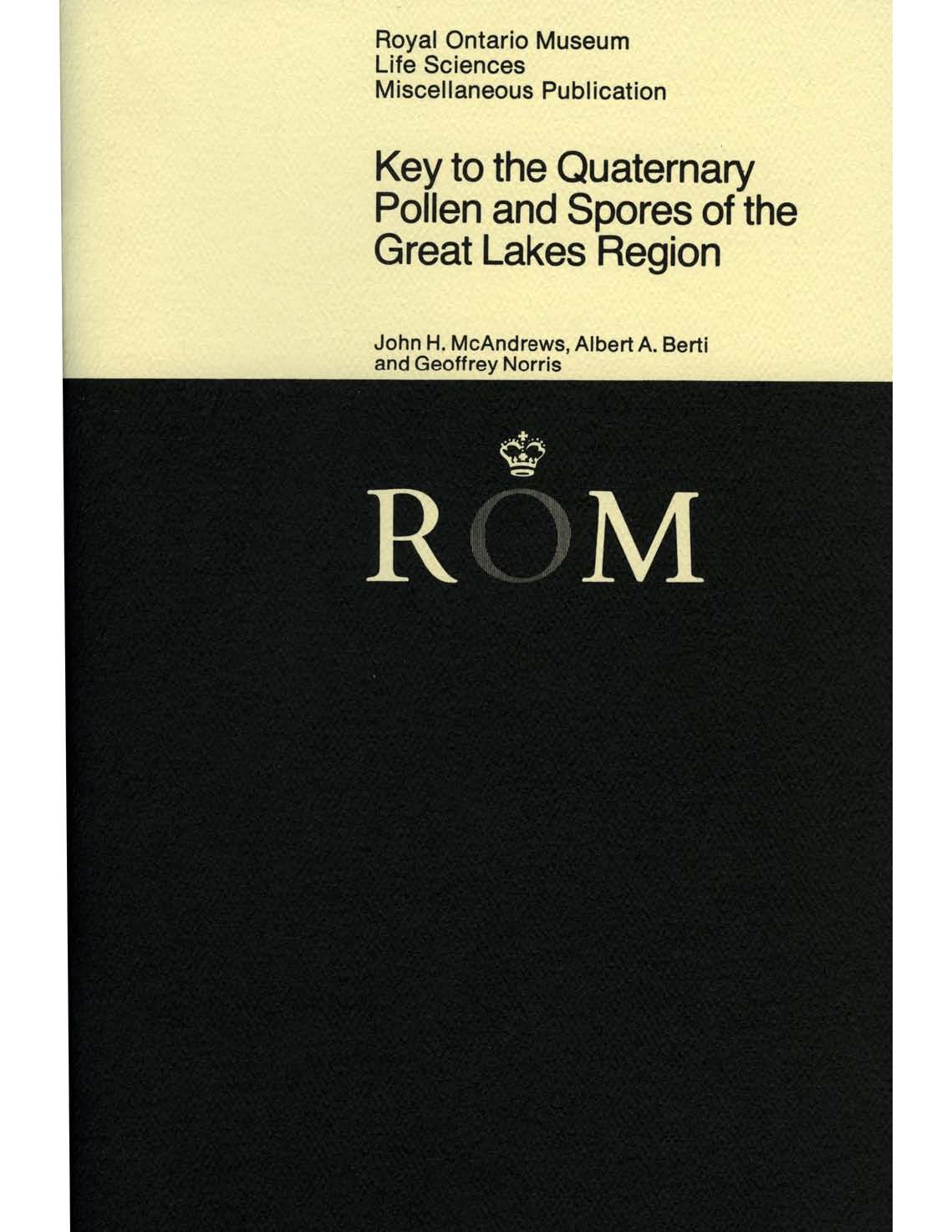 We’re short on cash these days, so exploring the gift shop was an exercise in wishing (which is not as sad as it sounds. Is there anything more hopeful than wishing?). In addition to wonderful teapots, this umbrella stand that I want so, so badly, and the globe plush toy, I found the three best books ever. The Encyclopedia of Animals, with its photography and facts, animals I’ve never heard of (racoon dog, anyone?) I think we will eventually own this one; The Pattern Sourcebook, each page a different world to get lost on (scroll down to see samples); and then Key to the Quaternary Pollen and Spores of the Great Lakes Region, just because I think the world is a better place for this book existing in it, and for there being at least three people who understand what it’s about.






